G20 NDCs ‘come nowhere close’ to climate commitments: Greenpeace


 0
0
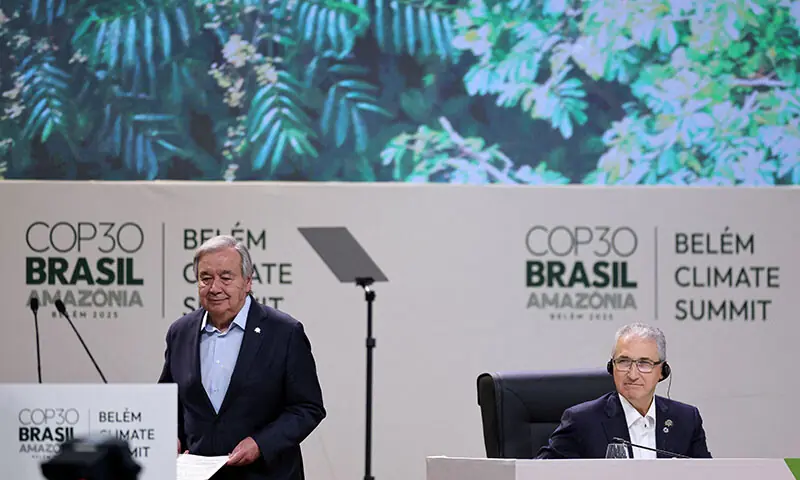

A report launched by Greenpeace International at COP30 in Belem, Brazil, revealed insufficient climate ambition in the 2035 nationally determined contributions (NDCs) submitted by the G20 countries.
The report, 2035 Climate Ambition Gap, was released at the UN climate change conference as part of Greenpeace’s call for governments to agree on a Global Response Plan to ensure the 1.5°C limit remains in reach, said a statement issued by the global climate NGO.
According to the statement, these major emitters account for almost 80 per cent of current emissions and around 85pc of global GDP, giving their policies outsized influence on global trade, investment and technology flows.
In short, what G20 countries do — or fail to do — will determine whether the 1.5°C temperature limit remains in reach, it said, adding that within the G20, the developed countries bear the greatest responsibility, given their historic and current contribution to global emissions and their far greater capacity to act.
“Yet taken together as a group, G20 countries’ submitted and announced 2035 targets would only lead to a reduction of 23pc to 29pc of their emissions compared to their emissions in 2019,” Greenpeace said, calling the targets a serious shortfall compared to the global 60pc reduction agreed in the Global Stocktake two years ago.
“When the G20 countries — responsible for 80pc of global emissions — deliver collective ambition that falls dangerously short, the world has a problem. With 85pc of the global economy behind them, the G20’s decisions shape trade, investment and technology worldwide.
Their choices will make or break the 1.5°C goal, but their plans amount to just a 23-29pc cut in emissions towards the 60pc reduction globally that is needed,” Tracy Carty, climate politics expert at Greenpeace International, said.
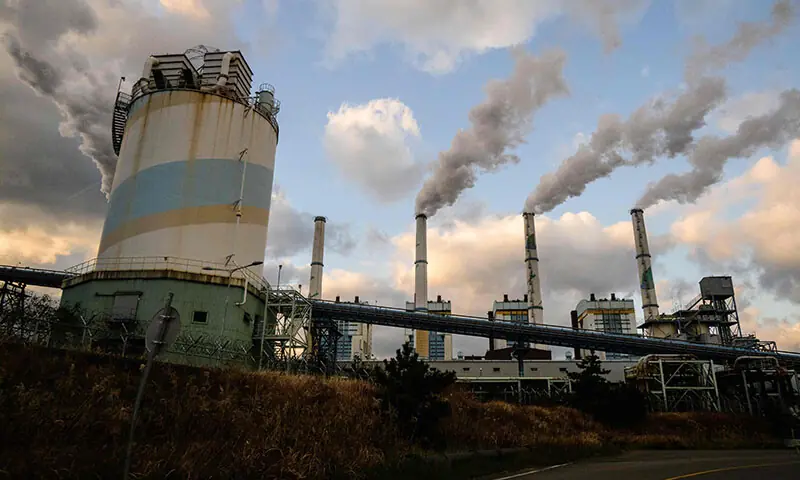
The report further said that all G20 country NDCs were failing to adequately contribute to the agreed energy transition.
“They lack both the necessary commitment to phase out fossil fuels as well as quantified targets for progress related to renewables and energy efficiency developments,” it said, adding that overall, G20 countries, home to the world’s largest producers and consumers of fossil fuels, offered climate goals that conspicuously lacked credible, actionable plans to phase out the fuels driving the climate crisis.
It said at COP30, countries will need to adopt a Global Response Plan to tackle the mitigation ambition gap and ensure substantial and equitable progress is made in reducing greenhouse gas emissions and phasing out fossil fuels.
Jasper Inventor, deputy programme director at Greenpeace International, said, “At this COP we are fighting for a Global Response Plan to bridge the 1.5°C ambition gap.
“That must include a roadmap to phase out fossil fuels and include an action plan to end deforestation. We’ve seen progress in week one, but we need an outcome that leads to change and not just another roadmap to nowhere.
“We must ensure COP30 leads to urgent action to phase out fossil fuels and fast-track renewables. But it must also yield progress for crucially needed climate finance, including steps towards making polluters pay for climate damages and a just transition. COP30 must deliver an outcome that accelerates real action.”
The report said currently, fossil fuel use was responsible for around 70pc of greenhouse gas emissions, and emissions from fossil fuel use had increased by more than 60pc since 1990. “The 43 member countries of the G20, including the EU27 but excluding the African Union, made up for 77pc of emissions in 2023,” it added.
In its recent Advisory Opinion on the obligations of states with respect to climate change, the International Court of Justice underlined the importance of phasing out fossil fuel use in order to achieve the goals of the Paris Agreement and stop global warming, it added.
In the 2015 Paris Agreement, countries committed to “holding the increase in the global average temperature to well below 2°C above pre-industrial levels and pursuing efforts to limit the temperature increase to 1.5°C above pre-industrial levels”.