



 0
0

 THE early onset of the monsoons last week came as a much-needed relief to the United Progressive Alliance (UPA) government in Delhi. The south-west monsoons, which are crucial for the nation’s farm sector – providing 60 per cent of the water for agriculture, and 80 per cent of the rainfall in India – set in over Kerala, and stormed its way northwards through Karnataka, Goa and Maharashtra, wreaking havoc in its path.
Many Indian states, including Maharashtra, the most industrially-advanced, are facing massive power problems. Maharashtra alone faces a shortage of nearly 4,500 MW, which could shoot up to 10,000 MW in a couple of years. The power crisis eases a bit with the onset of the rains, as farmers switch off power-guzzling motors.
The India Meteorological Department (IMD) had in April forecast that the country would receive 93 per cent of the long-period average rains, with an error factor of plus/minus five per cent. By last week, the south-west monsoon (or summer monsoon) had covered Kerala, parts of southern Tamil Nadu and parts of the north-eastern states, Karnataka, Goa and Maharashtra. It had also set over parts of Gujarat.
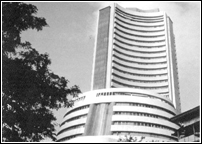
For the government led by Prime Minister Manmohan Singh, the past few weeks have been unnerving. The stock markets have crashed, with the Sensex, the benchmark index on the Bombay Stock Exchange, tumbling by nearly 20 per cent in May. The Indian rupee sunk to a three-year low against the dollar last week.
Politically, the government finds itself in the midst of a raging controversy over the reservations issue, with doctors and medical students rebelling against the move to raise the quota in higher educational institutions for students of backward communities.
And next week will see another formidable challenge for Singh, as he finally plucks the courage to jack up the price of petroleum products. Left allies of the government and opposition parties have warned of a massive agitation if the government raises the price of oil products.
The last time fuel costs were raised in India was in September last year. Since then, the three state-owned oil giants – Indian Oil Corporation, Hindustan Petroleum and Bharat Petroleum – have sustained huge losses.
The government has partly compensated them for the losses, and was toying with the idea of raising the price of petrol, diesel and liquefied petroleum gas (LPG – or domestic cooking gas).
However, elections in the crucial states of West Bengal, Kerala, and Tamil Nadu (besides a few smaller ones), forced the UPA government to postpone the decision to raise prices. Petroleum Minister Murli Deora says that the government has no other alternative, but to raise prices in the coming week.
Crude oil prices have jumped by over 15 per cent in the first five months of 2006. But Indian consumers have not felt the pinch – ergo, not much efforts have gone into consuming precious fuel – because of coalitional politics.
BESIDES the early onset of the rains, the other bit of good news for the UPA government was in the GDP (gross domestic product) figures released last week. According to the Central Statistical Organisation, GDP grew by a hefty 9.3 per cent during the January-March quarter (Q4 of fiscal 2005-06).
The economy grew by 8.4 per for the fiscal ending March 31, 2006, as against the projected growth of 8.1 per cent. The agriculture sector, accounting for around 25 per cent of the GDP, grew by 5.5 per cent during Q4, as against a mere 1.5 per cent in the corresponding quarter of the previous fiscal. For the fiscal, agriculture grew by 3.9 per cent (0.7 per cent in the previous financial year).
Manufacturing grew by a beefy 8.9 per cent in Q4 (8.1 per cent in Q4 of previous fiscal), and 9 per cent in the fiscal. Financial services saw a 9.7 per cent growth (9.2 per cent), and the services sector as a whole accounted for 54 per cent of the GDP.
But finance minister P. Chidambaram called for further widening and deepening of reforms, especially in the mining and power sectors, to sustain the growth rates. The minister was disappointed with the single-digit growth rates in these sectors, and called for more reforms to ensure double-digit growth. Sectors like construction continued to grow briskly, recording a rise of 12.1 per cent. India’s exports also surged by 25 per cent to a record $101 billion. But worryingly for the government, imports are growing at a much faster pace, and with the rupee losing value, the oil import bills have flared to record levels. The trade gap is expected to touch almost $60 billion this fiscal, up from $55 billion last year.
The current account deficit is also estimated to have risen to three per cent of GDP, up from a little under one per cent last year. Much of this deficit is funded by portfolio investments, which – as the past fortnight has shown – is unreliable and can take flight in hours.
Net foreign investments into the Indian stock markets in calendar year 2006 shot up to $5 billion in May, but within a matter of two weeks, it fell by an astounding over 50 per cent, as foreign institutional investors (FIIs) dumped over $2.5 billion worth of shares and fled.
The Indian rupee took a massive beating, and sunk to a three-year low last week. The currency depreciated by three per cent last month, dipping to 46.57 against the US dollar, the lowest since June 2003. Foreign currency analysts fear it could shed further points, and end at around 47.5 by early 2007.
THE Reserve Bank of India (RBI), the country’s central bank, will now be under pressure to raise interest rates, to check the plunging rupee and to control inflation. Inflation rose to 4.74 per cent last week, an eight-month high, and up sharply from the previous week’s 4.32 per cent.
Of course, last year the figure was much higher at 5.38 per cent. But with next week’s expected increase in fuel prices, inflation is expected to touch five per cent soon. The wholesale price index rose on the back of an increase in the price of farm products, and the early onset of the monsoon, is likely to ease the pressure a bit.
But the RBI has been closely monitoring both the inflation rate, and the depreciating rupee. In April, the bank left rates unchanged in its lean season policy, but analysts expect a 25-50 basis points hike in rates in its next policy statement towards the end of July.
The central bank has set a target of five to 5.5 per cent for inflation. The spurt in GDP, on the back of a furious 12 per cent growth in the services and construction sectors, and the dramatic rise in stock indices over much of the year, has caused fears of escalating prices.
India’s benchmark short-term rate – the reverse repurchase rate – was last raised in January by a percentage point. It stands at 5.5 per cent, and analysts expect it to be increased by 25 to 50 basis points by next month.
RBI’s deputy governor Rakesh Mohan points out that the bank’s monetary policy stance remains unchanged from its April policy statement. The bank is monitoring international developments, especially in the oil and foreign exchange sectors. Its exchange rate policy is determined by these developments, says Mohan.
Governor YV Reddy has also asserted that the bank would not hesitate to act to curb volatility, and would intervene swiftly whenever needed. The RBI has been intervening in the currency markets, to ease pressures on the plunging rupee.
But India’s foreign exchange reserves position continues to remain buoyant, having risen to a record $163 billion. The RBI appears, for the time being, unfazed by the fall in the Indian currency.
The deputy chief of the bank also feels that the full pass-through of the impact of international oil prices has still not been felt by the Indian economy. But this may change, once the government jacks up the price of petroleum products later this week.






























