Pakistan must expand grid for renewables: UN

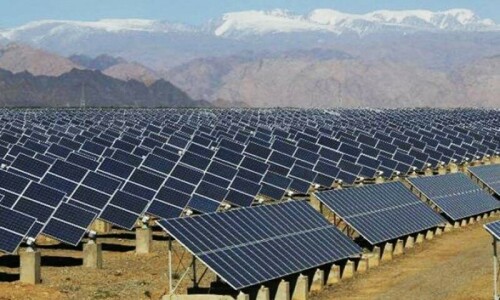
ISLAMABAD: Pakistan’s abundant solar and wind potential positions it well to transition towards affordable, carbon-free electricity, but weak grid infrastructure remains a major obstacle, a United Nations report has warned.
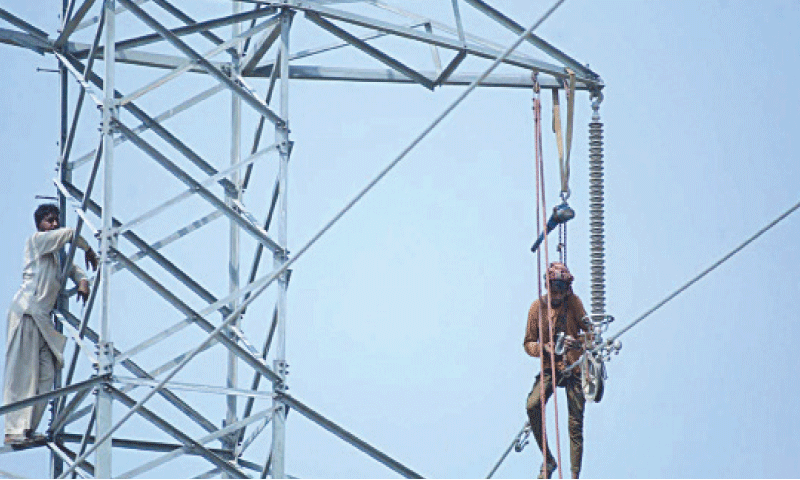
According to the 2025 Review of Climate Ambition in Asia and the Pacific, released by the UN Economic and Social Commission for Asia and the Pacific (UN-ESCAP), Pakistan needs significant investment and coordination to upgrade and expand its grid network to integrate large-scale renewable energy while maintaining system stability.
The report says that a successful phase-down of coal in Pakistan will require a comprehensive energy transition plan with clear targets, strong policies and engagement of all stakeholders. The transition, it adds, must be “just” to avoid disproportionate impacts on workers, businesses and households.
Renewable edge over coal
The UN report highlights that solar and wind energy are now cost-competitive with coal, giving Pakistan an opportunity to accelerate its shift towards cleaner energy. Data from the SDG-7 Roadmap for Pakistan show that the Levelised Cost of Electricity (LCOE) for solar and wind generation is significantly lower than that of coal-based power.
Solar and wind can cut power costs, but weak infrastructure may slow carbon-free transition
The energy landscape, the report notes, is evolving as global pressure to cut emissions increases. However, Pakistan’s transition will depend on long-term policy stability, financial support and institutional reforms that encourage private investment in renewables.
Regional context
The report places Pakistan’s situation within a broader Asia-Pacific context, describing the region as being at a “critical juncture” amid accelerating economic growth and intensifying climate pressures. Economic activity in the region expanded 4.6pc in 2024, contributing 60pc of global GDP growth over the past decade. Yet, rising debt, climate change and biodiversity loss continue to expose countries to mounting risks.
Despite these challenges, the Asia-Pacific has maintained its position as a global leader in renewable energy, accounting for 70pc of new capacity additions in 2024. Governments are increasingly adopting net-zero targets, revising climate policies and integrating them into Nationally Determined Contributions (NDCs) to meet emission-reduction goals.
Policy and carbon pricing reforms
To translate these commitments into action, countries are reinforcing their legal and regulatory frameworks to attract investment in clean energy. The report says private companies also have a crucial role in implementing deep decarbonisation strategies across their operations and supply chains.
The region remains heavily reliant on coal, producing 84pc of the world’s coal-fired power in 2024 and consuming 81.7pc of global coal output in 2023. The UN stresses that phasing down coal will require strong political commitment, removal of fossil fuel subsidies and coordinated policy frameworks to support renewable growth and energy efficiency.
Published in Dawn, November 9th, 2025