RAWALPINDI: As many as 33 dengue patients were reported in the three government-run hospitals of the garrison city on Saturday, despite the temperature dropping to six degrees Celsius.
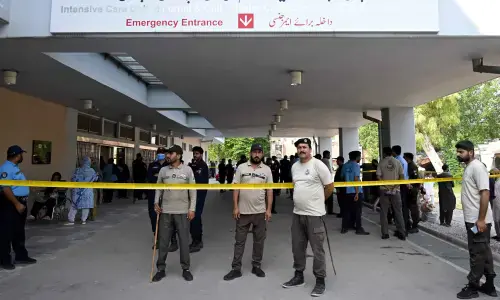
According to official data from Rawalpindi Medical University, a total of 272 patients arrived at the three hospitals, including 118 at Holy Family Hospital (HFH), 90 at Benazir Bhutto Hospital (BBH) and 64 at Rawalpindi Teaching Hospital (RTH).
However, the serology reports confirmed that 33 of these patients had contracted the dengue virus, including 13 at HFH, 12 at BBH and eight at RTH.
A senior doctor toldDawnthat 75 patients were currently admitted to the three hospitals, including 32 at HFH, 22 at BBH, and 21 at RTH.
“As many as 27 patients are suffering from dengue haemorrhagic fever, while three patients are suffering from dengue shock syndrome (DSS),” he said, adding that dengue shock syndrome is a severe and life-threatening complication of the disease.
He advised patients showing symptoms of dengue to avoid self-medication, as the fever can develop into dengue haemorrhagic fever or dengue shock syndrome if not treated in a hospital. He added that many patients from Islamabad had also been admitted to Holy Family Hospital for treatment.
He said patients were being treated according to the directives of the provincial government. Despite the change in weather, he added, people were still reporting with dengue fever in hospitals, underlining the need to adopt precautionary measures.
He urged people to keep their surroundings clean and improve their diet to strengthen their immune systems.
Most of the dengue cases were reported from areas within the city, including Kotha Kallan, Dhamial, Gheela Khurd, Pindora, Gangal, Satellite Town D-Block, Dhoke Munshee, Khayaban Shumali, Khayaban Janubi, Saray Kala, Dhoke Ali Akbar, Dhoke Babu Irfan, Rehmatabad, Dhoke Mangtal and all 20 wards of the Rawalpindi and Chaklala cantonment boards.
It is worth mentioning that dengue is transmitted by the Aedes aegypti mosquito. The most common symptoms include high-grade fever accompanied by joint and muscle pain.
As vaccines are unavailable in most parts of the world, early detection and proper medical care can significantly reduce mortality.
Published in Dawn, November 9th, 2025