Women’s public role realisation of long-denied right: SC
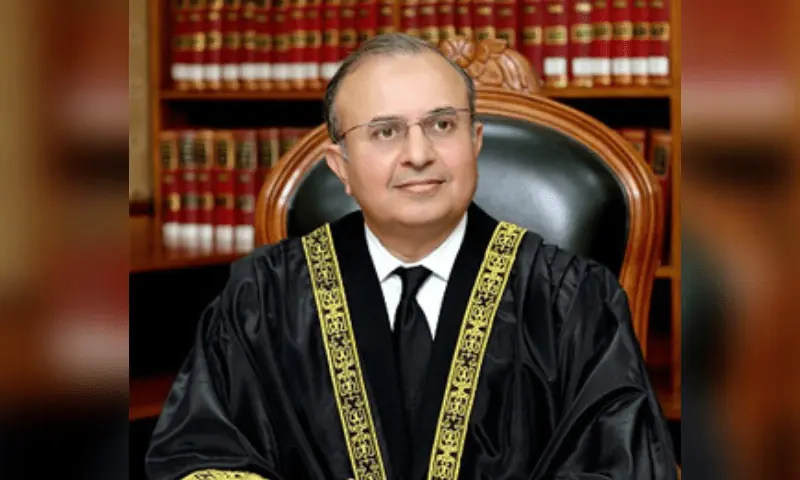

ISLAMABAD: Expounding on an earlier ruling, the Supreme Court on Thursday held that participation of women in the public sphere was not a benevolent concession, but a realisation of a right long denied.
“When women contribute across education, administration, policy, health, and justice, institutions draw upon a broader spectrum of experience, enhancing the quality, legitimacy and responsiveness of governance,” observed Justice Syed Mansoor Ali Shah while setting aside the Feb 14, 2024, order of the Khyber Pakhtunkhwa Service Tribunal, Peshawar.
In March this year, Justice Shah had ruled in a similar case that a woman’s legal rights, personhood and autonomy were neither erased by marriage nor should they depend on it.
On Thursday, he explained that women’s equal participation in public life was not simply a means to personal financial independence, but it was a structural driver of socio-economic development, good governance, and constitutional democracy.
Justice Shah calls on legislators, policymakers to stop enacting or interpreting laws in a manner that subordinates women to patriarchal or marital constructs
This has been recognised internationally through the Sustainable Development Goals (SDGs) and by comparative constitutional jurisprudence that advocates affirmative measures to correct gender imbalance in public services.
The dispute before a two-judge Supreme Court bench headed by Justice Shah was whether marriage would disqualify a daughter from appointment under the quota reserved for children of civil servants who die or become incapacitated while in service.
The controversy pertains to petitioner Ms Farakh Naz, an employee of the KP education department, who was appointed in place of her mother after she retired from service on medical grounds in April 2022.
Ms Naz’s appointment order as a primary school teacher in Karak was withdrawn without any notice in 2023 after she got married. This termination was based on a clarification letter of February 2022, which stipulated that the benefit of appointment under the quota was not available to a female who has contracted marriage.
Further, an April 28, 2023, clarification provided that a married daughter may again be considered eligible for appointment if she has separated from her husband and is dependent on her parents. Aggrieved by her termination order, the petitioner filed a departmental appeal against the order, which was rejected in August 2023. Consequently, the petitioner preferred an appeal before the KP tribunal, challenging the impugned order, which was dismissed in February 2024.
In his 11-page verdict, Justice Shah asked legislators and policymakers to recognise women as autonomous individuals and refrain from enacting or interpreting laws in a manner that subordinates their personhood to patriarchal or marital constructs.
The exclusion or “othering” of women — particularly on the grounds of matrimony — constitutes a direct assault on their dignity and equality and denies them the fundamental rights that attach to their independent selves.
Terminations like that of the petitioner, resting upon patriarchal readings of the rule or policy, not only violate the identity and rights of women but also impoverish society and future generations, who are thereby deprived of the intellect, values, and perspectives that women uniquely bring to public life, the verdict explained.
Justice Shah observed that being married was not a disqualification that strips a woman of her personhood or her constitutional entitlements; marriage merely alters her legal status, not her fundamental rights.
A woman like a man is a “person” under the Constitution — and this constitutional status of her personhood remains undisturbed through marriage or divorce. The view that a daughter (and not the son) is always dependent upon her father and thereafter as a wife is always dependent upon her husband is constitutionally unsustainable.
Such a notion undermines her individuality and erodes her identity as a person in her own right, Justice Shah observed and cited Martha C. Nussbaum — an American philosopher — who had said: “A society that denies women equal opportunities for full human functioning denies itself justice.”
Published in Dawn, November 7th, 2025