Global panel proposed to combat elite wealth capture
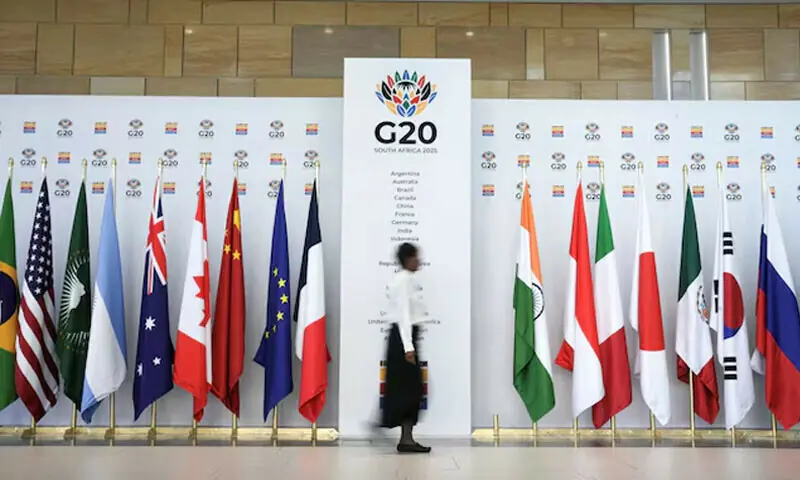

ISLAMABAD: An expert committee formed by the South African president ahead of the G20 summit has proposed establishing an international panel on inequality, modeled on the Intergovernmental Panel on Climate Change (IPCC), to inform policymaking addressing rising global inequality.
The Extraordinary Committee of Independent Experts on Global Inequality, commissioned for South Africa’s G20 Presidency, pointed out stark inequalities and proposed reforms amid growing concerns about democratic capture associated with wealth concentration.
The committee — chaired by Nobel Laureate Prof Joseph Stiglitz — submitted its report as concerns heighten about global increases in incomes and wealth at the upper end while large population segments struggle to make ends meet.
“Like climate change, unrestrained and growing inequalities also represent a major threat to the global community. It is imperative that we have better knowledge about its evolution and how proposed policy changes might alleviate it — or make it worse,” the experts noted.
In its report to the G20, experts led by Nobel Laureate Prof Joseph Stiglitz recommend the establishment of an international panel on inequality
According to the study, though inequality between all individuals worldwide has fallen in recent decades largely due to income growth in China, prospects for further reduction are uncertain, while the overall income gap between ‘Global North’ and ‘Global South’ countries remains very high.
The top 1 per cent captured 41pc of all new wealth since 2000. The richest 1pc saw their average wealth rise by $1.3 million, while the bottom 50pc saw wealth rise by just $585 from 2000 to 2024.
The study revealed that 83pc of all countries, accounting for 90pc of the world population, meet the World Bank’s definition of high inequality. Countries with high inequality were seven times more likely to experience democratic decline than more equal countries.
The committee highlights how inequality, particularly in extremes, has negative economic, political, and societal outcomes that interact and exacerbate adverse effects. High wealth inequality undermines both democracy and economic progress.
“Recent events since 2020, including Covid-19, the Ukraine war, and new tariffs and trade disputes since the beginning of 2025 are creating a perfect storm which is further increasing poverty and inequality. One in four people worldwide now regularly skip meals, while billionaires’ wealth has now hit the highest level in history,” it added.
The report said $70 trillion of wealth is expected to be handed to heirs over the coming 10 years, posing a major challenge to social mobility, fairness and equality of opportunity.
Deregulation of financial markets
The report criticised the international financial architecture, deregulation of financial markets, and global taxation system, which generate volatility and compound inequality. “Deregulating financial markets compounded this by generating volatility that could result in crises, with especially adverse effects on those at the bottom of the distribution.”
The committee noted it is a misconception that the private sector is more efficient than the public. “This runs counter to evidence that public services, in many cases and contexts, are both necessary and superior.”
Privatisation of state-owned enterprises and services in sectors like energy, water, transport, education and health drove up corporate profits and consumer prices, reducing access for the poor and lowering living standards.
These structural policies were typically accompanied by significant austerity measures, including cuts to public spending affecting ordinary people’s access to essential goods and services, driving further inequality increases with particularly adverse impacts for women and marginalized groups.
Recent advances in technology, particularly digitalisation and artificial intelligence, have the potential to increase inequalities within and between countries, even as they bring some benefits.
Reforms
The report focuses on international-level policies, including efforts to rein in corporate concentration and reform the international tax architecture. “An agreement among countries to have a minimum corporate income tax would, for instance, help prevent the destructive race to the bottom in corporate taxation.”
It calls for reforming international economic rules—redesigning intellectual property rules (especially relating to pandemics and climate change), rewriting tax rules to ensure fair taxation of multinationals and the ultra-wealthy.
National action can include pro-worker regulation, reducing corporate concentration, taxing large capital gains, investing in public services, and more progressive tax and expenditure policies.
The committee proposed reforming governance of international financial institutions to better reflect the contemporary global economy and increasing the IMF’s Special Drawing Rights annually along with global GDP increases.
It also proposed debt restructurings and liquidity support for developing countries and emerging markets with excess debt. “The global financial architecture needs reforming to make it less likely that another debt-and-development crisis emerges in the future.”
Published in Dawn, November 5th, 2025