Iron, steel imports surge as State Bank relaxes curbs
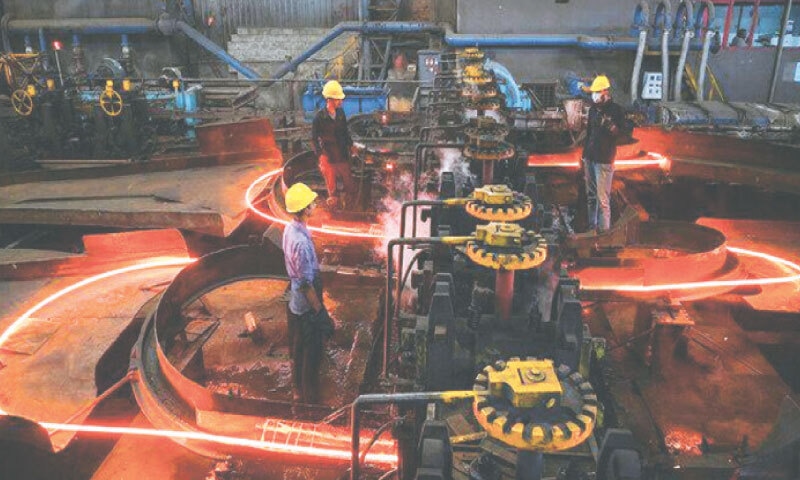


KARACHI: Pakistan’s iron and steel scrap imports rose to their highest level since 2021, indicating a shift in the government’s import policy, according to data shared by Arif Habib Ltd (AHL) on Saturday.
AHL reported that iron and steel scrap imports reached 359,759 tonnes in September, up 30 per cent year-on-year and 36pc month-on-month. During the first quarter of FY26, total scrap imports increased by 12pc to 935,981 tonnes. In value terms, imports stood at $178 million in September, reflecting an 11pc rise year-on-year, while first-quarter import values declined by 2pc to $486m due to a 12pc fall in the average import price to $524 per tonne.
The State Bank of Pakistan (SBP), in coordination with the Ministry of Finance, has eased import restrictions during FY26. This relaxation contributed to a trade deficit of over $9bn in the first quarter and allowed 86pc higher profit repatriation by foreign investors compared to a year earlier.
Iron and steel imports have significant implications for industrial activity, foreign exchange reserves, and overall economic stability. Over the past two years, the sector faced disruptions due to foreign exchange shortages and restrictions on the import of raw materials such as steel scrap. While import volumes have recently rebounded, demand remains subdued amid slow economic growth.
Steel sector sees higher raw material inflows after two years of import restrictions
Pakistan’s per capita steel consumption was around 48 kilogrammes in FY22, declining to an estimated 36kg in FY23, well below the global average of about 222kg.
According to a 2024 report by the Pakistan Credit Rating Agency, global GDP growth and steel consumption are closely linked, as steel is a key input in construction and manufacturing. The global steel market contracted by 1.1pc in CY23, in line with a slowdown in global GDP growth to 2.7pc, largely due to high interest rates and inflation. For CY24, global GDP growth is projected at 3.2pc, with steel demand expected to rise by 1.7pc.
During FY24, Pakistan’s GDP grew by 2.4pc year-on-year, while domestic steel consumption rose slightly by 1.8pc following the lifting of import restrictions on scrap in June 2023.
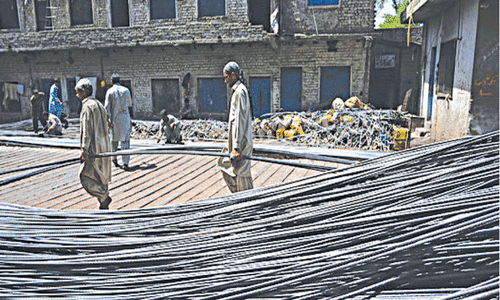
The rise in scrap imports is seen as positive for the long steel sector, where scrap is the main raw material for producing billets, rebars and girders.
Published in Dawn, October 26th, 2025