KP asks Punjab to withdraw ‘restrictive measures’ on inter-provincial movement of wheat


 0
0
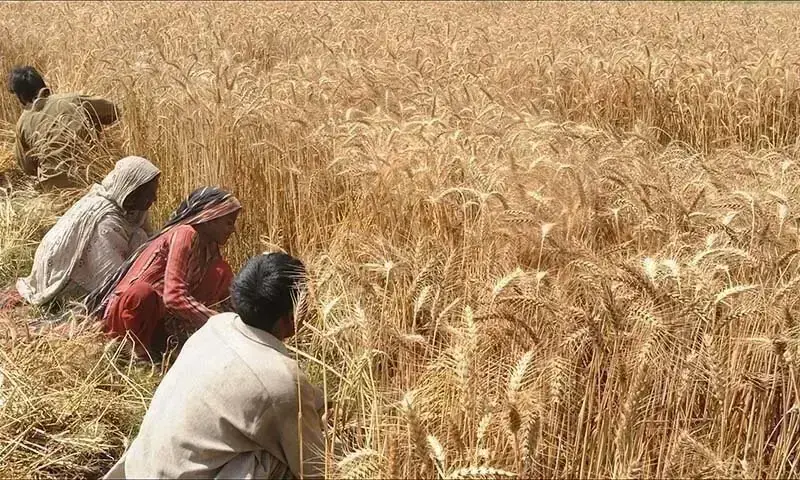

The Khyber-Pakhtunkhwa (KP) government has requested that the Punjab government withdraw “restrictive measures” on the inter-provincial movement of wheat and wheat products, citing a “sharp escalation” in the prices of the essential commodity in the province.
The development comes a day after the KP Chief Minister Sohail Afridi condemned the Punjab’s “move” to restrict the transportation of wheat and flour to KP while chairing a meeting. The KP CM termed the move “a blatant violation of the Constitution and an attack on the rights of KP citizens,” and directed food authorities to write a letter to relevant bodies in Punjab.
In the aftermath of floods, the Punjab government began tightening controls on the inter-provincial movement of wheat and flour through a permit regime to curb price hikes within the province — a move that has particularly been denounced by KP amid soaring prices and wheat shortage.
In a letter addressed to secretary price control & commodities management department, Punjab, the KP food department said, “It is earnestly requested to take urgent and decisive action to ensure immediate withdrawal of all restrictions on the inter-provincial movement of wheat”.
The letter added that the current situation was “inconsistent” with Article 151(1) of the Constitution, which guarantees that “freedom of inter-provincial trade and movement of goods across the country”.
“Khyber Pakhtunkhwa, being a wheat-deficient province, heavily relies on inter-provincial supplies from Punjab to meet its daily wheat requirement of approximately 14,500 metric tonnes,” the letter read.
“The prevailing restrictions have severely disrupted the flow of wheat and flour into the province, thereby threatening food availability and destabilising market prices.”
The food department stressed that the province was affected by the restrictions “disproportionately, with the steepest surge in wheat and flour prices compared to other provinces”.
It welcomed the “recent permission for transportation of 2,000 metric tonnes of flour to KP through a permit system,” but noted that it was the measure was “insufficient.”
The letter continued: “Despite repeated communications from the Chief Secretary, Secretary Food and Director Food, Government of Khyber Pakhtunkhwa, to counterparts, the restrictive measures continue to remain in force.
“As a result, the province is now witnessing acute shortages and unprecedented price escalation in [the] wheat market.”
It added that the Flour Mills Association of KP has also “repeatedly conveyed grave concerns over the rapidly depleting wheat stocks, cautioning that non-availability of wheat and flour may arise in the coming days if the restrictions persist.”
The KP food department recalled that the matter also came under discussion during Prime Minister Shahbaz Sharif’s meeting about the Wheat Policy 2025-26.
During the meeting — held last week — the premier had directed that there should be no restriction on the inter-provincial movement of wheat to ensure its availability across the country.
The food department detailed that the price of 100 kgs of wheat before the movement restrictions, on August 13, in Peshawar, was Rs6,175. However, after the restrictions, it rose to Rs7,725 on August 28, and it stands at Rs10,675 as of October 22.
Meanwhile, in Karachi, the price was reported to be Rs9,975, in Lahore, Rs9,375. In Rawalpindi, it was Rs9,600, and Rs10,000 in Quetta as of October 22.
CM KP, in his remarks at the meeting yesterday, had said that “hiding behind political differences to deprive citizens of basic necessities was unacceptable”.
Officials from the food department informed the meeting that KP’s annual wheat and flour consumption was approximately 5.3 million metric tonnes, of which only 1.5m metric tons were produced locally.
The remaining requirement, according to the statement, was met through supplies from Punjab and other provinces.
Punjab’s restrictions on the interprovincial movement of wheat have drawn sharp criticism from politicians and flour millers who argue it violates constitutional rights and a recent deregulation agreement.
While Punjab officials denied a formal ban, they acknowledged establishing checkpoints to curb what they termed “unusual” wheat movement. Critics, however, argued that these measures are against the spirit of a deregulated market.