Face masks declared a must for Punjab traffic police, sanitary workers


 0
0
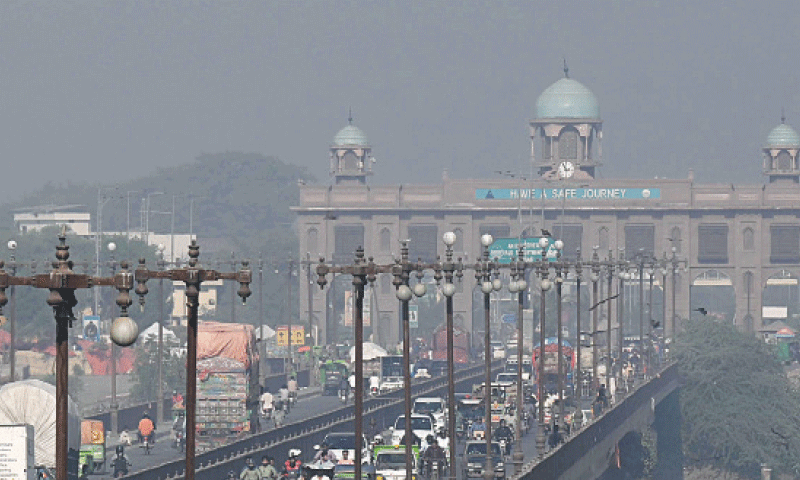

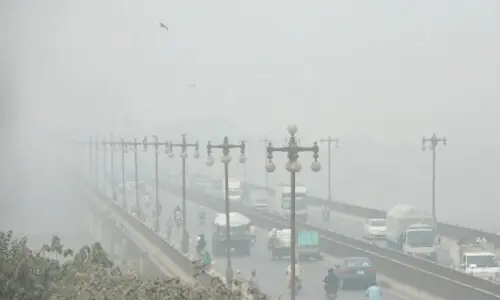
LAHORE: The Punjab government has made wearing of face masks mandatory for the traffic police officers and “Suthra Punjab” field teams, following the advent of ‘smog season’ in the province.
Lahore was ranked the second most-polluted city in the world on Tuesday with its Air Quality Index (AQI) reaching 218, after Delhi, India, that topped the list with its AQI at 247, while Kolkata, India, standing third with 209 AQI.
Punjab Senior Minister Marriyum Aurangzeb, who also heads the environment department, has stated that comprehensive measures are being taken across the province to combat smog and protect public health.
She says that wearing face masks has been declared mandatory for the traffic police officers and “Suthra Punjab” field teams.
Lahore ranked second most-polluted city in the world
Senior traffic police officers have been directed to strictly enforce the direction among their subordinates, who are constantly exposed to vehicular emissions and air pollution.
Similarly, all “Suthra Punjab” field workers have been instructed to wear masks during their duty hours to safeguard their health against the harmful effects of smog.
The government says that due to the Diwali fireworks and large-scale stubble burning in Indian Punjab, air pollution levels in Lahore and Kasur have risen to dangerous levels.
According to Punjab environment department, polluted winds moving at a speed of five kilometre per hour are blowing from Indian cities, including Amritsar, Ferozepur, Patiala, Gurdaspur, Sangrur, Bathinda, Moga, Barnala, Mansa and Faridkot into Lahore and other parts of Pakistan.
Approximately, rice crop cultivated over three million hectares is harvested in Indian Punjab during September and October, followed by widespread stubble burning.
According to the Punjab Pollution Control Board (India), 663 villages have been identified as major stubble-burning hot spots, significantly contributing to cross-border pollution.
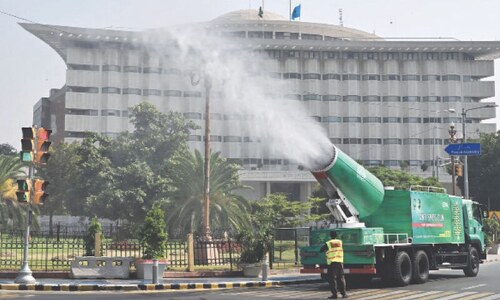
Anti-smog operations are underway in Lahore and other major cities. The Lahore Development Authority (LDA), the Water and Sanitation Agency (Wasa), the Parks and Horticulture Authority (PHA), the Lahore Waste Management Company (LWMC) and the Environment Protection Agency (EPA) are jointly engaged in water sprinkling on city roads to reduce dust and pollutants in the air.
The recently-introduced ‘anti-smog guns’ are also operating in the highly-polluted city areas, while construction sites are being regularly sprayed with water to check dust.
As per environment department, 24-hour monitoring is being carried out to check emissions from brick kilns, industries and vehicles. At Lahore’s entry points, vehicle inspections and monitoring have also been increased.
Punjab’s first modern ‘Smog Monitoring and Control Centre’ is now fully operational, collecting real-time data from across the province to enable immediate action, the department says.
According to the centre, wind speeds between 3 and 6km/h will gradually help reduce pollution levels.
As per the centre, on Wednesday (today) Lahore’s average AQI is expected to remain between 210 and 240. Winds from Indian cities including Dharamshala, Ludhiana, Haryana, and Sri Ganganagar are likely to affect the air quality of Gujranwala, Lahore, Faisalabad, Sahiwal, Burewala, Bahawalpur, Rahim Yar Khan and Multan, it adds.
The Punjab government has advised people to wear masks during smog conditions, avoid unnecessary travel and limit outdoor exposure for children, elderly individuals and respiratory patients. Residents are also encouraged to increase indoor and outdoor greenery to help absorb pollutants.
Ms Aurangzeb says that Punjab government’s machinery is fully mobilised to mitigate smog and protect public health. “We are taking every possible step to safeguard our people from the harmful effects of smog,” she emphasises.
Published in Dawn, October 22nd, 2025