KARACHI: The Pakistan Stock Exchange (PSX) experienced a significant downturn on Monday, suffering a loss of Rs534 billion in a single session, as rising tensions with Afghanistan, political instability in Khyber Pakhtunkhwa, and violent protests in Punjab created an environment of heightened uncertainty.
The benchmark KSE-100 index fell below the 158,000-point mark, marking the fourth consecutive session of broad-based profit-taking.
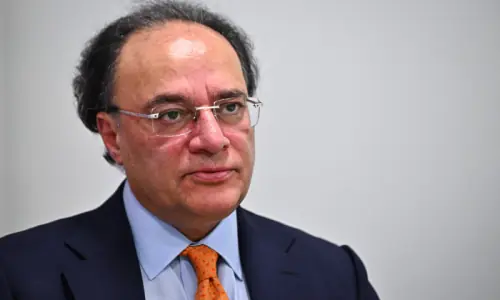
The market’s decline was compounded by concerns over Pakistan’s stalled discussions with the International Monetary Fund (IMF) regarding the $7 billion Extended Fund Facility (EFF). The IMF had concluded its second economic review, but the absence of a Staff-Level Agreement (SLA) to release the third tranche of $1.2bn left investors apprehensive. Finance Minister Muhammad Aurangzeb, however, expressed optimism that the SLA would be signed this week, as he attends the IMF and World Bank annual meetings in Washington.
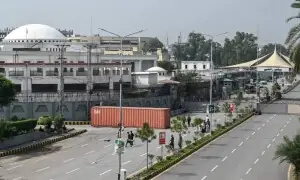
Adding to the pressure, protests by the Tehreek-e-Labbaik Pakistan (TLP) disrupted the market’s sentiment. The religious party, which began a long march from Lahore on Oct 9, aimed to voice opposition to a US-brokered ceasefire between Israel and Hamas. The march turned violent, with clashes between protestors and law enforcement agencies in multiple cities, resulting in casualties.
Equity investors lose Rs534bn amid geopolitical tensions, protests
According to Topline Securities, bearish sentiment gripped investors throughout the day. The KSE-100 index tumbled to an intraday low of 157,678 points, reflecting a decline of 5,420 points. Although there was a slight recovery, the index closed at 158,443 points, down 4,654 points, or 2.85pc.
The primary drivers of this downturn were escalating geopolitical tensions and a worsening security situation. These factors contributed to broad-based selling across key sectors, with major stocks like Bank Al-Habib, Engro Holdings, Lucky Cement, Oil and Gas Development Company, and Mari Energies collectively losing 1,261 points.
Market participation also showed signs of weakening. Trading volume dropped by 2.53pc to 1.361 billion shares, though trading value surged by 30.69pc to Rs62bn. K-Electric led the volume chart, with 197 million shares traded.
Ali Najib, Deputy Head of Trading at Arif Habib Ltd, noted that following last week’s decline of more than 4pc, the PSX faced yet another challenging session. From the opening bell, investor sentiment remained negative, and selling pressure remained persistent throughout the day. The market’s sharp decline was exacerbated by global uncertainty, with the US imposing fresh tariffs on Chinese imports, triggering panic across international markets, including equities.
Locally, escalating border tensions between Pakistan and Afghanistan, along with violent unrest in Punjab, further dampened investor sentiment. The breakdown of the 160,000-162,000 support zone reinforced the market’s bearish trend. Investors are now looking for support around the 157,000-158,000 level, which is viewed as a critical buffer zone to determine whether the market will stabilise or continue its downward trajectory. On the upside, resistance is expected to form between the 160,000-162,000 range, which will likely serve as a key sentiment checkpoint in the upcoming sessions. As investors navigate a volatile environment, the outlook for the PSX remains uncertain, with political and geopolitical risks continuing to dominate the market landscape.
Published in Dawn, October 14th, 2025