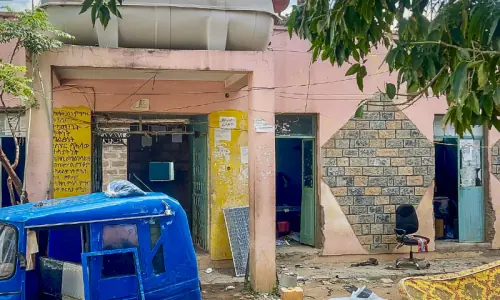
THE state has faltered on its promise of ensuring justice for the victims of the Jaranwala incident of 2023, when mobs — incited by allegations of blasphemy — burnt down churches and homes of Christian families in the Punjab town. Apparently, the investigating officers did not show up to inspect the damaged sites or contact the victims. Five FIRS were ‘sealed’ by an ATC judge, forensic tests were not run on video footage and police were not made a witness in any case. Despite evidence to the contrary, the revenue department concluded in one case that an affected site did not have a church. Meanwhile, the committee constituted to assess the damage failed to seek input from the harmed parties. After two years, countless court appearances and a JIT, a sole accused, out of mobs of hundreds, is in custody. Minority Rights Movement members provided these details at the ‘Jaranwala tragedy of Aug 16, 2023: Condition of minorities in Punjab, government steps and our strategy’ conference at the HRCP.
The Jaranwala episode is a stain on the nation’s conscience, but not a test case. Today, victims believe that any group can launch an assault with impunity. The justice system has forgotten that it is duty-bound to employ all measures to foil crimes of persecution. Any commitment to combat bigotry is hollow without accountability for the law enforcers, as shoddy investigation and prosecution invites further violence. Every perpetrator must be brought to justice to convey that no citizen is unequal, and that the state’s actions exist beyond news cycles. The grievances highlight the callousness of the criminal justice system and the victims’ loss of trust in it. This must be redressed, along with fair compensation to the affected. The police should be compelled to cooperate with the vulnerable to establish long-term safety. Exclusion is the deepest cut. It is, therefore, crucial to hold the state to account for the way it treats the weak.
Published in Dawn, October 4th, 2025