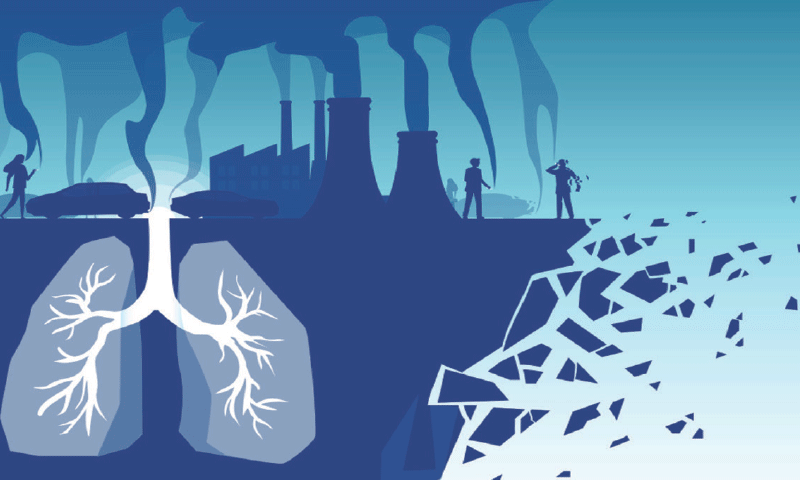

Karachi is choking, and we barely pause to notice; the skyline is a constant blur of grey- brown haze born of vehicular fumes, industrial emissions, open waste burning, and unchecked construction. Yet, air pollution remains an invisible threat in comparison to more sensational news of criminal activity or flooding, diminishing its urgency. It is not limited to the outdoor environment but is quietly creeping into our homes, schools, and offices, through our traditional ventilation systems, which weren’t designed for dealing with the toxic concoction the city now produces.
The silent killer
The air quality rankings for Karachi continue to decline, maintaining its position among the most polluted cities in the world for several consecutive years. The Air Quality Index often exceeds the prescribed safe limits by the World Health Organisation, with particulate matter concentrations frequently reaching 10 times over the allowed threshold (as per IQAir’s 2024 report). They penetrate deep into our lungs and bloodstream, causing respiratory illnesses, heart problems, and lower life expectancy.
A frequently ignored issue is how indoor environments increase the danger. Karachiites believe that closing their windows will keep them safe; however, poorly designed or inefficient cross ventilation, in combination with indoor pollutants such as gas stoves, generators, mosquito coils etc, can sometimes make indoor air worse than the streets.
The ventilation dilemma
Buildings in Karachi showcase a paradox. Older architecture with its traditional sehan (courtyard) and verandah (gallery), high ceilings, and well-balanced design is still better ventilated than modern buildings. The shift to high-rise apartments, glass facades, and gated communities with plots having little or no compulsory open space has largely cut off the natural airflows. Air-conditioning serves as a substitute for proper ventilation, but without an adequately efficient filtration system, the system keeps recycling polluted air.
The shift to high-rise apartments, glass facades, and gated communities with plots having little or no compulsory open space has largely cut off the natural airflows in the city
At the other end of the spectrum are those who cannot afford air-conditioning systems or their running cost, and hence keep windows open, breathing in the vehicular fumes, roadside garbage burning, and in some cases, industrial emissions. Many educational institutions in our city, catering to young students, do not have air purifiers or cross ventilation, which increases their risk of exposure to pollutant concentrations every day.
Learning from elsewhere
All over the world, ventilation is required as a public health priority. Post Covid-19, building codes for better filtration and airflow were part of regulations. Karachi has to begin this conversation in earnest, with the air quality monitoring station remaining a scarcity. Building codes for ventilation exist in paper only with enforcement almost nonexistent.
We have a lot of regional precedents that Karachi can learn from, for example, in Dhaka, the local government mandated sprinklers and netting for dust control around construction sites. Delhi, one of the most polluted cities in the world, is experimenting with green buffers of trees along high traffic roads and is incentivising citizens to adopt roof-top plants and to cool and filter the air. Within Pakistan, regulatory guidelines have been introduced to maintain indoor air quality within federal buildings post Covid-19 in Islamabad, recognising ventilation as a key factor in maintaining public health.
What needs to change
At the government level, the Sindh Building Control Authority needs to revise the ventilation requirements, especially for low-income neighborhoods, as mechanical systems are less reliable and affordable for their residents. Low-cost filtration systems to be prioritised for schools and hospitals as they are inhabited by the most vulnerable populations.
At the neighborhood level, heavy fines for roadside burning, the removal of trees, and construction sites operating without dust-control measures. At the citizen level, homeowners and tenants need to learn about ventilation, filters, and the hazards of indoor pollutants, with solutions such as exhaust fans, generator placement, and adding indoor plants being emphasized. This can be done through schools, offices, and market associations.
Breathing room for the future
The tragedy is that air pollution has been normalised in Karachi, and residents have developed a resistance to it by surviving frequent bouts of cough, watery eyes, and headaches, like the norm of daily life. But this is not just an inconvenience; it’s taking years off citizens’ lives.
We deserve policies and buildings that consider ventilation as a necessity and not a luxury, determining whether breathing, which comes naturally to a person, is poisoning us or protecting us. The future depends on reclaiming clean air as a human right, free from toxins and diseases, available without discrimination in every street, every school, and every home.
The writer is an architect and urban planner, currently leading her own practice, “Beyond Facades”
Published in Dawn, The Business and Finance Weekly, September 29, 2025