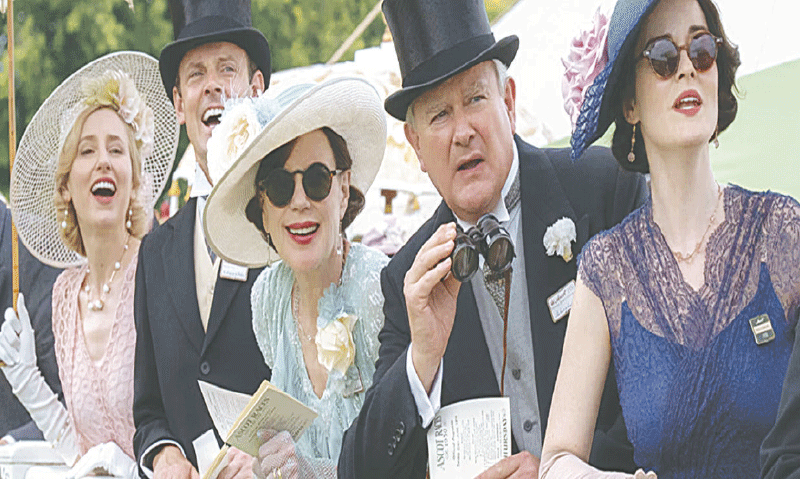
After 15 years on screen, Downton Abbey limps to its conclusion with The Grand Finale. Directed by Simon Curtis and billed as the ultimate farewell, it reunites the ensemble cast for one last bow.
Marketed as the crowning chapter of a much-loved, award-winning series that once defined Sunday night television in Britain and became a transatlantic hit, the film carries a weight of expectation.
What audiences have been given, however, is a perfunctory epilogue, as though everyone involved knew something had to be delivered but couldn’t quite summon the spark to make it worthwhile.
At the film’s centre lies the long-anticipated moment when Lord Grantham (Hugh Bonneville) prepares to hand the reins of Downton Abbey to Lady Mary (Michelle Dockery). This plot is further complicated by Mary’s divorce, a scandal rippling through society as she assumes leadership of the estate.
If you’re a fan of Downton Abbey, this Grand Finale — the third and final film of the TV series — is a big letdown
This culmination of a story, where responsibility is passed on, continuity is assured and change is accepted, ought to feel momentous, but it is bogged down by dozens of minor storylines, quickly raised and neatly resolved. The slack pacing and uneven tone reduce it to a carousel of passing tidbits. The Grand Finale seems determined to include all of the characters at once and, in doing so, loses its way.
With such a sprawling cast, there is no room to dig deeply. Scenes are crowded with so many characters that the effect often resembles a curtain call — each actor stepping forward for a line or two, then retreating again. It keeps faces in circulation, but it does not serve the audience.
This lack of focus highlights how far the films have drifted from what once made Downton Abbey irresistible. The television series thrived on a delicate balance of upstairs-downstairs drama. Modest conflicts, such as who might inherit, who might marry and whether a servant’s job was secure, were magnified through sharp writing and careful pacing into something greater than the sum of their parts.
It was a series about character, rhythm and mood as much as Edwardian glamour. The series let tensions simmer, mysteries unfold and gave its ensemble cast space to shine without overwhelming the story. Enormously popular, Downton Abbey became woven into Sunday nights in the UK, the kind of viewing that people looked forward to.
After a long week, Sunday evening would come, curtains were drawn, tea was brewed, and Downton Abbey was on TV. The familiar grand Victorian house with its rituals upstairs and downstairs helped close out the weekend with something warm, elegant and comforting. For me, it was a balm earlier this year while I was waiting on medical results and caught in restless uncertainty.
In this limbo, I returned to Downton Abbey on TV. It was comforting and familiar, yet still compelling enough to hold my attention when little else could. Back in good health, however, The Grand Finale could barely hold my attention for the two-hour running time.
Still, there is some pleasure in seeing the actors again. Michelle Dockery settles effortlessly back into Mary, and her warm exchanges with Laura Carmichael’s Edith highlight the positive development of the sisters’ relationship. Joanne Froggatt has a gentle and kind presence as Anna, and there are glimmers of the magic of the series in the scenes with Daisy (Sophie McShera) and Mrs Patmore (Leslie Nicol).
Maggie Smith’s absence is deeply felt; without the dowager countess’ sharp wit and perfectly timed barbs, the film misses the comedy of her character and veers too far towards sweetness and politeness.
Downton Abbey: The Grand Finale should have been the story’s crowning achievement, a chapter that tied its themes together and gave long-time viewers reason to cherish the journey one last time. Instead, it is a poor imitation of past glories.
A series that once made the smallest stakes feel monumental ends with an instalment that is both thin and tedious. Lord Grantham, resorting to cliche, remarks: “So this is how the world ends, not with a bang but a whimper.”
The whimper of this finale plays out in orchestral swells, becoming glossy and hollow, with a sentimental montage at the end which resembles a John Lewis Christmas advert.
On the other hand, if you have found yourself invested in Downton over the years, how can you not take this chance to wave off old friends and find out how it ends? Just don’t expect a bang.
The writer is a PhD candidate in the School of English at Dublin City University in Ireland
Republished from The Conversation
Published in Dawn, September 28th, 2025