The Pentagon has unveiled new restrictions on United States’s media covering American military, requiring them to pledge not to disclose anything not formally authorised for publication and limiting their movements within the Department of War.
The new guidelines, laid out in a lengthy memo distributed to reporters on Friday, require them to sign an affidavit promising to comply, or risk losing their media credentials.
The move is the latest by the administration of President Donald Trump to control media coverage of his policies, after he suggested that negative stories could be “illegal.”
The Pentagon “remains committed to transparency to promote accountability and public trust,” the memo says.
But it adds: “Information must be approved for public release by an appropriate authorising official before it is released, even if it is unclassified”, effectively barring material sourced to unnamed officials.
This new restriction would apply to both classified and “controlled unclassified information.”
The memo also details sweeping new restrictions on where Pentagon reporters can actually go without official escorts within the military’s vast headquarters just outside Washington.
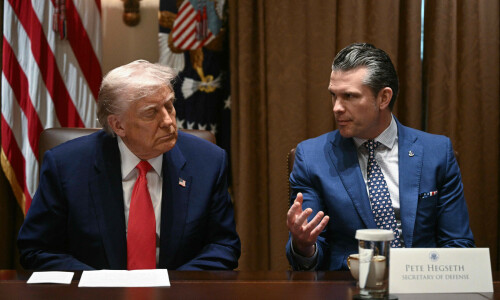
“The ‘press’ does not run the Pentagon — the people do,” Defence Secretary Pete Hegseth wrote on X. “The press is no longer allowed to roam the halls of a secure facility. Wear a badge and follow the rules — or go home.”
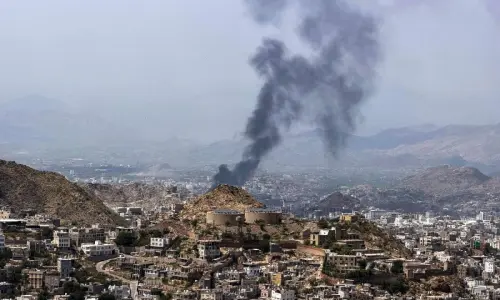
The new rules come months after Hegseth faced stark criticism for revealing timings of US air strikes on Yemen’s Houthis in a Signal group chat that inadvertently included a reporter.
Hegseth, a former Fox News co-host and Army National Guard veteran, was also reported to have shared those details in a separate Signal group chain that included his wife.
A spokesperson for The New York Times — a frequent target of Trump’s ire — called the new rules “yet another step in a concerning pattern of reducing access to what the US military is undertaking at taxpayer expense.”
National Press Club President Mike Balsamo hit out at the new rules, and called on the Pentagon to quickly rescind them.
“If the news about our military must first be approved by the government, then the public is no longer getting independent reporting,” Balsamo said in a statement. “It is getting only what officials want them to see. That should alarm every American.”
Trump terms his negative media coverage ‘illegal’
A day prior, Trump bashed US media coverage that he claimed was unduly negative and therefore “illegal,” stoking a debate over free speech following the suspension of comedian Jimmy Kimmel’s TV show by ABC.
“They’ll take a great story and they’ll make it bad. See, I think it’s really illegal, personally,” Trump, who has sued multiple major news organisations this year, told reporters gathered in the Oval Office.
The 79-year-old Republican, an avid television watcher, chiefly focused his diatribe on US television networks, reiterating a claim that coverage of him and his administration is “97 per cent bad”.
He also defended the head of the Federal Communications Commission (FCC), Brendan Carr, whose threats against broadcasters have sparked a national debate over free speech and caused some unease even among Republicans.
Carr on Wednesday criticised Kimmel’s remarks on the assassination of conservative activist Charlie Kirk and threatened broadcasters who carry his show with possible sanctions. Hours later, ABC announced Kimmel’s show was suspended indefinitely.
On Friday, Trump called Carr “an incredible American patriot with courage.”
Texas Senator Ted Cruz, a close Trump ally, meanwhile, said he believes it’s dangerous for a government to put itself in a position to say what speech it may or may not like.
Commenting on Carr’s threat to fine broadcasters or pull their licenses over the content of their shows, Cruz referenced a Martin Scorsese gangster movie.
“I got to say that’s right out of Goodfellas,” Cruz said. “That’s right out of a mafioso coming into a bar, going, ‘Nice bar you have here. It would be a shame if something happened to it.’”
Trump himself faced a setback in his personal anti-media crusade, with a federal judge issuing a scathing ruling and tossing out his $15 billion defamation lawsuit against The New York Times.