Crisis in the making: Complaints of missing facilities emerge from Punjab’s flood-hit areas


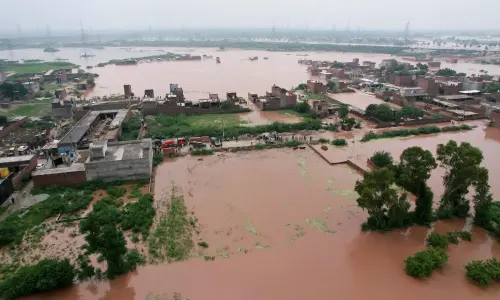
LAHORE: The humanitarian crisis is escalating in southern Punjab as exceptionally high flood levels in the Sutlej, Ravi, and Chenab rivers have inundated hundreds of villages, forcing thousands of families to flee their homes with minimal assistance from the state.
The Provincial Disaster Management Authority (PDMA) has predicted the flood situation in the rivers but affected communities complain that the response on the ground is too little, too late that has left a trail of devastation in their fields.
The government had evacuated 529,938 people from Multan division, including 351,230 from district Multan, 102,645 from Khanewal, 56,763 from Vehari and 19,300 from Lodhran.
The District Muzaffargarh administration evacuated 68,043 people from its three tehsils, including Muzaffargarh, Alipur and Jatoi.
The government has established 25 flood relief camps in different areas of Multan, including Lakwala, Muhammadpur Mahota on Head Muhammadwala, Sher Shah, Bund Bosan and Sikandri Nala.
A flood relief camp has been established at Head Muhammadwala where over 250 families are residing.
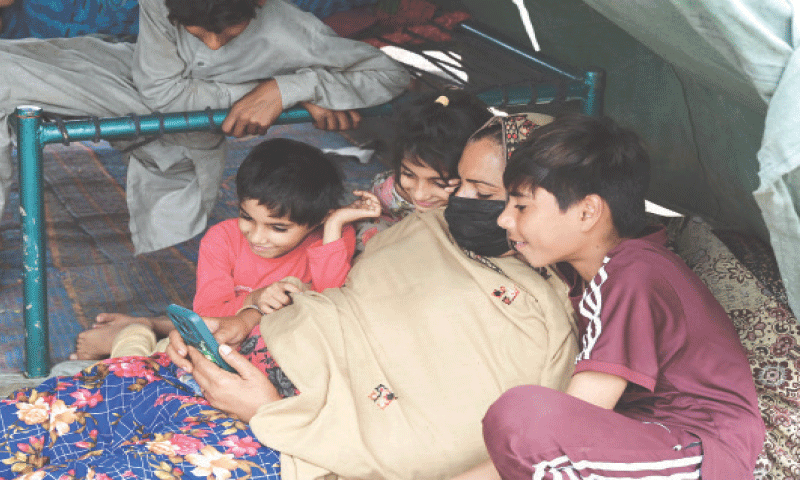
The flood-affected persons said they were living in the open for the last two days and did not receive any help from the government. They said they were forced to leave their houses without picking their belongings, which could be destroyed in water or get stolen.
Replying to a query about the commissioner and district administration’s claims to have served the food and fodder for cattle, the people said they received rice two times in the last two days and no one provided them with fodder for their animals. They complained about the absence of clean water to drink, medical help and washroom facility, saying that children and women were facing problems due to non-availability of washrooms.
Flood-affected people living at a BHU said there were two washrooms for more than 2,000 people and that they were receiving only one-time meal while their children were contracting diseases due to contaminated water.
In tehsil Shujaabad and Jalalpur, people living in low-lying areas complained about the police and district administration for issuing them threats of dire consequences for not leaving their homes. They said that there was no electricity in the flood relief centres and there were a lot of mosquitoes.
Sajjad from Shujaabad said that assistant commissioner office employees and police officials ordered him to leave the house but he refused.
“The officials asked me to leave the house or they would set it on fire. I had to leave my belongings and now I am living without a roof, food and washrooms under the sky.” He said there were several families living in the camp and some were provided with cloth tents and it did not stop rainwater.
Multan Commissioner Amir Kareem Khan visited flood-prone areas, including Basti Muhammadpur Ghota, Jhok Venus, Sher Shah, Lukwala Bund, Hajipur and Basti Langrial, to review ongoing relief operations. The number of flood relief camps across the division was increased to 90.
In Burewala, Sahoka and surrounding settlements were submerged after a breach in the Sahoka-Chishtian Road which resulted in disconnecting hundreds of villages from the city.
“Our village is now an island,” explained Ayesha Bibi from Sahoka.
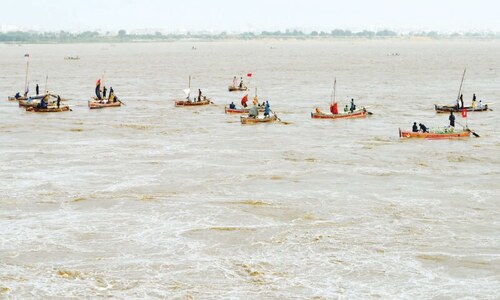
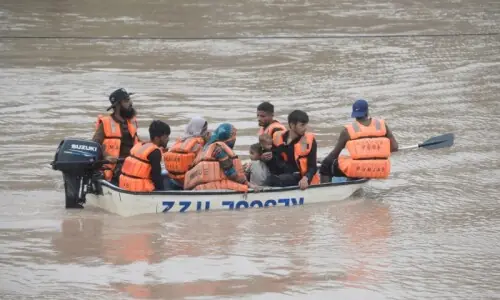
“The main road is under water. We are using makeshift boats to get to safety but where do we go? We have heard about relief camps but we have not seen any.”
In Manchanabad, temporary protective embankments at Mauza Rateeka, Lala Amar Singh, and several other villages were washed away, submerging thousands of acres of agricultural land and rice, cotton and maize crops. The floodwaters also cut off road access to multiple settlements.
In the Arifwala area, Basti Saboka, Yasin Kay, Balara Dilawar, and Balara Arjan were submerged. Several villages have lost road connectivity due to broken roads.
In Vehari, rescue teams relocated people and their livestock from the affected villages, including Lakhha Saldira, Sahooka, Farooqabad, Jamlera.
More than 80 villages were submerged and rural link roads eroded after high flood in the Ravi River at Kamalia. Officials said over 60,000 people were evacuated and 890 of them were given first aid. Their 61,999 animals were also evacuated. The road leading to Chichawatni, Faisalabad and M-3 interchange was submerged with floodwater near Kalaira Adda at Kamalia.
Published in Dawn, September 3rd, 2025