FPCCI calls claimed circular debt cut ‘misleading, artificial’


 0
0
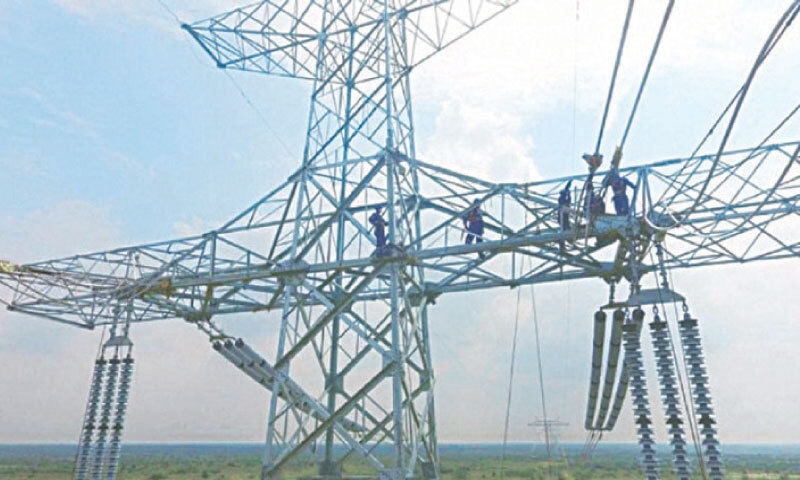

ISLAMABAD: Power Division’s claim of around Rs800 billion reduction in power sector circular debt is “misleading, artificial and unsustainable”, stemming from fiscal injections rather than structural reforms, a new report by the Federation of Pakistan Chambers of Commerce and Industry (FPCCI) observed.
The detailed analysis from the nation’s largest business body challenges a Power Division report that claimed circular debt (CD) would amount to Rs1.614 trillion by the end of June 2025, down from Rs2.393tr by end-June 2024, showing a reduction of Rs780bn.
“The reported reduction in CD for FY25 is primarily attributed to a one-time stock payment of Rs801bn rather than any sustained operational efficiency gains,” the FPCCI report stated, adding that this settlement was financed through fiscal measures, not through performance improvements in the power sector.
The FPCCI asserted that the funds used for the payment were originally designated for consumers, skewing the actual state of the power sector.
Says unsustainable govt injections fail to fix power crisis
“Notably, this amount was originally earmarked as a targeted direct subsidy (TDS) to be passed on to consumers. However, it was instead utilised to reduce CD stock, which may distort public perception by overstating the success of reforms and under-representing the benefit that consumers should have received directly,” the report said.
The chamber warned that such capital injections are a recurring pattern that fails to solve the underlying problem, recalling a Rs480bn injection in 2013-14 and other similar measures in 2009.
The “GoP’s current attempt to raise Rs1.25tr is highly reminiscent of these past events,” the FPCCI said. It added that without “deeply integrated structural reforms,” it is feared that the circular debt would “yet again rear its ugly head”.
The report also argued that apparent improvements in the performance of distribution companies (Discos) are misleading and are a consequence of falling electricity demand, not better management.
Discos’ and other inefficiencies are projected to cost the system Rs379bn in 2024-25, down from Rs591bn the previous year.
“While this is presented as an improvement, it is largely a function of reduced unit sales rather than actual efficiency gains,” it observed.
According to the FPCCI, the growing adoption of solar power is the primary driver behind the reduced demand on the national grid.
As consumers, especially in high-loss rural and peri-urban areas, switch to rooftop solar, the Discos’ exposure to those regions shrinks, making loss and recovery figures appear better.
“In this context, solar is playing the silent but pivotal role in reducing aggregate losses,” the report stated.
The FPCCI’s recalculation of the Power Division’s figures suggests that when one-time adjustments are excluded, the circular debt actually increased. The report said the claimed reduction of Rs780bn, minus the Rs801bn stock payment and Rs358bn in prior year adjustments, reveals an underlying increase of Rs379bn.
“This recalculation indicates that absent these exceptional items, circular debt would have increased (by Rs379bn), not decreased,” the FPCCI concluded. “Therefore, the sustainability of the CD management strategy is questionable.”
It said that while the overall system loss percentage has slightly improved — from 18.3pc in FY24 to 17.6pc in FY25 — the net underperformance against FY23 has actually increased to 1.1pc when loss stood at 16.5pc.
“This undercuts narrative of Discos’ ‘remarkable improvements’ reducing circular debt. Financial losses from Discos inefficiencies remain high at Rs264bn in FY25, barely less than Rs277bn in FY24. These minor savings don’t support claims of a structural turnaround.”
The report also pointed to specific failings within Discos, noting that Quetta Electric and Sukkur Electric saw losses increase by 11.7pc and 4.8pc, respectively, compared to FY2023 benchmarks, contributing over Rs88bn in losses in FY25.
Published in Dawn, August 23rd, 2025