Azerbaijan and Armenia sign peace deal at White House
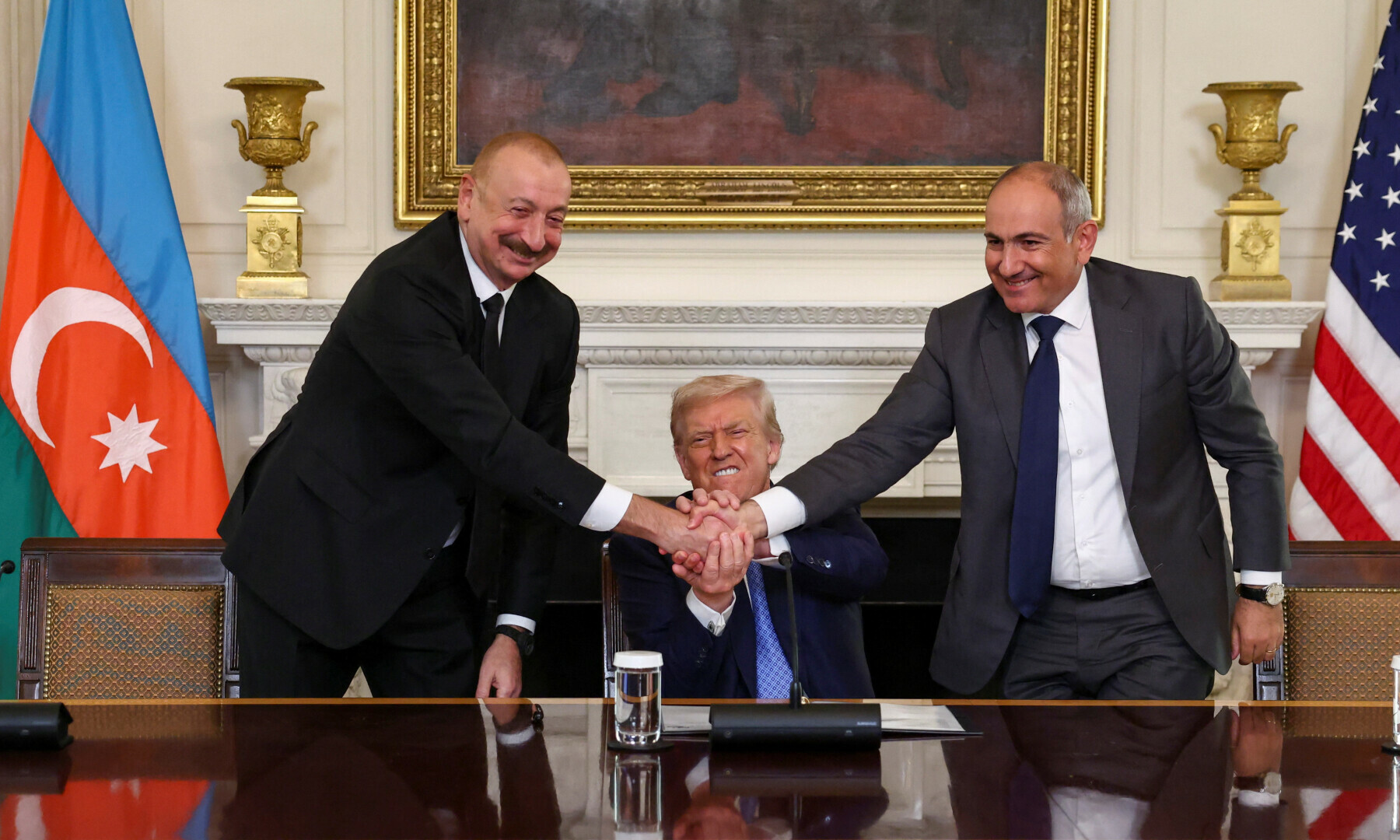



WASHINGTON: Azerbaijan and Armenia signed an initial US-brokered peace agreement during a meeting with President Donald Trump on Friday, a deal aimed at boosting economic ties between the two countries after decades of conflict, the White House said.
White House spokeswoman Anna Kelly told reporters that Trump signed separate deals with both Armenia and Azerbaijan on energy, technology, economic cooperation, border security, infrastructure and trade. No further details were provided.
The agreement includes exclusive US development rights to a strategic transit corridor through the South Caucasus, dubbed the “Trump Route for International Peace and Prosperity.”
US officials said the agreement was hammered out during repeated visits to the region and would provide a basis for working toward a full normalisation between the countries.
Neither the joint declaration due to be signed nor the separate bilateral agreements with the US were released.
It was not immediately clear how the deal being signed on Friday would address thorny issues such as the demarcation of shared borders and Baku’s demand for a change in Yerevan’s constitution, which includes a reference to a 1989 call for the reunification of Armenia and Nagorno-Karabakh, then an autonomous region within Soviet Azerbaijan.
Officials briefing reporters skirted over the Nagorno-Karabakh issue.
Armenia and Azerbaijan have been at odds since the late 1980s when Nagorno-Karabakh — a mountainous Azerbaijani region that had a mostly ethnic Armenian population — broke away from Azerbaijan with support from Armenia.
Both Armenia and Azerbaijan won independence from the Soviet Union in 1991. Azerbaijan took back full control of Nagorno-Karabakh in 2023 in a military offensive, prompting almost all of the territory’s remaining 100,000 Armenians to flee to Armenia.
US officials highlighted the opportunities presented for both countries and US investors through creation of the new transit corridor, which will allow greater exports of energy and other resources.
“What’s going to happen here with the Trump route is, this isn’t charity. This is a highly investable entity,” said one senior administration official, adding that at least nine companies had in recent days expressed interest in operating the transit corridor, including three US firms.
Safer and prosperous
Under a carefully negotiated section of the documents signed on Friday, Armenia plans to award the US exclusive special development rights for an extended period on a transit corridor that will be named the Trump Route for International Peace and Prosperity, and known by the acronym TRIPP, the officials told Reuters this week.
Trump would sign a directive to set up a negotiating team to work out details for how to operate the corridor, with initial commercial negotiations to begin next week, one of the officials said.
“The losers here are China, Russia and Iran. The winners here are the West,” one of the officials said.
“Both countries that have been in conflict for 35 years … are looking and talking about full peace with each other tomorrow.”
“It’s being done, not through force, but through commercial partnership … with these two countries,” the official said.
“The joint declaration that we’re going to see signed today is the first-ever peace declaration signed bilaterally by the two countries since the end of the Cold War.”
Published in Dawn, August 9th, 2025