USC closure leaves employees, consumers high and dry
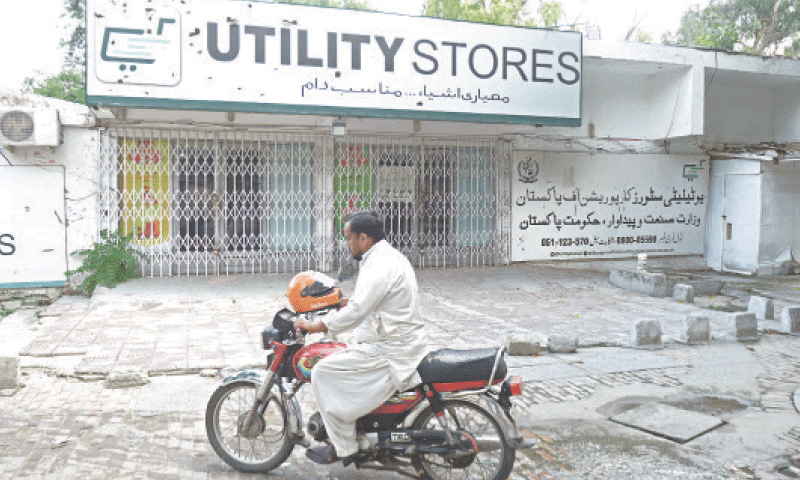

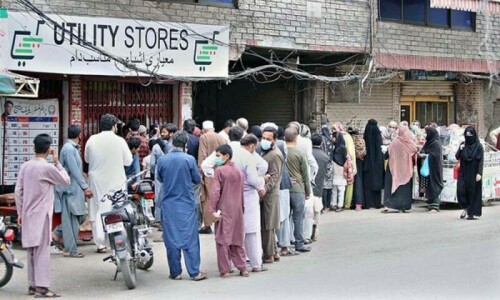
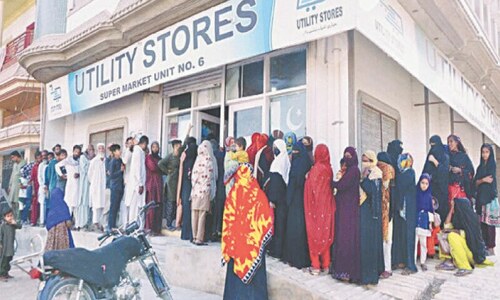
ISLAMABAD: The government’s decision to close all utility stores across the country has not only left thousands of employees in a state of shock, but has also triggered deep concern among low-income consumers who depended on the network for essential goods at subsidised rates.
Amid harsh hot and humid weather conditions, a large number of USC employees, including women, have established a protest camp outside the USC head office at Blue Area, waiting for the result of talks between their union and the government negotiating team.
The government negotiating committee includes SAPM Haroon Akhtar, Adviser to the PM on Inter-Provincial Coordination Rana Sanaullah and Minister for Parliamentary Affairs Dr Tariq Fazal Chaudhry.
The key topic of negotiation between the employees’ union and the government team was the formulation of a fair and financially viable Voluntary Separation Scheme (VSS) for the USC employees.
A meeting in this regard continued throughout the day on Thursday and was expected to conclude on Friday.
Meanwhile, fear of the unknown gripped the USC employees who slammed the government for shutting down utility stores.
“This is simply a betrayal,” said one of the protesters, a store manager in Rawalpindi. He said that he had been in the job for over 18 years. “Now, I am not even in a position to get another job and my children are still studying. Those who relied on us too are left to suffer.”
The government’s decision to close utility stores is part of a wider austerity and privatisation drive aimed at reducing the financial burden on the national exchequer.
However, critics argue that the decision reflects misplaced priorities, ignoring the harsh realities faced by millions who already struggled to afford daily necessities amidst rising inflation.
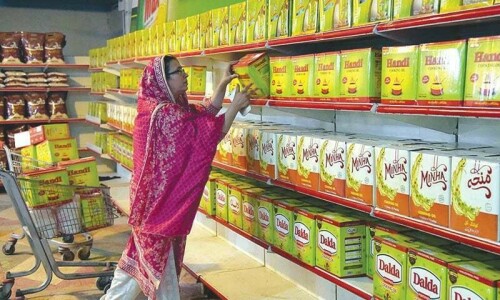
For 54 years the Utility Stores Corporation (USC) served as a critical lifeline for the poor and lower-middle class, offering essential items like flour, sugar, rice, ghee, pulses and other household items at comparatively affordable prices.
Now, with the abrupt decision to shut down these outlets, many families fear being left at the mercy of unregulated markets and profiteering retailers.
“Private shopkeepers charge double the price; it is embarrassing to see that our government cannot even provide subsidy for the poor,” said Kausar Bibi, a household maid.
There are more than 4,000 utility stores across the country and USC was established with the concept to counter the market manipulation by the retailers and the wholesalers and in case of need the government could intervene to provide any essential item or subsidised essential items in any particular area.
On the other hand, despite public backlash, a senior official of the ministry of industries said the system had become unsustainable and plagued with inefficiencies.
Published in Dawn, Aug 1st, 2025