0
0

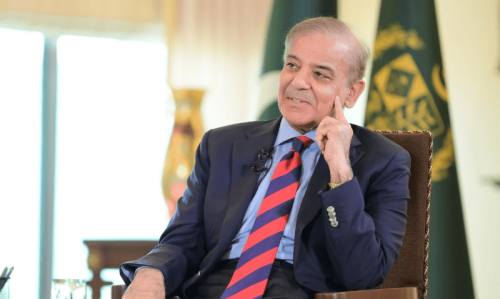
ISLAMABAD: Prime Minister Shehbaz Sharif has approved the development of a modern and world-class digital ecosystem in the Federal Board of Revenue (FBR), directing that globally renowned experts be engaged for this purpose.
The premier was chairing a meeting to review progress on FBR reforms in Islamabad on Saturday.
He directed the FBR to continue dialogue with the business community over tax compliance concerns, emphasising that any form of harassment will not be tolerated.
The government, he stated, remains committed to creating a facilitative environment for businesses across the country. The directive comes amid mounting tensions, as trade associations have announced a nationwide strike in response to budgetary tax measures aimed at documenting the retail sector and curbing tax evasion.
An official source told Dawn that the prime minister has directed senior FBR officials to ensure that no member of the business community is subjected to harassment. “We have to keep businesses running,” he stated, adding that any coercive actions against traders would be unacceptable. “We do not want to close businesses,” he said.
Mr Shehbaz further emphasised that the FBR should rely on digital surveillance rather than physical crackdowns to identify tax evaders. “Utilise technology to detect tax evasion and then issue recovery notices,” the prime minister instructed.
The FBR has deployed tax officials across 10 key sectors — including ghee, tobacco, and sugar — to monitor actual production and detect instances of concealment. Section 40B of the Sales Tax Act, 1990 authorises the FBR to station officers directly at business premises for this purpose.
To ensure transparency, FBR personnel are accompanied by representatives from the Intelligence Bureau and other relevant agencies.
Preliminary findings indicate that certain sectors have been deliberately underreporting production in order to evade taxes.
The prime minister has underscored the need for equitable tax contributions across all segments of the economy. Expressing concern over the narrow focus of current tax collection efforts — primarily targeting the manufacturing sector and salaried individuals — he termed the approach as unjust.
He directed that high-net-worth individuals, retailers, wholesalers, and other economic actors be brought under the tax net to ensure a broader and fairer revenue base.
“The tax collection process must be rational and efficient so that we reduce reliance on domestic taxation,” the premier stated, emphasising that every sector carries a responsibility to contribute its fair share to the national exchequer.
According to the tax official, the issues with traders are expected to be resolved by the coming Monday.
“We have addressed most concerns and reached an understanding,” the official stated, adding that the remaining issues will be settled during the final round of negotiations.
Published in Dawn, July 27th, 2025