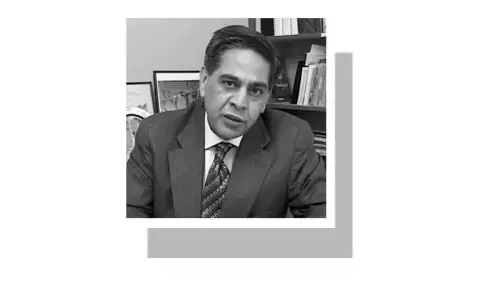
KARACHI: A senior health expert has emphasised the need for integrating mental health into the care and management of chronic diseases, especially diabetes, as people living with this health condition are two to three times more vulnerable to suffer from psychological problems than the general population.
Prof Abdul Basit said this while speaking at a dialogue on diabetes and depression organised by the Indus Hospital & Health Network (IHHN) as the first episode of ‘HealthWise’ — a quarterly initiative exclusively designed for media professionals — on Tuesday.
Prof Basit, a senior diabetologist and director of the Indus Diabetes and Endocrinology Center (IDEC) at IHHN at the hospital’s Korangi campus, focused on the often-overlooked link between diabetes and depression — a growing public health challenge in Pakistan.
Drawing from national data and clinical experience, he shared that Pakistan has over 33 million people living with diabetes, and 30 to 40 per cent of them are also grappling with depression and mental stress.
“People with diabetes are two to three times more likely to suffer from depression than the general population,” said Prof Basit. “Yet, Pakistan faces an alarming shortage of trained mental health professionals. We must integrate mental health into chronic disease care, now.”
The session was attended by IHHN President Dr Abdul Bari Khan, CEO Prof Syed Zafar Zaidi, alongside a diverse audience of health reporters, doctors and IHHN officials.
Both leaders reiterated IHHN’s commitment to delivering not just free-of-cost healthcare, but also expert-led public education to reshape health narratives across the country.
“The media are our allies in building a healthier Pakistan. With HealthWise, we aim to empower them with accurate, evidence-based information that can spark change in public attitudes and behaviours,” noted Dr Bari.
The conversation also spotlighted findings from the NIHR Research and Innovation for Global Health Transformation Programme, DiaDeM (Diabetes and Depression in South Asia) — a collaborative research effort led by Najma Siddiqi, a professor of psychiatry at Hull York Medical School, University of York, UK.
The programme, funded by the UK’s National Institute for Health and Care Research (NIHR), has tested a culturally adapted form of Behavioural Activation — a low-cost, simple, non-pharmacological therapy for treating depression in people with diabetes.
According to the study’s key findings, the therapy is culturally appropriate for use in Pakistan and can be conducted by non-specialist health workers. It also showed that just six sessions of the therapy significantly reduce depression cases and severity.
Patients also reported increased diabetes self-management activities. In time, this would be expected to translate into better control of their diabetes and better diabetes outcomes.
Dr Kamran Siddiqi from Hull York Medical School, University of York, UK, said, “This approach carries with it the real and timely opportunity to rapidly expand the mental health capacity of the workforce, without relying solely on scarce mental health experts”.
According to experts, the success of the DiaDeM programme signals a paradigm shift toward task-shifted integrated care models, where high-quality, yet low-cost mental health support becomes a standard part of chronic disease management in Pakistan.
They have chosen the primary care diabetes service at IHHN as one of the demonstration sites to understand how this model could be implemented nationally.
The DiaDeM programme will also develop an accredited training programme for Behavioural Activation to create a skilled workforce, and to ensure there are mechanisms to maintain the quality of the therapy.
Published in Dawn, July 16th, 2025