Automated tax filing system rolled out for salaried class

• Urdu version to be available by July-end, Sindhi and Pashto versions will follow suit
• New system will automatically pull data linked to filer’s CNIC, at-source deductions, bank details
• PM seeks early release of income tax refunds for salaried individuals; wants Raast chairman, board to be appointed by September
ISLAMABAD: In a move to simplify tax filing procedures for the salaried class, the Federal Board of Revenue (FBR) has introduced a new interactive return form, which will incorporate an auto-fill system that seamlessly integrates data about purchases, asset details and tax deductions at source etc. — ultimately generating a single-form return upon completion.
The new return form is currently available in English, while the Urdu version is set to come out by the end of this month.
During the first rollout phase, the form will also be available in two regional languages, Sindhi and Pashto. More versions in regional languages — Punjabi and Balochi — are expected to be rolled out subsequently.
Under the Income Tax Ordinance, individual taxpayers are required to file their returns by September 30.
The new return form consists of eight digital windows, each containing one input column. The process is designed to be step-by-step, with each screen containing a single question prompt to guide users through the filing process.
In the first window, entering one’s employer’s name will automatically populate the fields of tax deduction at source.
All deductions of withholding taxes based on the Computerised National Identity Card (CNIC) numbers will also appear on the form.
Similarly, providing bank account details will prompt the form to display closing balances.
Registered purchases linked to the filer’s CNIC will also appear automatically, streamlining data entry and minimising manual input.
According to an official announcement, Prime Minister Shehbaz Sharif directed the FBR to launch a digital invoicing in Urdu. He said tax reforms should focus on facilitating citizens.
He asked the FBR to expedite the release of income tax refunds for salaried individuals of those amounting to less than Rs50,000. These refunds are to be issued within one month of return submission. The total disbursement under this directive is estimated at Rs10 billion.
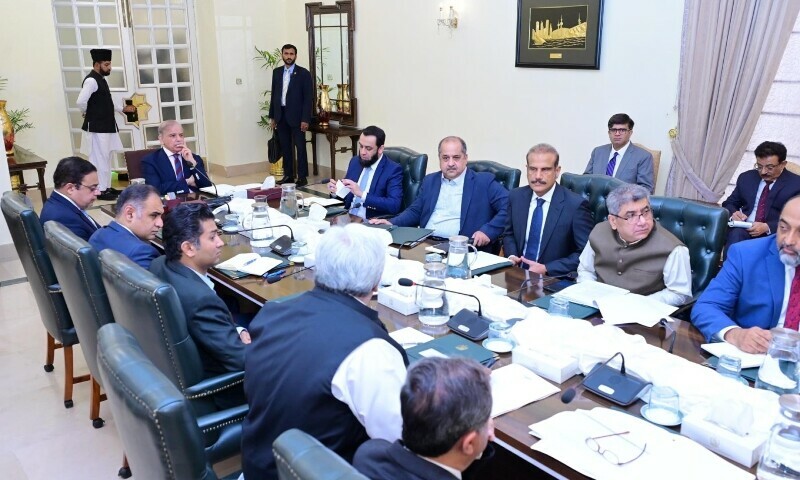
While chairing a meeting to review progress on FBR reforms on Monday, the PM instructed the FBR to establish a helpline aimed at assisting the filing process. The meeting was informed that simplified digital tax returns for salaried individuals would be available from Tuesday, with access for other taxpayers beginning by July 30.
PM Shehbaz said tax returns had been made digital, concise, and linked with a central database for public convenience. He believed the salaried class would benefit the most from the new simplified tax returns system. He noted that implementation of AI-based tax assessment system was a major success, calling for raising awareness to encourage taxpayers to use the new system.
He also emphasized a third-party validation to ensure transparency in all FBR reforms. The premier directed the officials concerned to provide special facilities to small and medium-sized businesses to join the digital invoicing system.
The meeting was briefed on progress regarding digital invoicing, e-Bilty, simplified tax returns, the AI-based assessment system, the central command and control centre, and the cargo-tracking system. It was shared that FBR’s Command and Control Unit would become operational by September, enabling centralized data access and facilitating efficient decision-making.
Regarding the digital invoicing system, it was noted that all small and large businesses would issue receipts through FBR’s online platform at the point of sale and purchase. Approximately 20,000 businesses are expected to be integrated into the system in the coming months.
Customs automation
The meeting was briefed on the AI-driven assessment system that would allow traders to submit advance goods declarations prior to the arrival of ships, with full exemption from upfront duties and taxes. This measure is expected to increase advance declarations from three per cent to over 95pc, allowing containers to be transported directly from ships to factories.
The meeting was informed that within just one month, 8,000 invoices worth Rs11.6bn were issued. The system includes a taxpayer portal and a monitoring dashboard. Integration with PRAL is free of cost, and traders’ training is being actively facilitated. Once fully implemented, traders will no longer need to file separate sales tax returns, as transactions would be automatically recorded in the system.
Digital economy
The PM said the digitisation of the economy was the government’s top priority as it would bring transparency to the system. He said that digitalising payment systems between the public and the government would enhance transparency and ease of use for citizens.
He directed that progress towards a digital economy be accelerated and instructed that the processes of digitisation and the shift towards a cashless economy be simplified for small and medium-sized enterprises (SMEs). He also emphasised that all state-owned enterprises should be integrated into the digital framework.
The PM advised the relevant officials to complete the process for the appointments of the board of governors and chairman of Raast by September. He noted that RAAST’s Board of Directors must comprise business experts.
The meeting was informed that the number of users of mobile apps and digital banking services was expected to increase from 95 million to 120m, with the volume of digital payments projected to rise from Rs7.5bn to Rs15bn. A nationwide public awareness campaign on Raast and digital payments would be launched next month.
To align Pakistan’s economy with those of developed nations, a Digital Payments Index will be introduced within one month. Additionally, the Capital Development Authority Board has approved the right of way for digital public infrastructure in Islamabad.
It was also noted that the remittance system was being digitised, ensuring that all funds sent from abroad would be received through the formal banking system. Coordination is ongoing with the governments of all four provinces, Gilgit-Baltistan, and Azad Jammu and Kashmir to promote digital payments.
Published in Dawn, July 15th, 2025