ISLAMABAD: Pakistan’s state-owned enterprises (SOEs) continue to pose serious fiscal and operational challenges due to entrenched inefficiencies, poor governance, and delayed reforms, as aggregate revenues and profits declined by 8 per cent and 10pc, respectively, during the first half of FY25, the Ministry of Finance said on Friday.
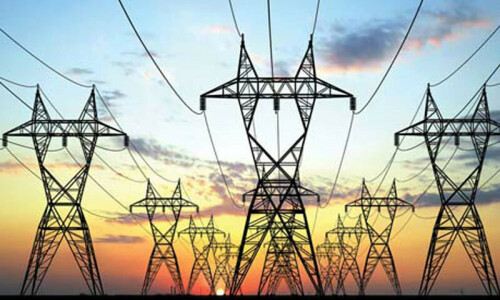
In its biannual performance report (July-December FY25), the Ministry’s Central Monitoring Unit (CMU) highlighted the power sector as the biggest drag, with accumulated losses reaching Rs5.9tr. The sector alone accounts for Rs2.4tr of the Rs4.9tr circular debt across all SOEs.
“Distribution companies (Discos) reflect unsustainable losses when stripped of subsidies, further compounded by outdated infrastructure and unaccounted energy losses,” the report stated. Transmission constraints due to delayed NTDC upgrades and inefficient generation companies further eroded system efficiency.
The findings came a day after Power Minister Awais Leghari claimed a Rs191bn cut in FY25 losses via better recoveries and theft control.
State-run firms’ total debt climbs to Rs8.831 trillion
According to the CMU, power Discos posted a core operational loss of Rs283.7bn in six months. Expanding circular debt in the oil, gas, and power sectors is distorting asset valuations and weakening cash flows. Meanwhile, persistent government financial support through grants, subsidies, and equity injections continues to strain public finances.
The report also flagged large unfunded pension liabilities in entities like railways and Discos, with contingent liabilities from government guarantees standing at Rs2.245tr. Rollover costs remain high due to refinancing risks from foreign relent loans (FRLs) and cash development loans (CDLs).
Total outstanding SOE debt reached Rs8.831tr, including accrued interest and rollover costs.
Gross revenues of federal SOEs stood at Rs6.459tr in July–December 2024, down 7.9pc from the same period last year. Lower global oil prices and reduced domestic interest rates dampened earnings in oil-related firms and financial institutions.
Aggregate profits declined to Rs457bn, while loss-making SOEs posted a combined loss of Rs343bn. After adjustments, net profits totalled Rs114bn, up 12pc from Rs101bn a year earlier.
The financial position of SOEs showed modest improvement. Total liabilities rose 1.03pc to Rs31.092tr, while asset value increased by 3.75pc to Rs37.72tr. Net equity rose by 18.8pc to Rs6.629tr.
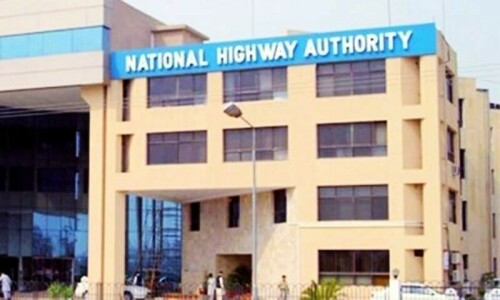
The National Highway Authority reported the highest net loss of Rs153.3bn, pushing its accumulated deficit to Rs1.953tr. Quetta Electric Supply Company and Sukkur Electric Power Company followed with six-month losses of Rs58.1bn and Rs29.6bn, and cumulative losses of Rs770.6bn and Rs473bn, respectively.
Other major contributors to the fiscal drain included Pakistan Railways (Rs26.5bn loss), Peshawar Electric Supply Company (Rs19.7bn; Rs684.9bn accumulated), Pakistan Steel Mills (Rs15.6bn; Rs255.8bn accumulated), PTCL (Rs7.2bn; Rs43.6bn accumulated), and Pakistan Post (Rs6.3bn; Rs93.1bn accumulated).
The report estimated technical and commercial electricity losses at 20pc. “These structural flaws push the 6-month average sectoral loss close to Rs300bn — or Rs600bn annually — underscoring an urgent imperative for transformational reforms,” it stated.
Without sweeping reforms — including governance restructuring, technology upgrades, privatisation or concession models, and tariff realignment — the report warned that the fiscal burden would persist and stall energy sector recovery.
On a positive note, profit-making SOEs earned a combined Rs457.2bn in the six months. OGDCL led with Rs82.5bn, followed by Faisalabad Electric Supply Company at Rs53.5bn, significantly supported by Rs38.9bn in subsidies and Rs5.8bn in other income.
Pakistan Petroleum Ltd earned Rs49.9bn, National Power Parks Management Company Rs37.4bn, Government Holdings Rs25.3bn, and Gujranwala Electric Power Company Rs24.6bn — including Rs13.6bn in subsidies. Wapda and Port Qasim also posted profits of Rs18.5bn and Rs18.3bn, respectively.
To support loss-making SOEs, the government provided Rs616bn in fiscal assistance during July–December FY25, including Rs113bn in grants, Rs333bn in subsidies (mostly for power), Rs92bn in loans, and Rs77.5bn in equity injections.
Published in Dawn, July 12th, 2025