Birth and evolution of Azadari in Talpur era


 0
0

HYDERABAD: Some intricate streets are part of Tando Thoro — a pre-partition era locality of Hyderabad — where two histories run parallel to each other if it comes to mourning and other rituals in Muharram.
The area is at the far end of old Hyderabad’s eastern side near the bank of Phulelli canal. Its inner pocket is now surrounded by Paretabad, a densely populated area.
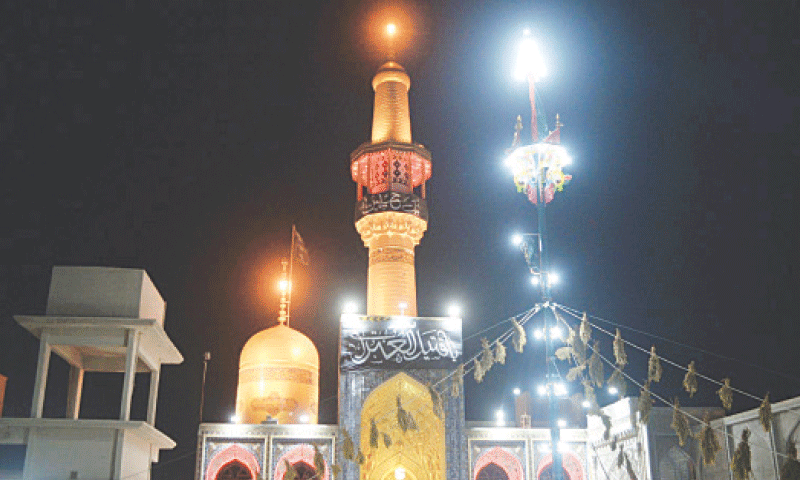
One of the few landmarks of Tando Thoro is the 1965 Imambargah known as Astana-i-Quds which has added colours to the locality. Its tall illuminating minaret is visible from different corners of the area. It has undergone massive rebuilding work over the last several years. Its new façade resembles the mausoleum of Imam Raza in Mashhad and has been built on the pattern of Iranian architecture. The work was completed about five years back. One of its custodians, Mirza Imtiaz, was invited to Mashhad and presented a souvenir by Iranian government for this work. The flag that hoists over it was also gifted to him.
Other communities had lived in Tando Thoro before the Partition but primarily it is synonymous with Mirzas, who are said to be descendants of Mirza Khusro Beg, a scion of Georgian Muslim family. He had arrived in Sindh in early 19th century as a young boy when Sindh was under Talpurs’ rule headed by Mir Karam Ai Khan Talpur.
After ousting Kalhoros, Talpurs ruled Sindh from Hyderabad’s historic Pucca Qila. The fort was built by Ghulam Shah Kalhoro in early 18th century — in 1768 precisely. Talpur dynasty came to an end in 1843. Hyderabad’s Mirzas are known for their literary and academic brilliance. A noted Sindhi scholar and literary giant, Mirza Qaleech Baig was maternal grandson of Mirza Khusro Baig and was bestowed the title of Qaiser-i-Hind. He was son of Mirza Fareedun, who arrived in Sindh after Khusro. Mir Karam Ai Khan Talpur, who was issueless, had requested Iran’s ruler, Fatah Shah Kachar, to help him adopt someone from a royal family and that’s how he nurtured Khusro, who also served as Talpur’s ambassador.
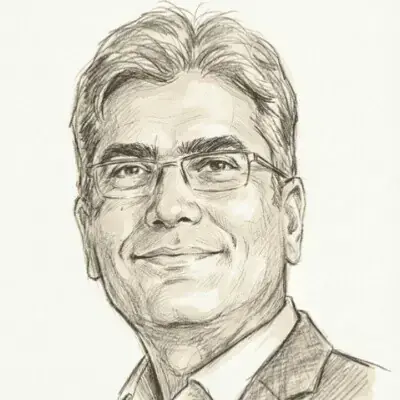
“His [Khusro’s] curt reply to Charles Napier “Sindh koi hallway ki plate nahi still echoes in the minds of many,” says Naseer Mirza, a Sindhi broadcaster known for his eloquence. Naseer is paternal grandson of Ms Sharfunnisa, Mirza Qaleech’s sister, and lately retired as station head of Radio Pakistan, Hyderabad.
Tando Thoro was named after Nawab Mohammad Khan Leghari, who came from Thoro branch of Leghari tribe and said to have held a position in the Talpur era equivalent to a present day minister. Tando Thoro was a small settlement or village then. “This village or area was given to the Nawab by Talpurs as jagir (land grant)…,” adds Naseer.
According to him, our ancestors started following teachings of fiqah-i-Jafria due to Talpurs’ influence. Talpurs had followed this faith and now Mirzas are practising this fiqh after inheriting azadari from Talpurs. “Mirzas in fact brought azadari from Pucca Qila to Tando Thoro. Khusro’s five children were born in the Qila,” Naseer asserts.
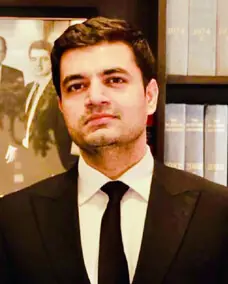
Kazim Mirza, one of longest serving custodians of Qadam Gah Maula Ali in recent history, disputes Naseer’s claim, saying that only Mirza Qaleech Baig, among his brothers, was more independent in his religious beliefs. “Mirzas have followed this fiqh from day one,” he adds.
Dr Imam Ali Mirza, who has done his PhD in ‘Sindhi mersia” says:“Azadari in Sindh is largely due to Talpurs’ influence. But, Urdu-speaking community’s azadari is different from Sindh’s traditional colour of mourning.
Mirza Qaleech was born in Tando Thoro. Until Britishers conquered Sindh, Tando Thoro used to be a kot sort of settlement then having different Mirza households. Today it is somewhat an urbanised area of Hyderabad.
After Mir Naseer Talpur, Sindh’s last Talpur king along with others was shipped to Calcutta to serve out his jail term, Khusro stayed in Tando Saindad in Tando Mohammad Khan (now a district) back home along with Talpur’s womenfolk.
“Mirzas used to bring saij of Shahzada Qasim and zuljinah. These processions in memory of Imam Hussain are still a regular feature of Muharram. In his memoirs, Mirza Qaleech has mentioned that when they didn’t have a horse, they brought an elephant to replicate Imam Hussain’s sawari instead of zuljinah”, Naseer said quoting Qaleech’s book, Yadgiriyon.
These five major saijs are brought out in Muharram, adds Kazim, who is great grandson of Mirza Sadiq Baig, the son of Mirza Fareedun. These saijs are brought from houses of now extended Mirza family.
Azadari in Tando Thoro was subsequently blended with those who arrived in Tando Thoro from India following partition that became azadari’s history also, he adds. “Elders of Urdu speakers who settled here from Alvar in India shared same sectarian bond with our elders,” says Kazim
Naseer agrees with Kazim. He says, “these Urdu-speaking families adjusted amongst us comfortably here.
He says the tradition of 9th Muharram event of alam in memory of Hazrat Abbas and tazia was introduced here by elders of these migrated people such as Syed Tahir Taqvi, Saleh Taqvi alias Saleh Mamoo and Nasir Taqvi alias Nasir Phupha. “This was different from azadari in the area that centered on pirs,” he adds.
Taqvis, according to Naseer, were given a space for an Imambargah by Mirzas so that they could continue their azadari in their own Hindustani ways. Such space located in Sunar Gali, used to be inhabited by Hindu families who migrated to India after the Partition. “This space is still in use of Taqvi family member, Azhar Taqvi,” he points out. Like other parts of Hyderabad which borne the brunt of ethnic disturbances, Tando Thoro had this bitter memory, too. “Most of our family members who lived here since migration period had to leave Tando Thoro due to ethnic riots but my family stayed back,” bearded Azhar Taqvi remarks while recalling those troubled days.
Published in Dawn, July 6th, 2025