Giant observatory reveals first images of deep space


 0
0
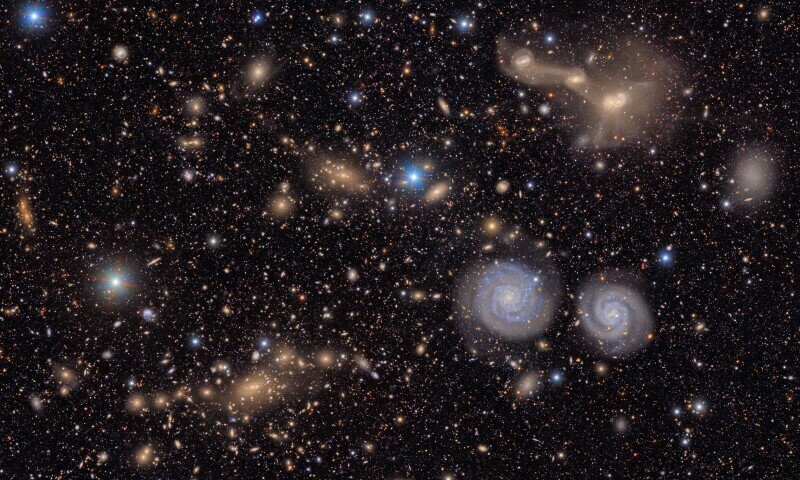
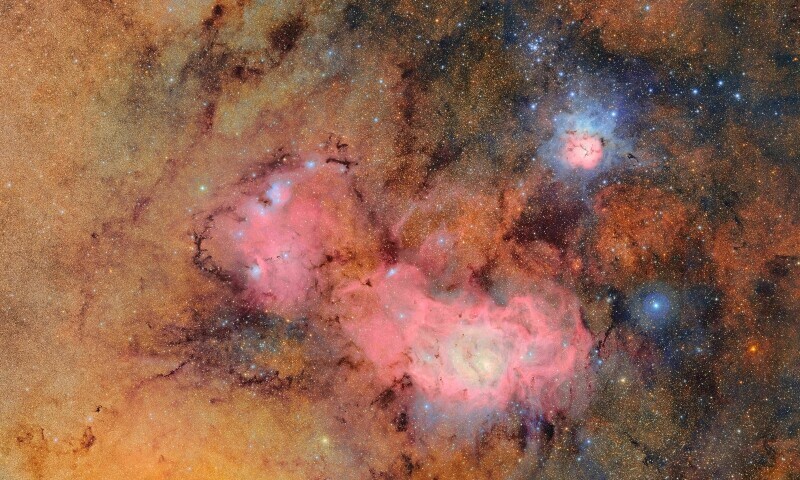

WASHINGTON: Breathtaking, swirling, multicolored galaxies and star-forming regions were revealed on Monday in the first images of deep space captured by the Vera Rubin Observatory in Chile.
More than two decades in the making, the giant US-funded telescope sits perched at the summit of Cerro Pachon in central Chile, where dark skies and dry air provide ideal conditions for observing the cosmos.
One of the debut images is a composite of 678 exposures taken over seven hours, capturing the Trifid Nebula and the Lagoon Nebula — both several thousand light-years from Earth — glowing in vivid pinks against orange-red backdrops.
The image reveals these stellar nurseries within our Milky Way in unprecedented detail, with previously faint or invisible features now clearly visible. Another image offers a sweeping view of the Virgo Cluster of galaxies.
The team also released a video dubbed the “cosmic treasure chest,” which begins with a close-up of two galaxies before zooming out to reveal approximately 10 million more.
“The Rubin Observatory is an investment in our future, which will lay down a cornerstone of knowledge today on which our children will proudly build tomorrow,” said Michael Kratsios, director of the White House Office of Science and Technology Policy. It features an advanced 8.4-metre telescope and the largest digital camera ever built, supported by a powerful data-processing system.
Roughly the size of a car and weighing 2.8 tons, the camera captures 3,200-megapixel images — more than three times the resolution of the next most powerful instrument, Japan’s Hyper Suprime-Cam, which records at 870 megapixels.
Published in Dawn, June 24th, 2025