ISLAMABAD: The Large-Scale Manufacturing (LSM) sector recorded a modest growth of 2.29 per cent in April compared to the same month last year, according to data released by the Pakistan Bureau of Statistics on Tuesday.
This marks the second consecutive month of positive growth, primarily due to a significant reduction in the key interest rate to 11pc since the start of the current fiscal year.
The LSM sector showed positive growth from December 2023 to May 2024, before turning negative in June 2024. On a year-on-year basis, LSM declined by 2.65pc in August and 1.92pc in September. A marginal growth of 0.02pc was recorded in October, followed by contractions of 3.81pc in November, 3.73pc in December, 1.21pc in January, and 3.51pc in February.
In March, the sector modestly returned to positive growth with a 1.79pc increase in production. However, on a month-on-month basis, LSM posted a negative growth of 3.20pc in April.
During the first 10 months of the current fiscal year, the LSM sector contracted by 1.52pc compared to the same period a year ago. In FY24, it shrank by 0.03pc against a growth of 0.92pc in the preceding year.
The food group declined by 2.75pc in 10MFY25 on a year-on-year basis. Wheat and rice milling rose by 5.90pc, and starch and its products increased by 0.80pc, primarily due to improved crop harvests. Vegetable ghee production declined by 1.16pc, tea blending dropped by 2.37pc, while cooking oil recorded a slight increase of 0.06pc.
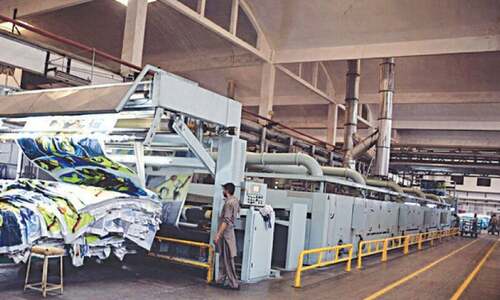
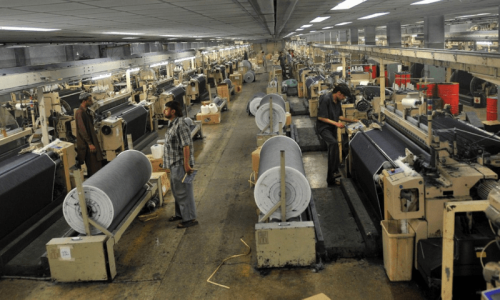
The textile sector grew by 2.99pc in 10MFY25 on a year-on-year basis. Cotton yarn production increased by 8.40pc, and cotton cloth by 0.75pc, with both accounting for over 80pc of the sector. This growth was mainly due to a modest rise in export unit value and increased external demand for textiles. Garment exports grew by 6.01pc, as several foreign buyers shifted their sourcing from Bangladesh to Pakistan.
Coke and petroleum products posted a growth of 5.01pc in 10MFY25. Petrol production rose by 1.91pc, high-speed diesel by 9.83pc, and kerosene by 23.87pc. On the other hand, LPG production declined by 0.73pc and jet fuel oil by 9.07pc.
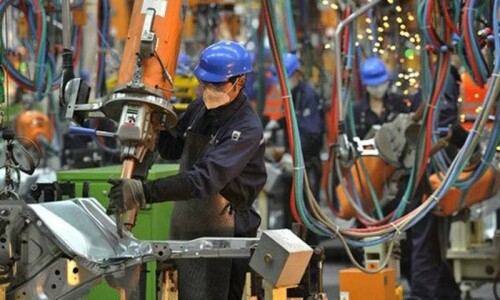
The automobile sector showed a strong growth of 42.16pc in 10MFY25 on a year-on-year basis. This was driven by a 37.48pc rise in production of jeeps and cars, 202.20pc in light commercial vehicles, 99.20pc in trucks, and 68.30pc in buses. However, diesel engine production declined by 7.56pc during the period under review.
The pharmaceutical sector recorded a growth of 2.81pc, while fertiliser production fell by 0.73pc. Iron and steel production declined by 10.11pc, with billets and ingots — mainly used in the construction industry — dropping by 24.90pc, and H/CR sheets, strips, coils, and plates decreasing by 2.20pc. The production of rubber products declined by 2.40pc, non-metallic minerals by 9.49pc, and electrical equipment by 14.27pc.
Published in Dawn, June 18th, 2025