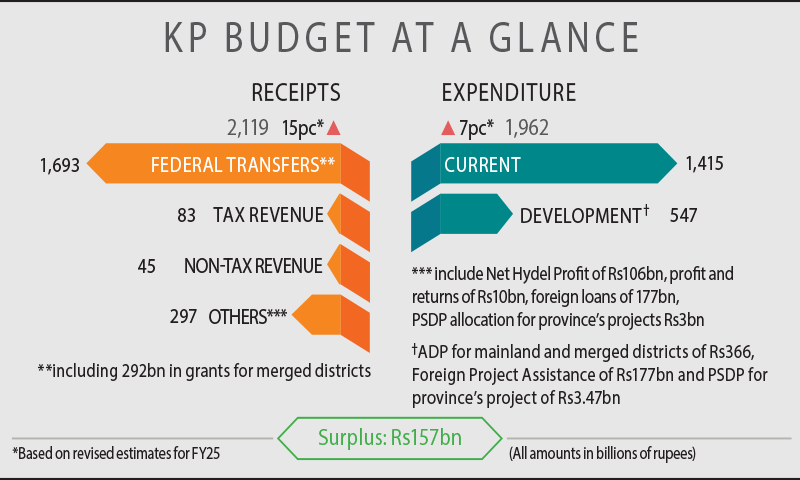

PESHAWAR: The Khyber Pakhtunkhwa government on Friday presented a Rs2.119 trillion budget for the upcoming fiscal year, featuring a record Rs547 billion development outlay, a projected cash surplus of Rs157bn and a hike in the minimum wage to Rs40,000.
The budget also includes a 10 per cent increase in salaries of government employees and a 7pc rise in pensions.
The budget session, however, was marred by an unusual stand-off between the provincial government and Governor Faisal Karim Kundi, who did not return a summary to call the budget session, forcing the government to convene the session through a requisition instead — perhaps for the first time in the province’s parliamentary history.
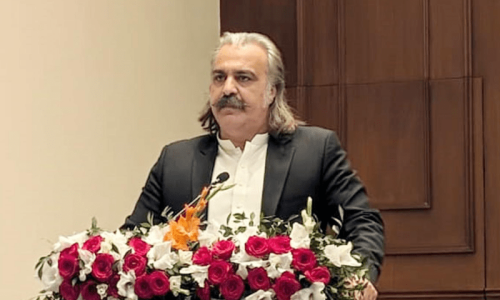
KP’s newly appointed finance minister, Aftab Alam Afridi, presented the tax-free budget, which projects federal receipts as the main revenue source, totalling Rs1.506tr. This includes Rs1.147tr from the federal divisible pool, Rs137.9bn under the one per cent share for the war on terror, Rs57.11bn in straight transfers, Rs58.15bn in windfall levy on oil, Rs34.5bn in net hydel profit (NHP) and Rs71.4bn in NHP arrears.
The province’s own tax and non-tax revenues are projected at Rs129bn, comprising Rs83.5bn in tax revenue and Rs45.5bn in non-tax revenue. Other receipts are estimated at Rs10.25bn.
Revenue estimates for the merged tribal areas have been set at Rs292.3bn, including Rs80bn as a current budgetary grant, Rs63bn in additional demand, Rs39bn under the Annual Development Programme (ADP), Rs50bn through the Accelerated Implementation Programme (AIP), and Rs17bn for the rehabilitation of temporarily displaced persons.
KP has also projected Rs42.7bn under its 3pc share from other provinces for merged areas — a head under which it hasn’t received a single penny so far since the Fata merger.
Foreign project loans are expected to amount to Rs171.83bn, alongside Rs5.3bn in foreign grants. Additionally, Rs3.2bn is expected under the federal Public Sector Development Programme (PSDP).
Expenditure estimates
Total expenditure for the year is projected at Rs1.96tr, including Rs1.41tr in current expenditure and Rs547bn for development.
The current expenditure for settled districts has been set at Rs1.25tr, including Rs288.3bn for provincial salaries, Rs288.6bn for district salaries, Rs190.2bn for pensions, Rs334bn for non-salary items and Rs65.6bn for medical teaching institutions.
For the merged districts, Rs160bn has been allocated for current expenditure.
Development outlay
The Rs547bn development outlay marks the highest in the province’s history. It includes Rs195bn for provincial ADP, Rs39bn for district ADP, Rs39bn for merged areas, Rs92.7bn under AIP, Rs177.1bn for donor-funded projects, and Rs3.47bn under federal PSDP.
Presenting the budget, Mr Afridi announced a reduction in stamp duty from 2pc to 1pc on the allotment and transfer of residential and commercial properties.
Residential and commercial properties up to 4.9 marlas will now be exempt from property tax. The hotel bed tax has been cut from 10pc to 7pc, while registration and token taxes for environment-friendly vehicles will also be waived.
He stressed that no new taxes would be imposed on the merged districts or the former Provincially Administered Tribal Areas (Pata).
Health, education
He said the health budget has been increased by 19pc to Rs276bn from Rs232bn. The health card allocation will also be increased from Rs28bn to Rs35bn — a 25pc hike.
The budget for elementary and secondary education has risen by 11pc to Rs363bn from Rs327bn. An additional Rs5bn has been allocated under the education emergency initiative to enrol out-of-school children.
The budget for higher education has seen a 39pc boost, increasing from Rs36bn to Rs50bn. The universities’ budget has been raised from Rs3bn to Rs10bn.
The KP government has also announced a 10pc pay increase for current employees and a 7pc raise in pensions for retired staff.
The minimum wage has been raised from Rs36,000 to Rs40,000 per month. This stands in contrast to the federal government’s budget, which did not announce any increase in the minimum wage.
Asked earlier why no hike was proposed, Federal Finance Minister Muhammad Aurangzeb said the industry in particular and the private sector in general were not willing to pay even the previous minimum wage announced by the government.
Published in Dawn, June 14th, 2025