0
0

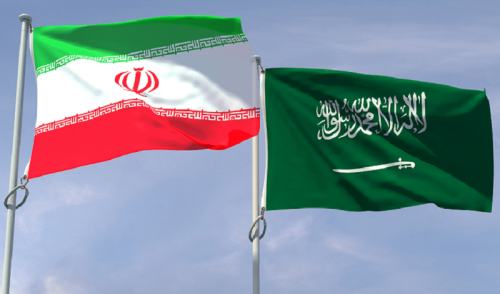
DUBAI: Saudi Arabia’s defence minister delivered a blunt message to Iranian officials in Tehran last month: take President Donald Trump’s offer to negotiate a nuclear agreement seriously because it presents a way to avoid the risk of war with Israel.
Alarmed at the prospect of further instability in the region, Saudi Arabia’s 89-year-old King Salman bin Abdulaziz dispatched his son, Prince Khalid bin Salman, with the warning destined for Iran’s Supreme Leader Ayatollah Ali Khamenei, according to two Gulf sources close to government circles and two Iranian officials.
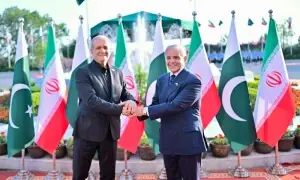
Present at the closed-door meeting in Tehran, which took place on April 17 in the presidential compound, were Iranian President Masoud Pezeshkian, armed forces Chief of Staff Mohammad Bagheri and Foreign Minister Abbas Araqchi, the sources said.
While the media covered the 37-year-old prince’s visit, the content of King Salman’s covert message has not been previously reported. Prince Khalid, who was Saudi ambassador to Washington during Trump’s first term, warned Iranian officials that the US leader has little patience for drawn-out negotiations, according to the four sources.
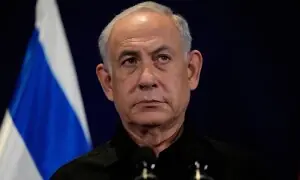
Trump had unexpectedly announced just over a week earlier that direct talks were taking place with Tehran, aimed at curbing Iran’s nuclear programme in return for sanctions relief. He did so in the presence of Israeli Prime Minister Benjamin Netanyahu, who had travelled to Washington hoping instead to win support for attacks on Iranian nuclear sites.
In Tehran, Prince Khalid told the group of senior Iranian officials that Trump’s team would want to reach a deal quickly, and the window for diplomacy would close fast, according to the four sources. The Saudi minister said it would be better to reach a deal with the US than face the possibility of an Israeli attack if the talks broke down, according to the two Gulf sources.
He argued that the region — already riven by recent conflicts in Gaza and Lebanon — could not withstand a further escalation in tensions, said the two Gulf sources and one senior foreign diplomat familiar with the discussions.
Iranian authorities did not respond to a request for comment before this story was published, but after its publication Foreign Ministry spokesperson Esmaeil Baghaei “categorically denied” agency’s report, according to Iran’s semi-official Fars news agency.
Authorities in Saudi Arabia did not respond to a request for comment. The visit by Prince Khalid — the younger brother of Crown Prince Mohammed Bin Salman — was the first by a senior member of the Saudi royal family to Iran in more than two decades.
Mohanad Hage Ali, an expert on Iran at the Carnegie Middle East Centre think tank in Beirut, said that Tehran’s weakness had offered Saudi Arabia the opportunity to exert its diplomatic influence, seeking to avoid a regional conflagration.
“They (the Saudis) want to avoid war because war and confrontation with Iran will have negative implications on them and their economic vision and ambitions,” he said.
Iran wants a deal
This agency was unable to determine the impact of the prince’s message on Iran’s leadership. In the meeting, Pezeshkian responded that Iran wanted a deal to ease economic pressure through the lifting of Western sanctions, the four sources said.
However, the Iranian officials, the sources added, expressed concerns over the Trump administration’s “unpredictable” approach to negotiations which have veered from allowing limited uranium enrichment to demanding the complete dismantling of Tehran’s enrichment programme.
Trump also has threatened to use military force if diplomacy fails to rein in the clerical establishment’s nuclear ambitions. One of the Iranian sources said that Pezeshkian emphasised Tehran’s eagerness to reach a deal but that Iran was not willing to sacrifice its enrichment programme just because Trump wanted an agreement.
The ongoing talks between Washington and Tehran have already been through five rounds to resolve the decades-long nuclear dispute, but multiple stumbling blocks remain, including the key issue of enrichment. Agency reported on Wednesday that Iran might pause uranium enrichment if the US releases its frozen funds and recognises its right to refine uranium for civilian use under a “political deal” that could lead to a broader nuclear accord, according to two Iranian sources familiar with the talks.
“President Trump has made it clear: make a deal, or face grave consequences, and the whole world is clearly taking him seriously, as they should,” White House press secretary Karoline Leavitt said in a statement. Trump said on Wednesday he warned Netanyahu last week not to take any actions that could disrupt nuclear talks with Iran, and said the two sides were “very close to a solution now”.
Published in Dawn, May 31st, 2025