Pre-budget seminar in Karachi discusses economic pressures on women’s lives
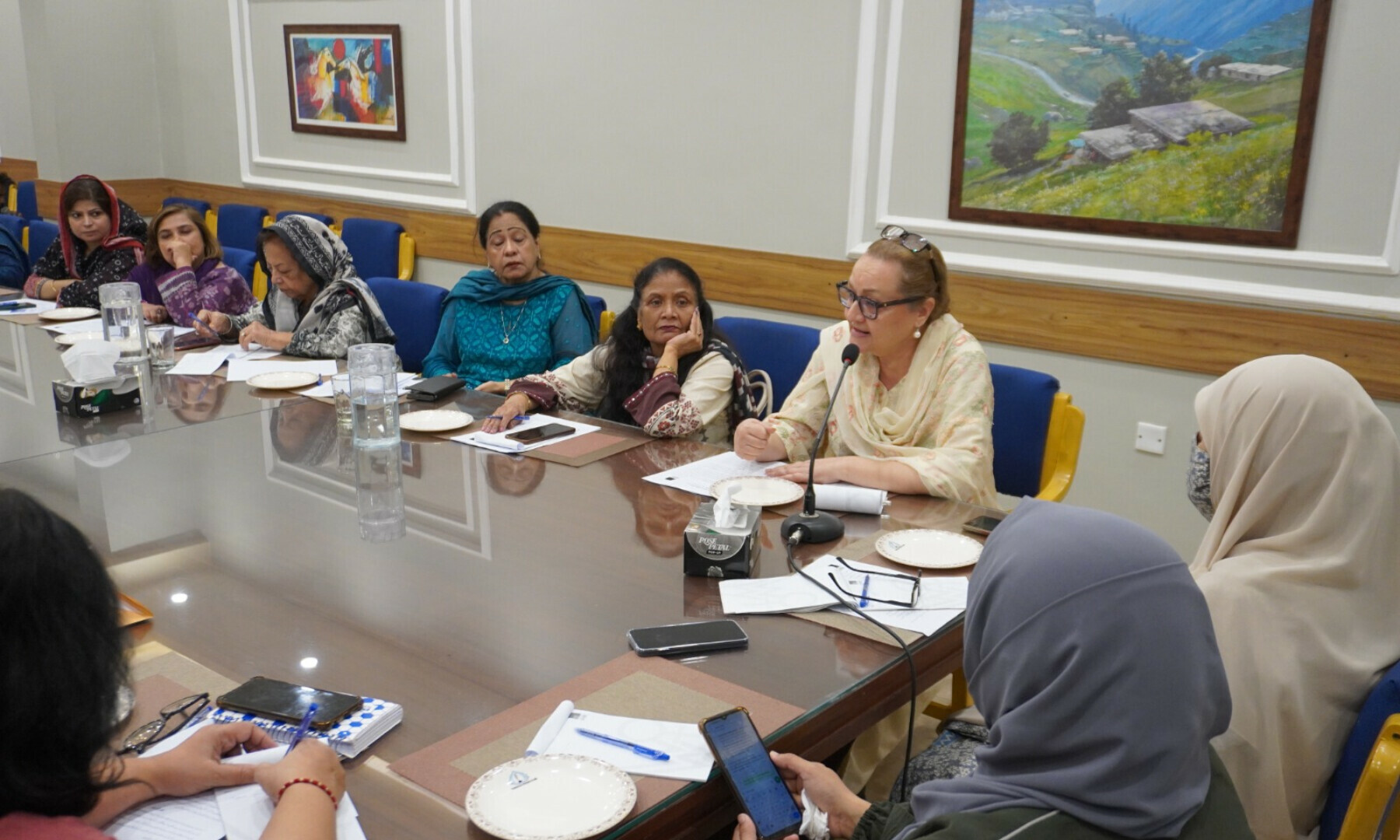

KARACHI: A pre-budget discussion on the topic of “Invisible Burdens: How Economic Pressure Shapes the Everyday Lives of Women” was organised by the Working Women Welfare Trust (WWWT) at the Karachi Press Club on Wednesday.
Humaira Qureshi of the WWWT opened the discussion by praising Pakistan’s armed forces for bringing victory to the country during the recent conflict with India.
“When we speak of war, we think of ways to overcome the enemy. Like our external enemies, we also have internal enemies, such as our dwindling economy,” she said.
“We are drowning in debt, but we are unwilling to do much about it. We are unwilling to go interest-free, which holds us back. There used to be a time when only one family member earned a living. Now, there is a need for every family member to earn in order to make ends meet. We are burdened by rising expenses, putting the woman of the house under immense mental stress,” she pointed out.
“Under these circumstances, we need an outstanding plan to move ahead without loans from the International Monetary Fund,” she concluded.
Academic and economic researcher Quratulain Nazeer Ahmed said that the country, especially its women, is facing the challenges of an interest-based economic system.
“The world is seeing the negative impact of interest-based systems, which place an extra burden on people. There is growing appreciation for riba-free finance all over the world. But here, we are still stuck paying heavy interest on our loans, which is a form of exploitation,” she said.
“Things are costlier — medicines are costlier, utility bills are higher, as are the various taxes. And in all this, it is the woman who faces invisible burdens and pressures the most. Along with running a household, taking care of the children, and holding a job, she faces personal problems, security issues, transport challenges, and a shortage of time. She is not just a working woman; she is a double-working woman, who also feels an added invisible guilt for not being able to give 100 per cent to either her job or her home,” she added.
Senior journalist Rafia Haider said there was a need to rightly identify the economic issues faced by women and make policies accordingly. “We are living in a world of consumer-based capitalist markets, where we need to remain cautious,” she said.
Michiko Adil of the Pakistan Women’s Foundation for Peace (PWFFP) suggested that mothers teach their children to be content. “They should know better than to copy others and get into competitions. The same goes for this country, which should focus on developing and improving what it already has instead of buying new things,” she said.
Human rights activist Darakhshan Sualeh said that inflation is increasing with each passing day. “With the rise in petroleum prices, everything becomes more expensive. And sadly, we see the salaries of ministers increasing on our tax money, while nothing is being done to control inflation or to provide women with wages equal to those of men.”
Syeda Naseem Bukhari, a former special secretary in the government of Sindh, said that the projects introduced for women should be need-based. “And the women-related projects need to have a proper budget,” she said, adding that, “We are where we are because we don’t know how to take a stand.”
Ayesha Islam, president of PWFFP, said there is a need to set aside funds for money-saving schemes for women.
Zehra Aamir of the WWWT lamented that people chase brands, which leads them to spend extra money unnecessarily.
Senior journalist Bilquis Jahan said women should focus on reducing their expenditures and sticking to a budget.
“Mothers should teach their children to live within their limitations. If the mothers themselves follow this rule, the children will automatically follow them,” she said. She also suggested holding a demonstration against the interest-based economic system outside the Sindh Assembly.
To this, Ms Qureshi also suggested spreading the message of adopting an interest-free or riba-free system through social media.
Entrepreneur Durre Shahwar and senior journalist Humera Athar also spoke.
Published in Dawn, May 22nd, 2025