KARACHI: The Sindh government, in collaboration with Unicef, has decided to develop a five-year multi-sectoral roadmap aimed at addressing the education needs of out-of-school children and adolescents.
Under this initiative, a strategy will be formulated to identify and eliminate barriers hindering access to education.
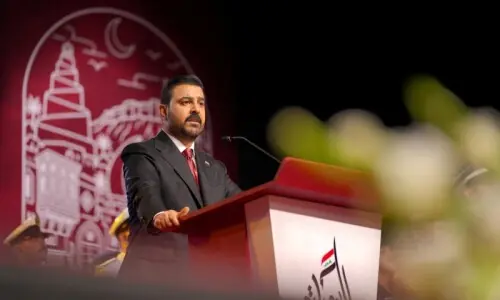
A key meeting regarding the development of this roadmap was held in Karachi which was chaired by Sindh Education Minister Syed Sardar Ali Shah, and attended by Unicef representatives.
“The roadmap is expected to help bring a greater number of children into the school system in the coming years,” an official statement said.
On this occasion, the provincial education minister acknowledged that children faced several challenges in accessing and continuing education. He stated that all such barriers would be removed to pave way for children to attend school, based on their convenience.
Highlighting a crucial point, Sardar Shah emphasised the importance of birth registration along with awareness of a child’s other essential needs.
The meeting participants were informed that the roadmap would cover sectors such as birth registration, health, public health, social protection, climate change, and more.
It was stated that children currently facing various social and behavioural challenges in relation to education — including economic hardship, conflict-related issues, environmental changes affecting school conditions, administrative and political problems, generation gaps between children and elders, and related interpersonal dynamics.
These challenges are expected to worsen in the coming years, necessitating a comprehensive multi-sectoral response.
The meeting participants were informed about alarming statistics: 46 per cent of children in Sindh face obstacles in continuing their education; some 25pc of girls are married before the age of 18; some 38pc of children aged 10-19 are engaged in labour due to financial pressure; 50pc of children suffer from malnutrition; 66pc of newborn babies are not registered at birth; 47.5pc of children live in poverty, with 71pc of them residing in rural areas; 45pc of children lack access to basic infrastructure like toilets, clean drinking water, and safety; and 79pc of children do not have access to vocational training.
The minister stressed the need to developing a strategy that takes all these factors into account in order to create a conducive environment for future generations to pursue education.
The meeting participants also reached an agreement on creating a comprehensive database to support early childhood, primary, and elementary education.
Published in Dawn, May 10th, 2025