KARACHI: The judiciary in the country needs to uphold justice and deliver it quick as justice delayed is justice denied, and it is more important in the context of Pakistan where there are many issues existing within the justice system.
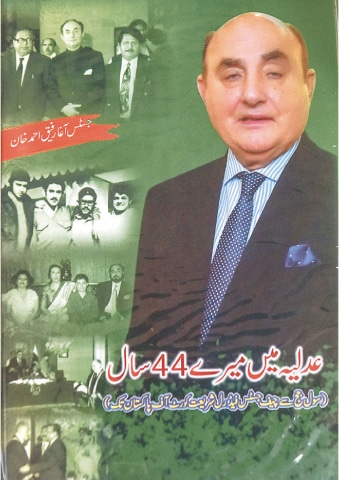
This was the key takeaway from the event held to launch the autobiography of retired Justice Agha Rafiq Ahmed Khan, former chief justice of the Federal Shariat Court (FSC), at the Institute of Business Administration (IBA), here on Saturday.
Titled Adliyah Mein Mere 44 Saal (My 44 Years in Judiciary), the book details important events in the judicial history of the country, the issues within it as well as Justice Khan’s personal life.
The event was attended by judges, lawyers, bureaucrats and journalists who spoke about the significance of the book and their relationship with Justice Khan.
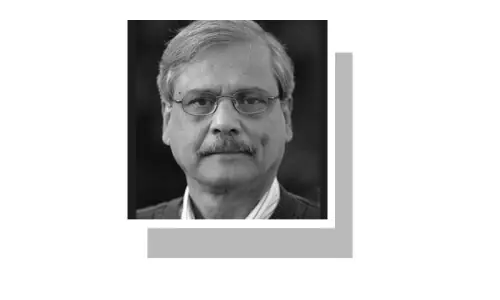
Noted lawyer Muneer Malik says Justice Agha Rafiq’s book is a first-hand account of appointments within judiciary
Speaking on the occasion, incumbent FSC Chief Justice Iqbal Hameed ur Rehman spoke about his relation with Justice Khan. The chief justice praised the book and said it was a guidance for him and other judges.
Advocate Supreme Court Syed Ghulam Shah said Justice Khan always upheld independence of thought. He even paid for it many times but stood firm on his words and principles and that could be seen in the book, he said.
The book, he added, identifies the “nepotism and favouritism” within the judicial system as well as other serious issues inside it.
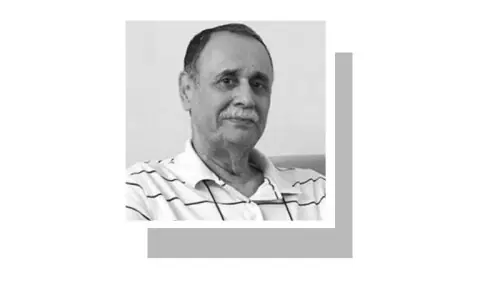
Lawyer Muneer Ahmed Malik said the book is the first-hand account of “the appointments within judiciary” and that it should be treated as a historic document. He said Justice Khan always took the legal path towards every issue despite the fact that he had often been victimised. He said he found the element of compassion and mercy in the judgments of Justice Khan, not just the strict word of the law.
Veteran journalist Mahmood Shaam said the book exposes the difficulties and challenges that a judge has to face from being a civil judge to becoming a chief justice. He added that the autobiography is a valuable addition to the judicial history of Pakistan as well as Urdu literature.
Speaking about his autobiography, Justice Agha Rafiq said the book provides details from his childhood memories up to his retirement from the judiciary.
About the judicial system in Pakistan, he said the district judiciary had the immediate responsibility to serve justice, adding that he advised the judges to uphold justice and serve it timely. “I particular request the district judiciary, do not delay your decisions. Expeditious dispensation of justice is your responsibility,” he said.
Former prime minister Mohammadmian Soomro, former governor and retired general Moinuddin Haider, businessman Jahangir Siddiqui, former chief minister Ghous Ali Shah and former ambassador Abdullah Hussain Haroon also spoke on the occasion.
Published in Dawn, April 21st, 2025