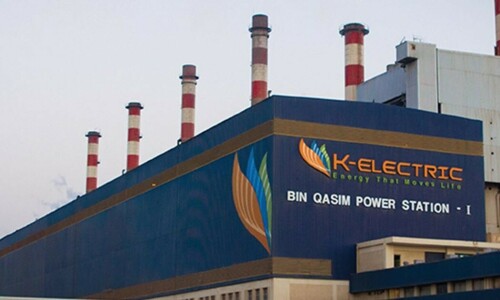
ISLAMABAD: Industrial and political representatives from Karachi have called for forensic audit of almost Rs76 billion write-off claims made by K-Electric unrecoverable from consumers since 2017 and announced that its recovery through tariff from consumers would be resisted through all constitutional means.
At a public hearing organised by the National Electric Power Regulatory Authority (Nepra) on Thursday, a case officer reported that KE had submitted Rs68bn writeoff claims in December on account of recovery loss under multi-year tariff (MYT) period of 2017-23, but later increased it to Rs122.8bn on Jan 16.
Another Rs8.13bn was claimed on March 18, and some of these claims were part of the original Rs68bn approved by the KE’s board of directors and its auditors A. F. Ferguson.
The total write-off claim of Rs76.032bn was, thus, debated at length during the hearing where KE had got support from a few commentators from Islamabad and Lahore, who attracted criticism from Karachi-based consumers.
A consumer from Machar Colony also supported KE’s claims, saying the utility had helped them install solar systems at their places.
The KE team, comprising its chief executive Moonis Alvi and Chief Financial Officer (CFO) Amir Ghaziani, explained that writeoff claims were on the basis of Rs1.7 trillion revenues bill by the utility during 2017-23 MYT, of which Rs1.6tr was actually recovered, leaving an unrecovered amount of Rs122.8bn in line with standards set by the Nepra.
Responding to Nepra’s questions, the KE officials said they could not commit that the Rs76bn writeoff claims were final for the MYT period, saying this would depend on Nepra’s decision on a pending petition on recovery loss mechanism as the total claim was of Rs122.8bn.
The regulator raised questions over the reliability of auditor’s verification of unrecoverable bills from consumers. A representative of A. F. Ferguson said the audit firm was bound by its strong code of ethics and had adopted due course in verifying unrecoverable bills.
Former prime minister Shahid Khaqan Abbasi, a couple of journalists from Lahore and Islamabad, as well as a representative each from Sailani Welfare and the Institute of Policy Studies generally supported KE’s case, saying such large unrecoverable amounts could impact not only KE as a going concern but also affect consumer service. “Prudent costs should be cleared” and paid to KE in a timely manner to ensure investor confidence for future privatisation of public sector distribution companies, they argued.
Fraudulent billing alleged
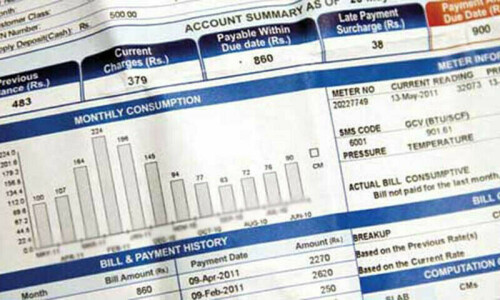
Jamaat-i-Islami’s Imran Shahid alleged that these claims have been built over “fake, bogus and fraudulent billing”. He produced a couple of fresh bills each running into millions of rupees despite their sanctioned load of 1-2kw.
He said a Rs30 million bill against 1kw connection was beyond imagination and the consumer had last paid the bill in 2008.
Another bill for Rs20 million and pertaining to a two kilowatt connection, had a last payment in 2005, which meant 24,000 to 28,000 units of monthly consumption.
Amir Ghaziani, the KE’s CFO, said the bills presented by the JI worker pertained to “detection billing” while detailed response about 19 previous bills had also been submitted to Nepra.
Mr Shahid, however, said that KE’s writeoff claims should be rejected and subjected to forensic audit.
Tanveer Barry of Karachi Chamber of Commerce & Industry said the KCCI “rejects the writeoff claims as KE has received Rs800bn tariff differential subsidy (TDS) since privatisation because it produced expensive electricity”.
Yet, he added, KE was unable to do away with loadshedding and also failed to recover billing amount from consumers. “Why should honest consumers pay more amounts on account of writeoff claims of K-Electric after timely payments of their bills,” he questioned.
If approved by Nepra, this would mean higher electricity bills for businesses and increasing their operational expenses. Mr Barry said the KE was claiming recovery of defaulted amounts from paying consumers and that too after seven years, but section 64A of the Limitation Act prohibited recoveries of any sort, including bad debts, beyond three years.
Published in Dawn, April 18th, 2025