Trump’s trade policies termed sign of deeper capitalist failures
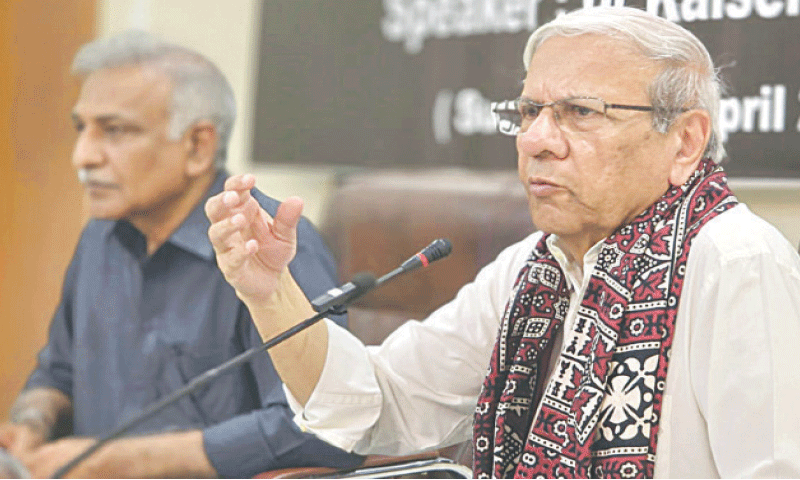
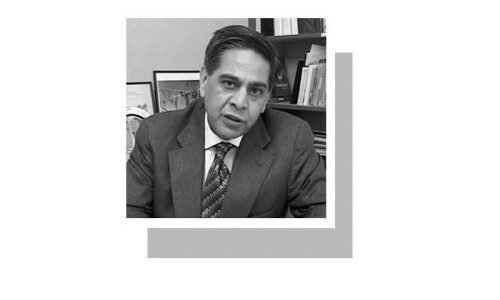
KARACHI: Renowned economist Dr Kaiser Bengali on Sunday delivered a sharp critique of American President Donald Trump’s trade policies, characterising them as indicative of deeper issues within global capitalism.
During a seminar titled Tariff Turmoil Unleashed: Cracks in Capitalism Deepen Under Trumps Trade War at the Karachi Press Club, Dr Bengali argued that Trump’s 90-day tariff reprieve reflects a retreat prompted by collapsing markets and backlash from investors.
The seminar, moderated by National Trade Union Federation General Secretary Nasir Mansoor, was organised in collaboration with the Home-Based Women Workers Federation and Alternate.
It focussed on the impact of global trade tensions on Pakistan’s economy and emphasised vulnerabilities in worldwide economic systems due to recent trade disputes.
Kaiser Bengali calls for significant cuts in defence spending
Dr Bengali described Trump’s tariff reversal as a major setback, noting that the United States stock market had collapsed and even Trump’s supporter, Bill Ackman, had shifted to advocating for the withdrawal of tariffs.
Bengali also expressed doubts about the Green Pakistan Initiative, suggesting it might fail like the China-Pakistan Economic Corridor, and recommended focusing on long-term infrastructure development.
He identified neoliberalism as the root of global economic problems and drew parallels with Brexit, a reaction to such policies.
He highlighted Pakistan’s declining industry, criticising policies that favour imports over domestic production.
The economist pointed out Pakistan’s narrow export base, comparing it to Canada’s reliance on a single market, emphasising the risks of such a strategy.
Reflecting on the past, Dr Bengali defended the nationalisation policies of the 1970s, arguing they strengthened the economy by curbing capital flight and boosting revenue, despite deterioration due to corruption in subsequent years.
He called for significant reductions in defence spending and criticised privatisation efforts, noting the failure of most industries privatised in 1992.
Nasir Mansoor addressed the challenges of organising resistance in Pakistan, citing the military and bureaucracy’s involvement in economic and political matters.
The seminar concluded with Bengali stressing the importance of resistance in global economic dynamics, stating that countries showing strength have influence, while others suffer.
Published in Dawn, April 14th, 2025