0
0

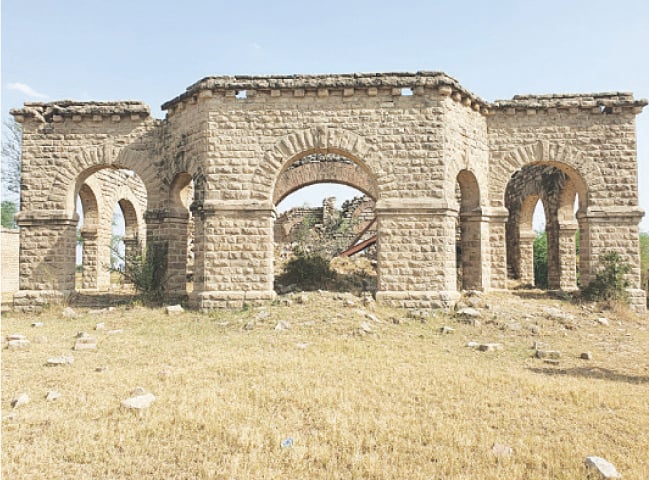
The remains of dak bungalows alongside the highways and prominent towns remind us of the glory of the pre-partition era in the subcontinent. These bungalows were, in fact, the annexes and official residences in the remote areas where the government authorities and colonial rulers used to stay while performing their official duties. These were the well-maintained big houses with staff and stables for the horses, which were used for entourage and even hunting in the area.
The word ‘dak’ is used for postal letters. During the era of Sher Shah Suri and the Mughal Rule in the subcontinent, a system of postal service for official correspondence between Kabul, Lahore, Delhi, and other important headquarters of the empire was introduced and maintained.
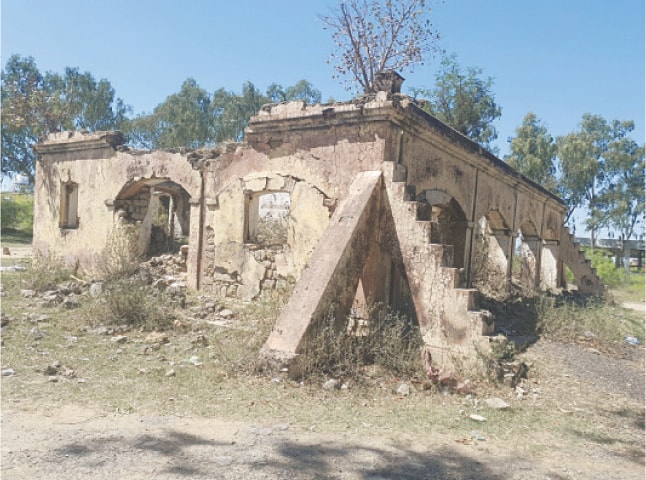
According to the historical record, Sher Shah Suri in order to establish an efficient postal system between India and Kabul had established well-guarded posts along the GT Road. These posts had ever-ready horses to relay postal bags to the onward posts.
Banyan trees, stables, and lodgings for soldiers were made available there and these posts used to serve as representative camps of the government of the day as well.
The British rulers converted these posts into police stations, and some new official residences and camp offices for the government authorities and high-ranking officers were also constructed.
These bungalows (rest houses) were common with the irrigation, highways, railways, and revenue departments. The remains of these bungalows can be seen near Rawat, Chehari Bungalow (near Mandra), Missa Kaswal (alongside GT Road), Lateefwaal (near Dhudial), and Tibbi Syedan at the Sohawa-Mandra highway.
During the peak days of glory, these camp offices were the symbols of state administration. These were palatial houses with sprawling lawns, boundary walls, servant quarters, and stables for the horses. Besides local state officials, these also served as the rest houses for the travelling officers of the British administration. The officers, like deputy commissioners and their juniors, used to hold meetings with the area notables for effective control and administration.
The Tibbi Syedan dak bungalow is also one such spot on the Sohawa-Chakwal highway in Sohawa and it still reminds us of the perfection and beauty of colonial architecture.
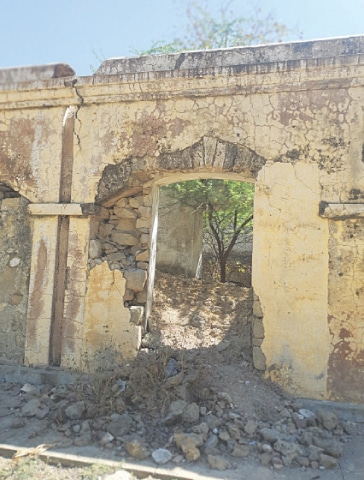
According to the residents of this village, it had a large stable for horses and a row of servant quarters, as the high officers of administration used to stay here. As this bungalow is located in the hilly terrain of Tarraki, the officers also used it as their camp during hunting trips in the region. It is constructed with block-shaped sandstones.
Syed Babar Shah, a resident of the village, said that this site can be repaired and can be used as a community hall for local functions or it can be converted into an educational institution, as the stone walls are still in their original form and its roofs can be refurbished with a little effort.
Similarly, Missa Kaswal bungalow is also in ruins. The building was in good shape a decade ago, but uncontrolled growth of trees on the roofs and walls has caused its destruction.
The servant quarters and the stables are all fading into oblivion while the roofless walls stand still to remind the visitors that grandeur and grace, so rare, were flaunted by this big house.
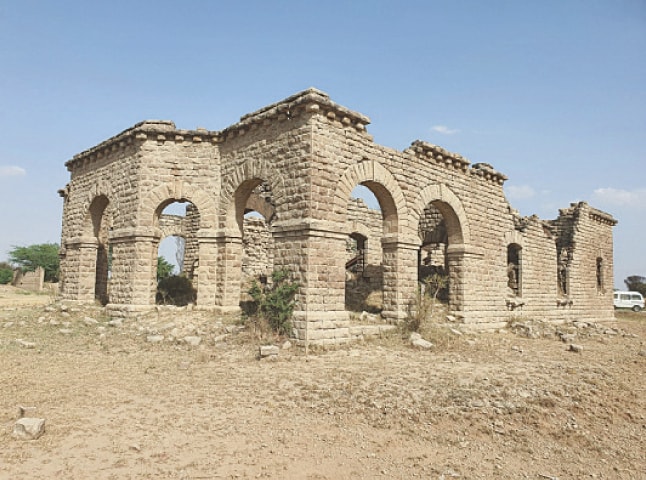
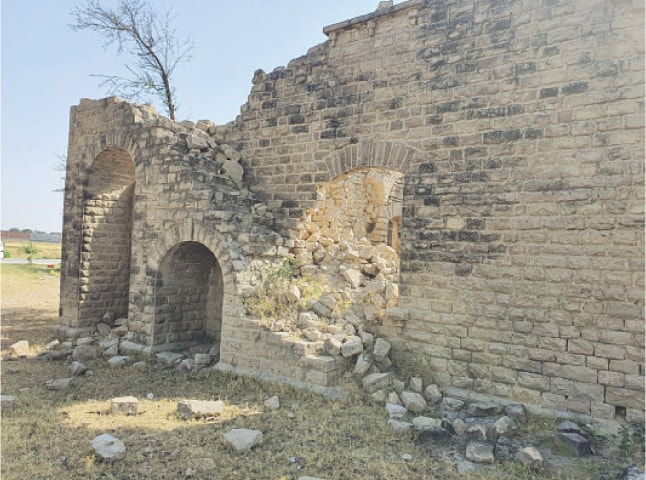
Almost all the walls of this big house were constructed with fossil stones cemented with a mixture of lime and clay. A similar bungalow at village Chihaari Bungalow and Rawat also existed, but the departments concerned supposed to look after these sites have failed to maintain these.
The assistant commissioner, Gujar Khan, when contacted for his comment on Missa Kaswal Dak Bungalow, said that the officials of the Auqaaf and Archeology department would be directed to take measures for preserving these buildings.
Similarly, Muhammad Irfan, the officer of the archeology department in Jhelum district, when requested to give his comments on Tibbi Syedan Dak Bungalow, said that this was worth preserving. The officer said that the revenue department would be approached for obtaining land records after visiting the site at the earliest.
The residents of the area have urged the provincial minister for archeology and heritage, Marriyum Aurangzeb, and the commissioner of the Rawalpindi division to take measures to preserve and protect these neglected sites.
Published in Dawn, April 7th, 2025