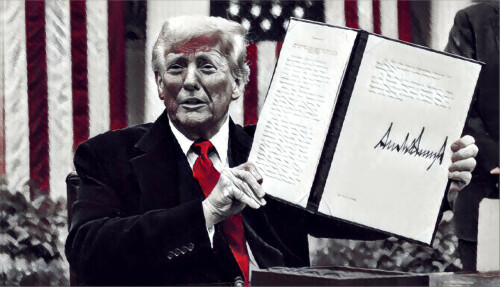
THE so-called reciprocal tariffs rolled out recently by American President Donald Trump have expanded his vicious trade war beyond China, Canada and Mexico onto a global scale.
The new levies, which Mr Trump said are a response to the barriers placed on US exports and aim to boost manufacturing jobs at home by making imports expensive, signal the end of an era of global trade liberalisation that has shaped the world economy in the post-World War II years. That financial markets everywhere tumbled as he brandished a list of allies and adversaries slapped with steep tariffs of up to 50pc for running trade surpluses with the US underpins concerns of an imminent escalation in the current trade war towards a potential global recession.
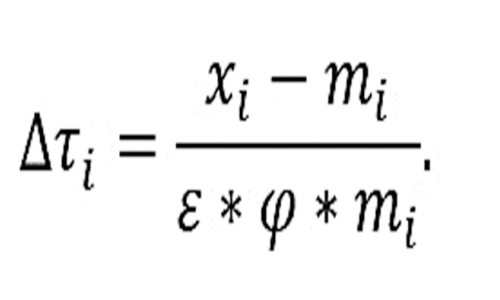
Not only are the tariffs not reciprocal, they are also based on the premise that a trade deficit is a sign that a given country is somehow treating the US unfairly. This reasoning disregards the fact that a ‘one-size-fits-all’ approach cannot be applied to countries with different resources and vastly different levels of wealth. The shoddy math applied to indiscriminately penalise its trading partners means that even the poorest nations have been slapped with steep tariffs just because the US buys more from them than they can afford to buy from the US. Lesotho — a tiny African nation that sells diamonds and jeans to the US — is a case in point.
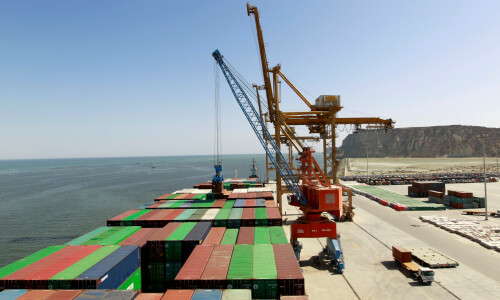
The dilemma of Pakistan running a trade surplus of more than $3bn with the US is not very different. The 29pc additional tariff dealt to Pakistan is very large, and can adversely impact its exports — three-fourths of which comprise textiles and clothing — to its single largest export destination. The situation may worsen if the US heads into a recession as is widely feared, and if competition in the European market also intensifies. Opinion is, however, divided on the size of its impact since the country’s competitors — Bangladesh, Vietnam, Cambodia, Indonesia, etc — have been burdened with larger import taxes.
The immediate question for countries such as ours is how to deal with the emerging situation. Unfortunately, the government has preferred to maintain radio silence on the issue as it appears totally clueless on how to proceed and engage the American authorities in order to get some concessions for our exporters.
Published in Dawn, April 5th, 2025