ISLAMABAD: Pakistan is working on special electricity tariffs to attract crypto mining and blockchain-based data centres, aiming to utilise surplus power at marginal costs while fostering growth in the digital asset industry.
Sources told Dawn that the power division had been consulting various stakeholders to develop an attractive electricity tariff for emerging industries and sectors without involving any subsidy that could help absorb surplus power and somehow reduce capacity payments.
Some estimates suggest that bitcoin miners at present spend up to 60-70 per cent of their total earnings on electricity costs. This places Pakistan in an attractive position with surplus electricity but will require more focus on its stable supply.
Globally, bitcoin mining is a highly energy-intensive process. Estimates suggest that it consumes over 130 terawatt-hours (TWh) of electricity annually — more than the entire power consumption of countries like Argentina or the Netherlands.
Power division consulting stakeholders to develop attractive power tariff for emerging industries
Due to this high demand, several countries have introduced specific electricity tariffs for crypto mining or have cracked down on it. For instance, once the hub for bitcoin mining, China banned the industry in 2021, citing environmental concerns and power shortages.
Iran offers subsidised electricity for mining but frequently shuts down operations during peak consumption periods. In October and November last year, Tehran and outlying provinces faced rolling power blackouts for weeks, with some suspecting cryptocurrency mining playing a role in the outages, according to the Associated Press.
Kazakhstan initially embraced crypto mining but later imposed higher electricity tariffs and taxes due to rising energy shortages.
El Salvador, the first country to adopt bitcoin as legal tender, provides low-cost geothermal energy from volcanoes for mining.
Pakistan Crypto Council
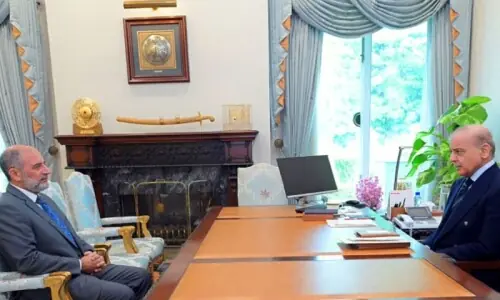
According to sources, Power Minister Awais Leghari and newly formed Pakistan Crypto Council’s (PCC) chief executive Bilal Bin Saqib had discussed at a recent meeting the potential opportunities as global crypto miners had expectations to benefit from Pakistan’s excess electricity.
This was followed by the council’s inaugural meeting on Friday, presided over by Finance Minister Muhammad Aurangzeb.
During the meeting, Mr Saqib “presented the concept of leveraging Pakistan’s surplus electricity for bitcoin mining, potentially turning the country’s liabilities into assets”, an official statement said.
The meeting was also attended by State Bank Governor Jameel Ahmad, Securities and Exchange Commission of Pakistan Chairman Akif Saeed, and federal secretaries for the IT and law ministries.
The meeting focused on Pakistan’s untapped potential in the crypto space, with Mr Saqib presenting a comprehensive vision and mission for the council.
His presentation highlighted the current state of Pakistan’s crypto landscape, shedding light on challenges and barriers to the widespread adoption of cryptocurrencies.
A major area of discussion was the need for regulatory clarity to unlock the full potential of the sector, an official statement said.
He also emphasised the importance of regulatory models and use cases, particularly in the region, that could be tailored to Pakistan’s unique context.
The finance minister underscored the critical role of the PCC in shaping Pakistan’s future in the digital asset space and hoped the council would serve as an umbrella platform, uniting all relevant stakeholders and regulatory bodies to work collaboratively towards a comprehensive, responsible and forward-looking crypto regulatory framework.
“This is the beginning of a new digital chapter for our economy. We are committed to building a transparent, future-ready financial ecosystem that attracts investment, empowers our youth, and puts Pakistan on the global map as a leader in emerging technologies,” the was quoted as saying.
The meeting agreed to learn from global best practices and ensure that its business and revenue models are firmly rooted in local realities.
In this regard, it was also decided to build on the existing work done by various entities and groups, leveraging their knowledge and experience.
The council agreed on the need for a well-defined regulatory framework, legislation and licensing regimes for consumer protection, blockchain mining and a national blockchain policy.
The importance of sequencing the rollout, running pilot programmes, and ensuring adherence to international obligations were also discussed, the statement said.
Published in Dawn, March 22nd, 2025