Germany wants nuclear weapons to boost deterrence


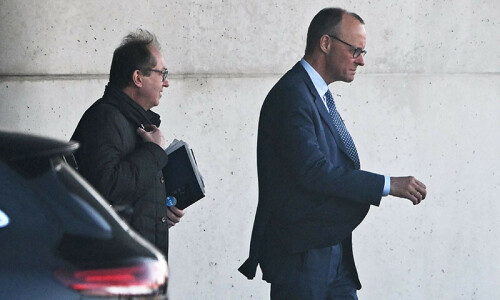
BERLIN: German Chancellor-in-waiting Friedrich Merz on Sunday said he would like talks with France and Britain about sharing their nuclear weapons, but not as a substitute for US nuclear protection of Europe.
“Sharing nuclear weapons is an issue that we need to talk about … we have to become stronger together in nuclear deterrence,” he said in an interview on Deutschlandfunk radio, a day after agreeing on the cornerstones of a coalition deal between his conservative party and the Social Democratic SPD party.
“We should talk with both countries (France and Britain), always also from the perspective of supplementing the American nuclear shield, which we of course want to see maintained.” Germany, due to its Second World War past, has bound itself to non-nuclear defence in a number of international treaties but participates in Nato weapons-sharing arrangements.
At a summit in Brussels on Thursday, EU leaders backed plans to spend more on defence amid fears that Russia, emboldened by its war in Ukraine, may attack an EU country next and that Europe can no longer rely on the US to come to its aid.
Merz’s tougher stance on security and migration reflects a changing political landscape, where the far-right Alternative for Germany (AfD) has surged to become the country’s second-largest party.
Germany’s plans to tighten migration laws did not clash with pan-European migration rules to be introduced by Brussels, Merz said.
“We want European solidarity…but Germany also naturally has a right to defend its own security and order,” he said.
Merz has said he wants to form a coalition by Easter and said he would press for the outgoing parliament to pass two major financial packages on infrastructure and defence and changes to state borrowing rules known as the ‘debt brake’.
Merz and the SPD crucially need support from the Green Party to pass the measures, and Merz on Saturday said there would be intensive talks with the Greens this week.
“We will integrate climate protection measures (in those packages),” Merz said in the radio interview.
In a position paper, Green Party ministers said they wanted to see a bigger proportion of funds in the financial packages going to states and municipalities, and money for defence ring-fenced, if they were to support the plans.
Published in Dawn, March 10th, 2025