Every sector has to ‘chip in’ for exports, says Aurangzeb


 0
0
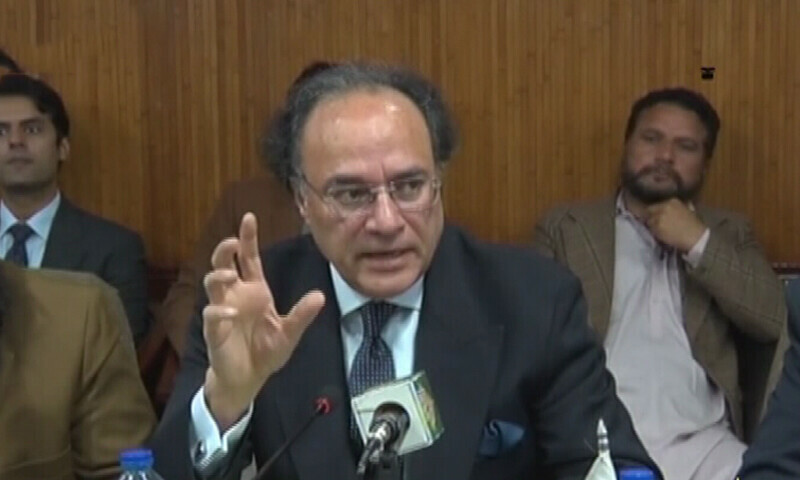

Finance Minister Muhammad Aurangzeb on Wednesday stressed that all sectors will have to “chip in” to increase the country’s exports.
Addressing the business community in Peshawar, the finance minister stressed the need to move away from the boom and bust cycle experienced in the past, adding that “it’s very easy to just pump in liquidity.
“However, when you reach four per cent growth — and because you are import-led and import-dependent — you run out of dollars and face the problem of balance of payment,” he said, highlighting that the country then reaches out to the International Monetary Fund (IMF) to stop it from defaulting on its payments.
In 2023, the country’s dwindling foreign reserves had raised alarm bells, as they reached $4.6 billion — barely enough to cover three weeks’ worth of imports — while the rupee underwent its biggest devaluation in history of 15pc.
Pakistan and the IMF had reached a three-year, $7bn aid package deal in July 2024, with the new programme set to allow the country to “cement macroeconomic stability and create conditions for stronger, more inclusive and resilient growth”.
The ongoing 37-month Extended Funded Facility programme consists of six reviews over the life of the bailout, and the release of the next tranche of approximately $1bn will be contingent on the success of the performance review.
While reaffirming support for textile, agriculture, and IT exports, Aurangzeb said that the responsibility extended beyond these sectors, requesting the business community to export — “even if it is one pc or two pc”.
“This protection given in the country without sunset clauses will not continue anymore, every sector has to pitch in,” he said, adding that rice exports would touch $4bn this year.
On the Federal Bureau of Revenue (FBR) reforms, Aurangzeb said they were taking steps to reduce human intervention in tax collection.
Raising the tax-to-GDP ratio is a key condition of Pakistan’s $7bn loan deal with the IMF, which was needed to shore up a faltering economy and manage its mounting debts.
“When human intervention lessens, leakage will lessen — which is a milder word of saying corruption,” he added.
“We are trying to bring FBR, which is our tax authority, trust and credibility,” he said.
“I want to say that one structural step that we have taken is that the tax policy has been taken out of FBR and placed in the finance ministry,” he said, citing the reason to be making the policy “based on economic considerations” and that the tax authority is solely focused on tax collection.
After decades of lapses, the government in Feb took the first step to separate tax policy from revenue administration and notified the creation of the Tax Policy Office (TPO), headed by the finance minister.
Under the ongoing Extended Fund Facility of the IMF, Pakistan had given an undertaking to set up TPO under the supervision of the finance minister to ensure it had sufficient teeth for policy implementation, according to IMF documents.
The TPO will devise tax policies and proposals through data modelling, revenue and economic forecasting, and the country’s international tax treaties and obligations, it added.