Trump’s aid freeze could cause millions of deaths: UN


ADDIS ABABA: President Donald Trump’s decision to suspend US overseas funding could result in millions more deaths from AIDS, the head of the UN’s programme for the illness warned on Sunday.
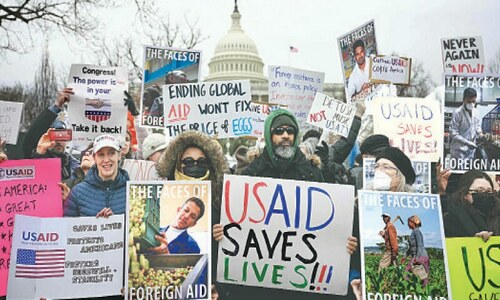
The United States is the world’s largest provider of official development assistance, with most funds directed through the United States Agency for International Development (USAID).
Trump ordered the bulk of US foreign assistance to be frozen for three months on returning to office in January, leaving global humanitarians scrambling to deal with the fallout. “It’s dramatic in many countries,” UNAIDS executive director Winnie Byanyima said.
“I need to sound the alarm so that it’s very clear that this is a big part (of AIDS relief funding). If it goes away, people are going to die.” The US move included a 90-day suspension of all work by the President’s Emergency Plan for AIDS Relief (PEPFAR), although his administration later issued waivers for medication under the programme.
‘Tenfold’ death increase
That programme supports more than 20 million HIV patients and 270,000 health workers, according to an analysis from the Foundation for AIDS Research (amfAR).
“We could see additional deaths increasing by tenfold” to 6.3 million in five years, Byanyima said, citing UNAIDS estimates.
“Or we could see new infections increase up to 8.7 million” in the same period, she said.
The United States has said that “life-saving treatments” would be exempt from the freeze — although front-line workers in Africa say facilities have already closed. Speaking on the sidelines of the African Union summit in the Ethiopian capital Addis Ababa, Byanyima said she had discussed the issue with leaders, urging them to transition from foreign funding towards using domestic revenue.
But she noted many African nations were saddled with huge debts — some at “more than 50 per cent of their entire revenue collections” — which crippled their ability to even begin to plug the potential shortfall.
“Part of the answer is in pushing very hard for an immediate and comprehensive debt restructuring,” she said.
“For many of them, debt is crowding out what could be spent on health and education.” Founded in 1961, USAID has an annual budget of more than $40 billion, used to support development, health and humanitarian programmes around the world, especially in poor countries.
Published in Dawn, February 17th, 2025