0
0

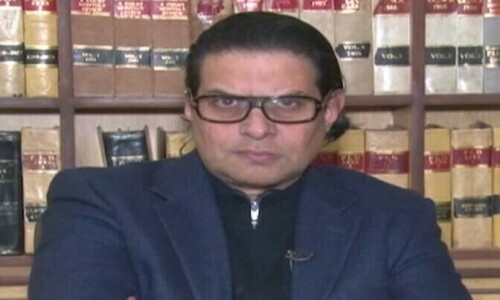
ISLAMABAD: Senior counsel Salman Akram Raja on Wednesday compared court-martial procedures in various countries with those applied in Pakistan, emphasising that the 19th-century principles of military trials cannot be enforced in 2025.
“The court-martial is a burning issue in the world for the last many years,” argued Salman Akram Raja, who was representing the father of Arzam Junaid, who was sentenced to six years by a military court in connection with the May 9 violence.
A seven-judge constitutional bench, headed by Justice Aminuddin Khan, was hearing intra-court appeals (ICAs) against a October 2023 ruling by a five-judge bench that nullified the trial of civilians by military courts for their involvement in the violence.
“Today, no one can fathom the reality that the military court never provides written reasons for awarding a death sentence,” the counsel regretted, citing a study conducted by the International Commission of Jurists. The study noted that Pakistan’s court-martial system had a 93 per cent conviction rate over the last 20 years, with nearly all convictions based solely on confessions.
Salman Akram Raja argues 19th-century principles can’t be enforced in 2025
Barrister Aitzaz Ahsan, also a petitioner, referred to a judgement by late Peshawar High Court chief justice Waqar Seth, which found that 159 individuals convicted under the 21st Amendment had given nearly identical confessions.
Analyst Hafeezullah Niazi also alleged that accused individuals were coerced into making confessions under the false assurance of acquittal.
When Justice Naeem Akhtar Afghan suggested that high conviction rates could be due to strong prosecution, Mr Raja countered that “fear”, rather than fair legal proceedings, was the primary factor in military court trials. In a light-hearted remark, Justice Afghan asked whether Mr Raja had political affiliations with a party that had previously amended the Pakistan Army Act (PAA).
Mr Raja clarified that he was not a part of the PTI government at the time, stating, “I have always been on the opposition side.”
Comparing Pakistan’s system with India’s and UK’s, Mr Raja said Pakistan’s system lacks transparency, with 105 individuals tried in military courts over the past two years without any external oversight.
“There is no opportunity in Pakistan to approach the high courts in the middle of the court martial proceedings,” the counsel regretted, whereas both in India and the UK, the entire concept of court-martial proceedings has been opened up and changed entirely.
Published in Dawn, February 13th, 2025