0
0

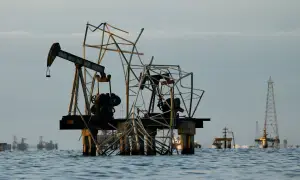
The amount of Russian and Iranian oil held on ships has hit multi-month highs as harsher US sanctions reduced the number of buyers, leaving fewer tankers available to deliver cargoes and driving up crude costs, trade sources and analysts said.
Washington has imposed multiple rounds of sanctions on ships and entities dealing with oil from Iran and Russia since October, disrupting trade with major importers China and India.
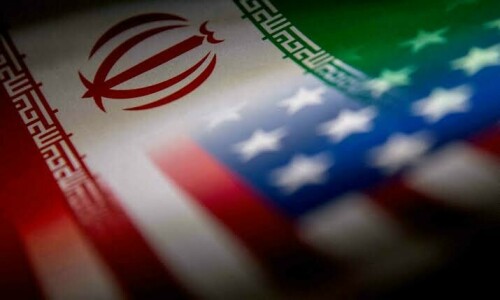
US President Donald Trump last week restored his “maximum pressure” campaign on Iran that includes efforts to drive its oil exports down to zero in order to stop Tehran from obtaining a nuclear weapon.
The OPEC producer has struggled to attract new vessels to fill the shipping capacity gap since the sanctions were imposed in the fourth quarter, said Xu Muyu, a senior analyst at data analytics firm Kpler.
A ban last month by China’s Shandong Port Group on sanctioned tankers from calling at its ports in the eastern province, home to most of the independent refiners that are the main buyers of Russian and Iranian oil, has also made it difficult for such cargoes to discharge.
Shipbroker Braemar ACM said 57 per cent of the 126 Very Large Crude Carriers (VLCCs) currently involved in Iran’s crude trade to China are already subject to US sanctions.
As exports have risen and deliveries to China have dropped, the amount of Iranian oil in floating storage has expanded by between 10 million and 20 million barrels so far this year, according to three analysts’ estimates.
However, calculations of the total volume of Iranian oil in floating storage vary widely as the analysts use different methodologies to track the so-called shadow fleet.
Data from Kpler showed Iranian oil floating storage at more than 25 million barrels, the highest in more than a year, with about 80pc of the cargoes floating off the waters of Singapore and Malaysia.
In contrast, Emma Li, a senior analyst at tanker tracker Vortexa Analytics, estimates the volume of Iranian crude and condensate in floating storage stood at 73.1 million barrels at the end of January.
Iran’s exports rose for a second month to 1.78 million barrels in January after hitting a two-year low of 1.45 million in November, she said.
“Smuggling techniques such as deactivating and spoofing AIS transponders and undertaking ship-to-ship transfers means there may be even more Iranian oil starting to float,” said Richard Bronze, head of geopolitics at consultancy Energy Aspects.
With fewer non-sanctioned ships to deliver oil to China, crude prices have climbed.
Discounts for flagship Iranian Light crude have narrowed to 50 cents per barrel against ICE Brent, a multi-year peak, versus discounts of $2.50 per barrel about two months ago, on a delivered ex-ship (DES) basis to Shandong province for a cargo arriving in March, traders said.