Pakistan’s first indigenous observation satellite launched


ISLAMABAD: The Pakistan Space and Upper Atmosphere Research Commission (Suparco) successfully launched the country’s first indigenous Electro-Optical Satellite (EO-1) from the Jiuquan Satellite Launch Centre in China on Friday.
This type of satellite uses electro-optical sensors to collect data and images of the Earth’s surface by detecting and measuring reflected sunlight or emitted radiation.
The PRSC-EO1 satellite will boost Pakistan’s ability to monitor and manage natural resources, respond to disasters and improve urban planning and agricultural development, Suparco said in a statement.
Suparc said the satellite offered valuable insights across diverse sectors in the following ways:
Urban planning: Aiding in monitoring infrastructure growth and managing urban sprawl.
Environmental management: Tracking deforestation, glacier recession and water resources.
Disaster management: Providing timely updates on floods, landslides and earthquakes for effective response.
Agriculture: Supporting precision farming, irrigation management and crop yield prediction.
“This remarkable milestone marks a giant leap forward in Pakistan’s journey toward self-reliance and technological excellence in space exploration,” the agency said.
Suparco Chairman Mohammad Yousaf Khan attributed this achievement to the relentless efforts of Suparco’s engineers and scientists, while also expressing gratitude for the government’s support. He emphasised that the launch symbolises Pakistan’s commitment to harnessing space technology for national progress and sustainable development.
The launch video of the satellite was aired for the first time to the Pakistani audience, and experts from Suparco were present at the auditorium of the Institute of Space Technology, Islamabad, to provide comments and insights.
According to the space agency, this landmark achievement positioned Pakistan among the ranks of nations with advanced space technology and highlighted Suparco’s critical role in fostering socio-economic growth through innovative solutions.
China’s Long March-2D carrier rocket also launched two other satellites, Tianlu-1 and Blue Carbon 1, into orbit along with the PRSC-EO1, China Aerospace Science and Technology Corporation said in a statement.
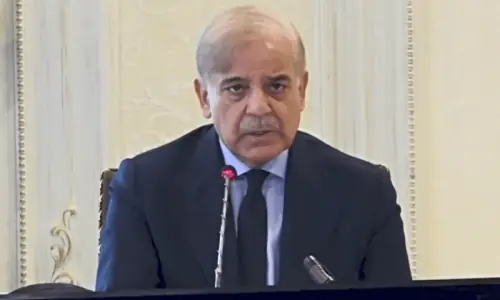
In a statement, PM Shehbaz Sharif said: “Spearheaded by Suparco, this demonstrates our nation’s growing capabilities in space science and technology.” He said it was a “proud moment” for the entire nation.
Published in Dawn, January 18th, 2025