TORONTO: Canada’s First Ministers on Wednesday pledged to head off potential US tariffs while outlining steps to manage any fallout should those measures take effect.
“While they are making every effort to prevent US tariffs, First Ministers are committed to continuing to work together on a full range of measures to ensure a robust response to possible US tariffs, including supports for sectors, businesses, and individuals,” a joint statement released after the premiers’ huddle in Ottawa said.
It added that, if retaliatory measures become unavoidable, the federal government would ensure that resources are readily available to offset economic pressures on workers and firms.
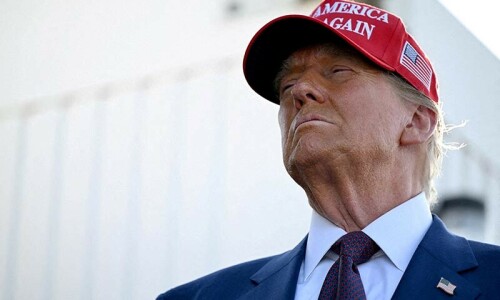
The discussions focused on President-elect Donald Trump’s threat to impose a 25 per cent tariff on Canadian imports, a policy that could disrupt trade relations between the two countries and potentially harm millions of jobs.
With combined trade in goods and services valued at about US$2.7 billion per day, tariffs could lead to higher costs for businesses and consumers on both sides of the border. Against that backdrop, the First Ministers emphasised the significance of continued cooperation with US officials to prevent any severe economic disturbance.
They also agreed to hold weekly follow-up meetings once Trump formally takes over, indicating that close coordination will be required to navigate rapidly shifting circumstances.
Beyond immediate trade issues, the premiers also addressed border security, proposing collaborative measures to stem the flow of illicit drugs between the two countries. The statement from the meeting placed these efforts as part of a broader approach to averting tariffs: “Collaborative efforts will continue to try to prevent US tariffs, including actions taken by the federal government to strengthen border security and curb the flow of illicit drugs.”
While Prime Minister Justin Trudeau and first ministers displayed a united front at large, Alberta Premier Danielle Smith chose not to endorse the joint statement. Her reluctance was tied to concerns that any retaliatory tariffs could extend to sectors crucial to Alberta’s economy, and suggested that such an approach could expose certain provinces to outsized risks.
The premiers noted that while differences of opinion are expected among provinces with varying economic profiles, there remains a broad consensus on shielding jobs, industries, and households from potential disruption. “They agreed to take a collaborative approach to US engagement that recognises the unique economic needs of all provinces and territories,” the joint statement said.
Meanwhile, Ontario Premier Doug Ford, wearing a cap that read “Canada is not for sale,” remarked: “The country comes first over anything,” drawing attention to fears that escalations in US trade policy could affect key industries across Canadian provinces.
Trudeau, meanwhile, acknowledged the challenges of managing a trade relationship that has long benefited both countries but may now be subject to sudden policy shifts. In private conversations reported by local media, officials stressed the need to remain agile and pragmatic, noting that tensions could escalate quickly once the new US administration takes office.
Published in Dawn, January 17th, 2025