Archaeological finds in AJK unearth ancient links


 0
0


MUZAFFARABAD:A significant antiquarian discovery by a renowned Kashmiri archaeologist in Kotli district of Azad Jammu and Kashmir (AJK) has raised hopes of opening new avenues for researchers apart from enhancing the potential for cultural heritage tourism in the region.
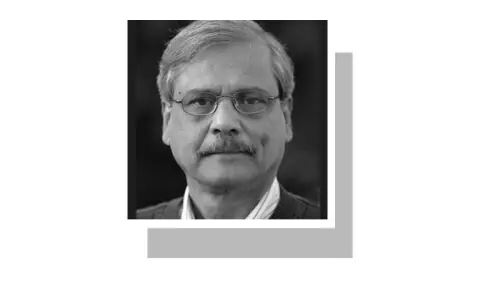
Dr Rukhsana Khan, an associate professor at the University of AJK with extensive experience in documenting and researching cultural heritage resources across different parts of the state, has formally reported these significant findings.
“It has been the first ever ground-breaking exploration undertaken in the rugged highlands of the southern Kotli district,” she said in a press release on Friday.
Dr Khan, a pioneering archaeologist from this side of Jammu and Kashmir, holds a PhD from the Taxila Institute of Asian Civilisations (TIAC) and has an impressive list of publications, particularly on the Sharda Civilisation and the prehistory of this region.
The fresh discoveries included prehistoric shelters, massive limestone rock boulders, defaced human faces marked with symbols, rock-cut caves, inscriptions, ancient water pools, buried mounds, and various pottery fragments.
According to Dr Khan, these discoveries indicated that the region remained an important hub of human activity in the remote past, dating back to the 4th Millennium BCE to 18th CE.
“The most exciting discovery is a stone inscription, apparently a detached part of an ancient grand structure,” she said, adding that such inscriptions were often used for religious texts, dedicatory purposes, administrative decrees, and land records.
The initial study, she said, revealed that the slab inscription contained some Korean alphabets along with the Proto-Sharda script, indicating a connection between this area and the Korean region.
Tracing history, Dr Khan maintained that Buddhism had spread from Kashmir to China, Korea, and adjacent regions through the connecting routes of the Great Silk Road.
The archaeological site in Kotli was strategically located at the junction of the Kashmir Valley and Jammu region, she said.
Dr Khan informed that the Sharda Centre of Learning at the University of AJK, which she heads, was undertaking further studies of these important archaeological discoveries, in collaboration with experts from other national universities.
Published in Dawn, January 11th, 2025