LAHORE: Punjab has become the first province in the country to automate its development system, taking a significant step towards modernising governance. In a parallel development, the provincial administration has launched a solarisation programme to transition agricultural tube wells to solar energy.
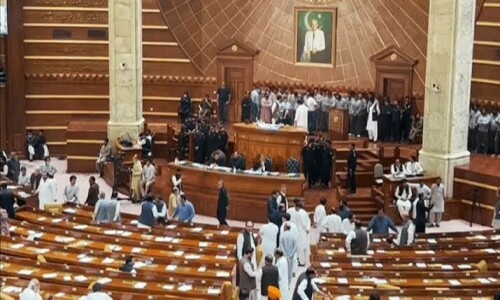
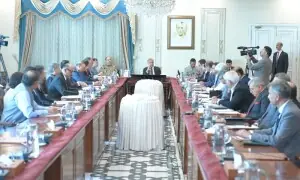
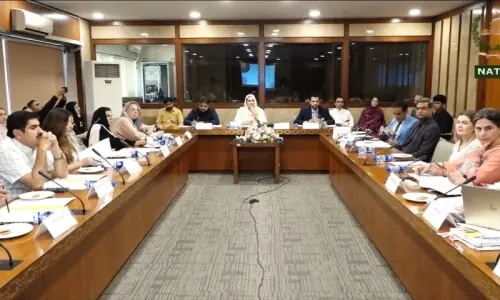
“The monitoring and review of development projects are now conducted daily using advanced technology. With the support of China, Punjab plans to expand the use of technology across governance and all sectors,” said Punjab Senior Minister Marriyum Aurangzeb while addressing the Punjab Assembly Standing Committee on Planning and Development on Thursday.
The session, chaired by PML-N MPA Shahbaz Ali Khokhar, was also attended by senior officials and committee members.
Ms Aurangzeb highlighted that Chief Minister Maryam Nawaz actively monitors development-related data in real time through an online portal, enhancing transparency and operational efficiency. This data-driven governance model is designed to streamline project implementation and reduce delays.
Launches initiative to transition agricultural tube wells to solar energy
The minister announced an unprecedented budget of Rs844 billion for public development projects. “Chief Minister Maryam Nawaz is resolute in ensuring equitable development beyond political affiliations,” she emphasised.
She added that substantial reforms in the healthcare sector were already underway. These reforms include upgrading basic health units, modernising divisional and district-level hospitals and expanding healthcare facilities to underserved areas.
“For the first time, Punjab is introducing a comprehensive model that integrates environmental sustainability with industrial and agricultural growth. This holistic approach is aimed at fostering long-term economic and ecological balance,” Ms Aurangzeb explained. “As part of this initiative, subsidised and instalment-based agricultural machinery is being distributed to farmers, providing them with the tools necessary to boost productivity.”
As part of the ‘Clean Punjab’ initiative, the government plans to replicate Lahore’s advanced waste management system across all districts.
“This initiative will standardise sanitation protocols, improve public health and enhance urban aesthetics,” she said. The government’s top priorities also include advancements in education, youth skill development, IT, and maternal and child healthcare.
The Planning and Development Department has implemented measures to combat Punjab’s persistent smog issue. Ms Aurangzeb said that over the past nine months, initiatives such as introducing zigzag kiln technology, banning plastic bags, prohibiting crop residue burning and controlling toxic industrial emissions have contributed to noticeable improvements in air quality.
Solarisation of tube wells
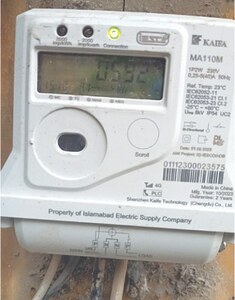
In a parallel move, the Punjab government has formally launched the Punjab Solarisation for Agricultural Tube Wells Programme.
This initiative aims to reduce farmers’ reliance on costly grid electricity by transitioning tube wells to solar power, promoting energy independence and cost efficiency.
“Approximately 8,000 agricultural tube wells across Punjab will be converted to solar energy under this programme,” Chief Minister Maryam Nawaz said.
“The government has allocated a subsidy of Rs9 billion to facilitate this transition. Farmers will receive financial assistance of up to Rs500,000 for tube wells with a capacity of 10 kW, Rs750,000 for those up to 15 kW, and Rs1 million for tube wells with capacities of up to 20 kW. The programme is open to landowners with a minimum of one acre of agricultural land,” she said.
Farmers can apply for tube well solarisation online at “cmstp.punjab.gov.pk” or download the application form from “www.agripunjab.gov.pk”.
This streamlined application process is intended to ensure broad participation and minimise bureaucratic hurdles.
The chief minister hoped that the initiative would provide relief from soaring electricity bills, alleviating one of the most pressing financial burdens faced by farmers.
Published in Dawn, January 3rd, 2025