Unesco-listed musical instrument Rubab stifled in Afghanistan

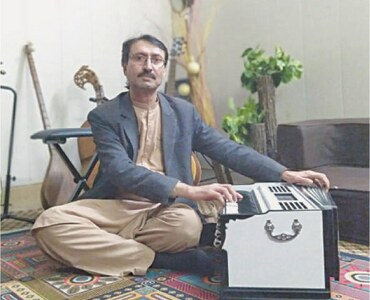
HERAT: Wood shavings littered the floor of Sakhi’s cramped workshop in the Afghan city of Herat as another rubab, the national musical instrument of his homeland, took shape under his deft hands.
Sakhi has crafted two rubabs a month for decades, and he refuses to set down his tools even as a Taliban crackdown strangles music in Afghanistan. “I know only this work and I need to make money somehow,” said Sakhi, surrounded by rubabs in different stages of completion.
But far more important to him than money is the “cultural value”, said the craftsman in his fifties, whose name has been changed for his safety along with those of others interviewed. “The value of this work for me is... the heritage it holds. The heritage must not be lost,” he said.
The UN agency Unesco agrees, recognising in December the art of crafting and playing the rubab as intangible cultural heritage in Afghanistan, Iran, Tajikistan and Uzbekistan.
Made of dried mulberry wood and often inlaid with mother-of-pearl, the lute-like rubab is one of the oldest instruments in the region, its twanging sound stretching back thousands of years. But that heritage is threatened in Afghanistan under the Taliban authorities’ near-total ban on music, considered corrupting in their strict interpretation of Islamic law.
Since coming to power in 2021, Taliban authorities have banned music in public, from performances to playing tracks in restaurants, in cars or on radio and TV broadcasts. They have shuttered music schools and smashed or burned musical instruments and sound systems.
Published in Dawn, December 30th, 2024