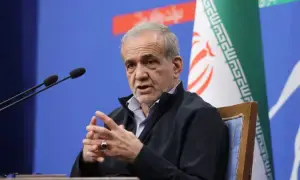
Aurangzeb calls for unity to boost tax-to-GDP ratio across all sectors


 0
0


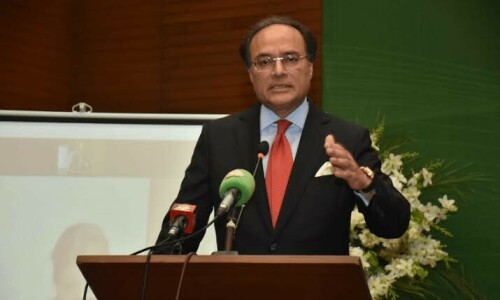
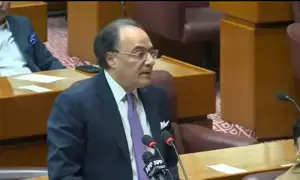
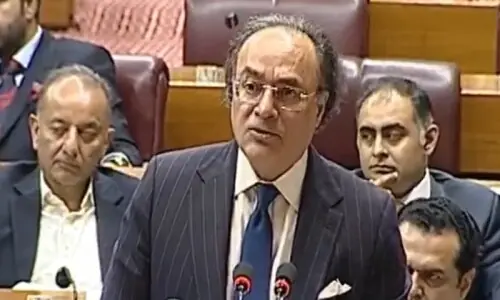
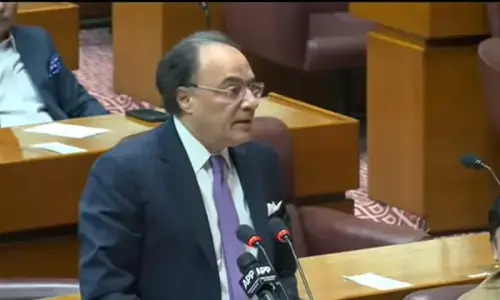
Finance Minister Muhammad Aurangzeb on Sunday said that all sectors would have to contribute towards increasing the country’s tax-to-GDP ratio, adding that the salaried class were at their limit and could not contribute anymore.
The finance minister has repeatedly underscored the need for strict enforcement of tax laws amid plans for the Federal Board of Revenue (FBR) to undergo full digitalisation to reduce human interaction and enhance efficiency. FBR’s performance will be reviewed as part of the tax transformation plan, and the second phase of “rightsizing” is expected soon.
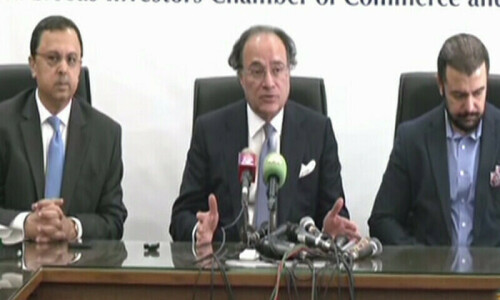
While speaking to the business community in Kamali, the finance minister said, “And they are certain segments that need to pay taxes and they will have to pay taxes now, he said.
He added that every single segment in this country will have to contribute because Pakistan’s tax-to-GDP ratio was only 9 to 10 per cent while neighbouring countries had it around 18pc. He added that the government had only talked about reaching 13pc.
“Then people say that your institution is very corrupt, that your institution harasses people — which is correct,” he admitted, adding that it was important to acknowledge the problem to start working on it.
“So we are tackling the issue with people-processed technology. The more technology comes, the less the human intervention,” he stressed.
On privatisation, the finance minister said that the government needed to play the role of a regulatory body rather than controlling businesses.
“I don’t know if there are any Passco people here but it is the most corrupt institution. That is why the prime minister has said that it needs to be closed and that is how we are taking it forward,” he said.
The minister added that there was a need to keep a “strategic reserve” but questioned whether it should be within the government.
“I am very clear as finance minister that we need to bring as many things towards the private sector — provided it is all regulated, God willing, so there are no monopolies,” he said.
He noted the poor standard of government research institutes, “All this research, where is it? Where are we in terms of the research? Why hasn’t that delivered results?” he rhetorically asked, “Because when I looked at the research institutes, 80 to 90pc [of the funds] of it are going into salaries.”
He said that 20pc of it should be going into salaries and 80pc into research, public-private partnerships and other universities.
“As far as I’m concerned, I am very clear all the institutions should be closed. Private sector people like you should come forward.”
He went on to say that there was nothing to show from “institutions such as higher education commission with its 270 universities”, noting their high current expenditure and development expenditure.
“What do we have to show? Where are the people that we are producing? The boys and girls, what is their calibre that on whose basis we need to take the country forward?” he asked.
On a positive note, Aurangzeb noted that the inflation had reached nearly 5pc, with the interest rate down to 13pc.
“These are all the things that indicate that the wheel of the economy has started moving and I would be the last person to say that we have achieved whatever we said — however, in the last six months the macroeconomic stability which makes the foundation is there so that we can achieve sustainable growth,” he said.
However, he cautioned that the country was still an “import-led economy” and it was critical to ensure that they headed towards export-led growth, adding that they had created the foundation where in 2025 they could head towards sustainable growth.