State-of-the-art fitness centres keep vehicles in check


 0
0


Two modern and computerised vehicle inspection and certification stations in the garrison city are working to control emissions released by public transport and freight vehicles as well as to curb the number of accidents in the district through the issuance of fitness certificates.
One inspection station has been operating in Rawat near Radio Pakistan since May 2019, while a temporary station at the Siham Bus depot has been operational since March 2023. About more than 24,000 vehicles have been registered and examined over the past five years, and since March last year, about 5,000 certificates are being issued every month.
It may be noted that the Punjab government has made it mandatory for commercial vehicles to pass the fitness test, and these vehicle inspection and certification stations (VICS) have been established with the help of Opus Inspection, a Swedish firm working in 39 Punjab cities.

At these stations, buses, waggons, taxis, and trucks are issued fitness certificates after their alignment and brake inspection, visual inspection, vehicle suspension verification, headlight inspection, emission inspection, and vehicle noise inspection. At the station, three bases are established where the staff checks vehicles with the help of a computer and issues certificates. The transport department has set a fee of Rs1500 for transport vehicles, and the certificate will be renewed after six months to ensure the safety of the passengers and reduce pollution.

Regional Transport Authority (RTA) Secretary Rashid Ali said one section had been allocated for the heavy transport vehicles while two other sections catered to the light transport vehicles. He said the fitness would be determined through different tests after which a computerised report would be issued. A single fault in any test would render the vehicle unfit, he said, adding that a retest within 14 days would not cost any money, however.

He said a fitness certificate would expire after six months while a brand new vehicle would be given a two-year fitness certificate.
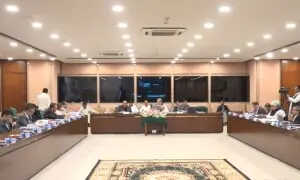
Deputy Commissioner Dr Hassan Waqar Cheema said that it was mandatory for the public transport and freight vehicles to pass seven inspections of international standard. He said that the Regional Transport Authority (RTA) had been directed to ensure every vehicle gets a VICS certificate. “In Rawalpindi, two stations had been established. One in Rawat and another on Peshawar Road. The government will construct a permanent station on Peshawar Road next year,” he said.
He said that a rapid increase in the number of vehicles over the last decade resulted in environmental degradation and traffic congestion, adding that the phenomenon also led to concerns about road safety.

Against this backdrop, the government established a vehicle inspection system to provide safe, reliable, and efficient transport services across the province. Under this project, all public vehicles will be inspected and certified using modern equipment.
Through VICS, the record of all vehicles is kept with the provincial government, which will be used to digitise the transport system. He said that the Punjab Information Technology Board (PITB) was developing a software for a digital public transport system in Rawalpindi, adding that in the first phase the Radio Frequency Identification (RFID) scanners would be installed at the Pirwadhai Bus Terminal, followed by their installation at all private bus stands.
This system will gather complete data, such as the vehicle’s registration number, owner’s name, fitness certificate details, driving licence, route permit, and tracking system, he added.
Published in Dawn, December 22nd, 2024