• PTI members criticise govt over perceived haste in advancing the bill
• Concerns raised about transparency, potential risks to citizens’ digital security
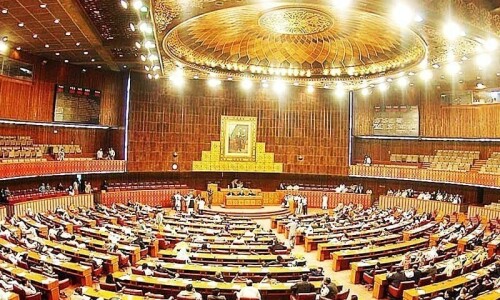
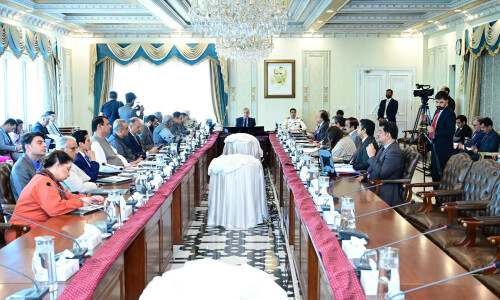
ISLAMABAD: The National Assembly Standing Committee on IT and Telecom deferred the Digital Nation Pakistan Bill on Wednesday despite general agreement among members following extensive discussions.
The federal government tabled the bill in the National Assembly session on Monday. The bill — aimed to create a digital identity for citizens and centralise social, economic, and governance data — was tabled by Minister of State for IT Shaza Fatima Khawaja. The bill was approved by the federal cabinet in June.
At Wednesday’s session, Committee Chairman Aminul Haque backed the bill during a heated debate, which saw opposition from members of the Pakistan Tehreek-i-Insaf (PTI) and even the government’s ally Pakistan Peoples Party (PPP). Ms Khawaja defended the bill, responding to criticism and queries raised by committee members.
PPP members Dr Mahesh Kumar, Sadiq Ali Memon and Sharmila Faruqui criticised the government for failing to provide adequate documentation ahead of the meeting. However, after the state minister addressed their concerns, they expressed agreement with the bill’s contents.
At one point, Sharmila Faruqui left the meeting following a disagreement with the committee chairman but later returned.
She requested Aminul Haque to either defer the bill or proceed to a vote, adding, “I have been sent back.”
PTI members Omar Ayub and Sher Ali Arbab voiced scepticism over the perceived haste in advancing the bill. They sought more time to consult experts and industry stakeholders and raised concerns about transparency and potential risks to citizens’ digital security once the bill is enacted.
In her remarks, Shaza Fatima Khawaja stressed the urgent need for national digitalisation, citing China and India’s long-term efforts, which she said took 15 and 24 years respectively to digitise their economies.
She warned against delays, stating, “If we do not digitalise in this country, we will go back to the stone age as technology waits for no one.”
The state minister highlighted that even a two-day delay in the bill’s approval could result in a two-month delay in its passage through parliament. She defended the government’s approach, asserting that the bill had undergone extensive consultation with stakeholders and should not be viewed solely through the lens of surveillance and politics.
“If we want to see everything from the perspective of security surveillance, then we need to turn off all TV sets, mobile phones, cars and go back to the old days,” she said.
However, despite her defence, committee members expressed strong reservations about the speed at which the bill is being pushed through.
Briefing the committee, IT Secretary Zarar Khan explained that digitisation was a devolved subject under relevant departments.
Pullain Baloch, an MNA from the National Party, urged caution, stressing that the parliament must be careful about the Digital Nation Bill to avoid another embarrassment like the recent fiasco of the madressah registration bill.
Following prolonged deliberations, the committee chairman decided to defer the bill for further consultation.
The bill says it is expedient to enable the people to become a digital nation by leveraging the transformative power of digital technologies, responsible use of data, innovative service delivery models and robust digital public infrastructure to accelerate sustainable economic development, improve citizen well-being and modernise governance frameworks for efficient and effective public service delivery.
It stresses the need to create a forward-looking digital society, foster a thriving digital economy and establish a collaborative digital governance ecosystem with secure, inclusive and interoperable digital public infrastructure as a key enabler supporting innovation, connectivity and seamless integration across sectors.
The bill says the establishment of the National Digital Commission and the Pakistan Digital Authority is necessary and will provide strategic direction, governance and operational oversight required to achieve the above objectives.
Published in Dawn, December 19th, 2024