AS the post-Assad dispensation takes shape in Syria, questions remain about how the international community will deal with the jihadists that are now calling the shots in Damascus.
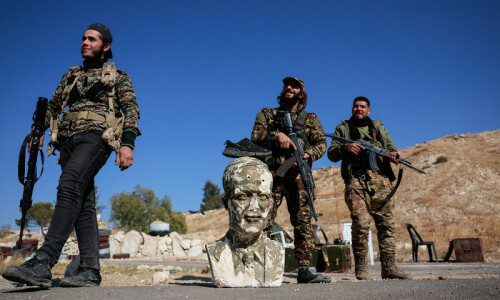
While Mohammad al-Bashir may have been named interim prime minister, it is clear that the man to talk to in Syria is rebel warlord-turned-statesman Abu Mohammad al-Jolani, head of Hayat Tahrir al-Sham, a militant group sanctioned by the UN.
Ever since the fall of Bashar al-Assad, Mr Jolani has been at great pains to convince the world that he is a changed man; the fire-breathing militant of old has been replaced by an individual in a blazer championing inclusivity and diversity. The weeks ahead will confirm whether or not this ‘conversion’ is genuine. Both the US and UK have confirmed they have made contact with HTS, though it is not clear if they will remove the militant group’s terrorist classification.
If the Western bloc goes ahead with mainstreaming HTS, it will be a dangerous development, though not an unprecedented one. After all, the West has in the past used religiously inspired militants when it was geopolitically convenient — as in the case of the Afghan mujahideen — only to discard them when they were no longer useful. Yet these experiments can have troubling consequences — both Al Qaeda and the Afghan Taliban developed from the same gene pool as the mujahideen.
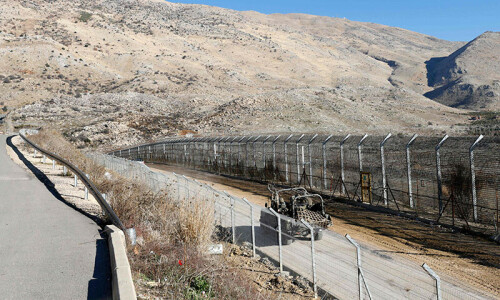
Also, while the West refuses to recognise the Taliban regime in Kabul, ostensibly due to its rigidity, it has applauded the takeover of Syria by groups that are just as extreme — if not more. This seems to be a case of ‘good militant, bad militant’. In Syria, the West supported these groups not out of any love for the Arab state’s people, but to inflict a geopolitical defeat on Russia and Iran, and strengthen Israel’s hand. Tel Aviv has bombed Syria hundreds of times since Bashar al-Assad’s fall, yet the country’s new rulers say they are not interested in confronting the Zionist state.
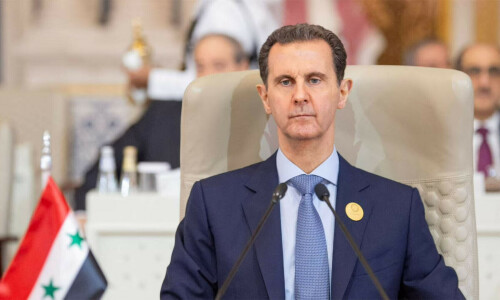
While Mr Assad may be gone — and not many are mourning the end of his brutal rule — Syria’s future does not look promising. Even if we assume that Mr Jolani is serious in his efforts to build a more inclusive country, the fact remains that many of the armed groups now running Syria are driven by extremist and sectarian ideologies.
Will these groups agree to give up their arms, embrace their ‘enemies’ and build a pluralist state? The history of such outfits suggests anything but a peaceful transformation into tolerant democrats. And if Syria becomes a hotbed for a resurgent IS or even more bloodthirsty groups, the Western bloc will be held largely responsible for destroying another Muslim state, and enabling a new set of extremist monsters.
Published in Dawn, December 18th, 2024