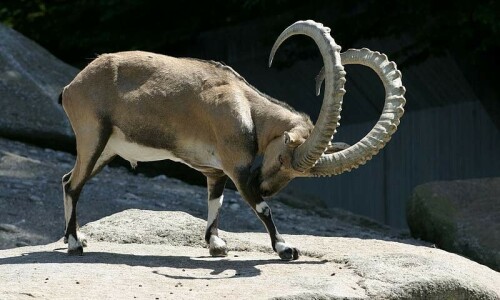
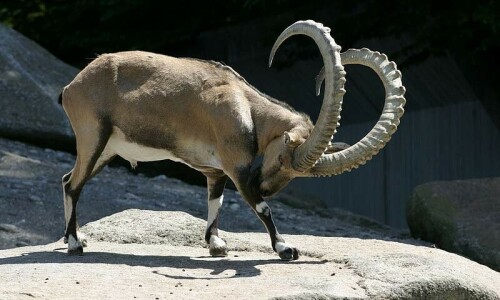
In an oddball attempt at wildlife conservation, the KP government chooses irony as its choice tool. The formula is simple enough: offer a few sacrificial lambs (literally) to eager hunters and rally together funds for further conservation practices and social development — building mosques, schools, park maintenance, the works.
Of the entire hunting itinerary — markhor, blue sheep, ibex — markhors are the most sought-after trophies that attract hunters from far and wide and manage to rack up a decent bill for individual licenses. Just this year, the highest bid was offered for $271,000 in the Toshi district, while all four licenses for the season (the current cap) were auctioned for $925,000 (around Rs0.25 billion), much greater than last year’s estimate of $657,000. As the years go by, the trophy licenses keep rising despite a slightly confused understanding of how endangered markhors actually are.
Around 2015, there was a significant outcry over their apparent endangerment. An increase in community-based hunting programmes thinned the herd quite a bit, and by 2018, its status changed to near-threatened. Trophy hunting started out as a way to discourage overhunting by offering 80pc of the funds raised via auction to community-based organisations. On the other hand, officials insist that the wild goat population has increased from 700 in 2004 to 5,621 in 2023, so much so that the KP government is keen to increase the licensing quota, especially now that the federal government has added a 10pc tax to trophy hunting despite receiving the remaining 20pc of all proceeds.
This might also appease organisation advocating for animal rights that question the legitimacy of these numbers, convinced that, in reality, the population of not markhors but other northern wild goats auctioned are most probably going down rather than up. They’re primary argument in the past has been the stagnant quota of bids that have remained unchanged for several years. For instance, ten years ago, the estimated population of urials was 1,500 and the quota stood at 16 per season. Today the quota remains unchanged despite a population growth to almost 6,000. Published in Dawn, The Business and Finance Weekly, December 16th, 2024